李飛飛團隊首發仿真引擎
Ad Skip to content World Labs turns one real-world robot task into thousands of simulated variations for training Jonathan Kemper View the LinkedIn Profile of Jonathan Kemper Aug 15, 2026 World Labs World Labs, the startup founded by AI pioneer Fei-Fei Li, has unveiled a simulation engine that trains robot control systems entirely in virtual environments.
The models then run reliably for hours on real hardware.The company's "Real-to-Sim-to-Real" (R2S2R) engine turns real-world robot tasks into simulations for training and evaluating control models, cutting out expensive tests on actual hardware.
The technology comes from SceniX, a startup World Labs acquired in July.The main bottleneck in robot deployment isn't model architecture, World Labs says, but the sheer volume of experience a robot needs to operate reliably.
Real-world data is expensive and hard to control, and even online videos don't systematically cover the full range of objects, physical conditions, and failure states.
One real-world task becomes thousands of controlled variations The engine captures robots, sensors, the environment, and task demos, then rebuilds them as an interactive virtual world that doesn't just look like the original but behaves the same way physically.
World Labs pulls this off by combining generative world models with task-oriented robot simulation.
From a single real-world task, the system generates thousands of variations by changing lighting, object position and count, the surrounding environment, physical properties like friction, and camera angle.
To check accuracy, World Labs runs the same action sequence in simulation and reality side by side and compares observations, object movements, and outcomes.From a single recorded task, the engine generates thousands of controlled variants so a policy can learn to generalize.
| Image: World Labs The examples shown include rigid, movable, and deformable objects such as cable routing, inserting an elastic cable end into a hole, and packing a box with both hands.
Control models that never trained on real hardware Control models train in simulation and then transfer to real robots.One of the test platforms was ALOHA, an open-source dual-arm design from Stanford operated through puppeteering with two smaller control arms.
The setup costs a fraction of commercial systems, and all blueprints are public, making ALOHA the go-to reference platform in robotics research.According to World Labs, the models each ran for one hour across four additional robot platforms without any human intervention.
Tasks ranged from wrapping a power cord around a refrigerator with both hands to precisely repositioning test tubes and separating thin objects like markers or pencils from a dense jumble.
The system isn't tied to a specific control model or robot type, so a world that's been reconstructed once can be reused later for new models and different robots, the company says.
Simulation can stand in for hardware during policy evaluation World Labs argues that robot development lags far behind language models because evaluating control models has mostly required tests on real hardware.A solid simulation doesn't need to deliver the same success rates as reality.
What matters is whether it answers the same questions: Where does a model fail, which version is better, and do improvements carry over to the physical robot?The team tested this with a two-handed cube handoff between the arms of an ALOHA robot.
According to World Labs, the simulation reproduced both borderline cases where the robot barely grasped the cube by its edge and the matching failed attempts.Across different model types, including GR00T N1.6 and π₀.
₅, and training stages, model rankings in simulation and reality stayed largely the same.That held for both known cube positions and previously unseen ones.Each checkpoint was evaluated using 2,000 simulated and 100 real runs.
Policies that perform better in simulation also perform better on hardware, and the ranking stays consistent.| Image: World Labs Development teams can filter out weak model versions in simulation and save expensive hardware tests for the most promising candidates.
The simulator sits at the center of World Labs' broader strategy World Labs ties these results back to its taxonomy of world models.In that framework, the simulator is the central piece because it turns a world into a place where software agents can act, learn, and be tested.
The company draws parallels with autonomous driving, where some successful Level 3 and Level 4 systems train on a mix of real and simulated data.World Labs frames its long-term goal this way: to scale the intelligence of robots, you have to scale the worlds in which they learn.
How well these results transfer to more complex environments, other robot types, and less controlled everyday situations remains an open question.World Labs was founded in 2024 by AI researcher Fei-Fei Li to build models with spatial intelligence that understand the three-dimensional physical world.
An early system generated walkable 3D environments from single photos.More recently, the company raised one billion dollars in venture capital to extend its world models into robotics and science.The R2S2R engine is the first concrete application of that vision in robotics.
This research feeds into a broader debate about the role world models should play in robotics.An international research team recently tried to pin down a uniform definition of what a world model actually is, drawing a clear line between world models and pure video generators.
A related field is World Action Models, which tie predictions about the near future directly to control commands.That differs from the World Labs approach, where simulation and policy stay separate.
Another method called Orca comes from China and lets a robot learn tasks purely by watching video, with no real motion data needed during training.
AI News Without the Hype – Curated by Humans Subscribe to THE DECODER for ad-free reading, a weekly AI newsletter, our exclusive "AI Radar" frontier report six times a year, full archive access, and access to our comment section.Subscribe now Read on for the full picture.
Subscribe for hype-free coverage.
Full access to every article on THE DECODER No ads Join the comments and community discussions A weekly AI news recap via mail 6x/year: "AI Radar" — deep dives on the AI topics that matter most Daily AI news, always up to date Our full ten-year archive Covered by a team with 10+ years in AI Subscribe to The Decoder BETA-TEST × wpDiscuzInsert BETA-TEST × wpDiscuzInsert
Related
相關文章
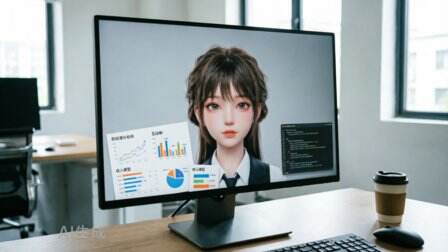
AI偶像,不能照搬真人明星的邏輯
虛眸2026.08.24 14:26 · 來自北京全文4075字00:00 / 11:50就算看著再逼真,也知道不是人。文 | 虛眸第一波AI明星出道,並不順利。AI短劇《被裁掉的女孩》的虛擬女主角方桃子,代言隱形眼鏡時稱“戴了一天很舒服”,隨即被大眾質疑:一個沒有身體的AI角色,如何感受“舒服”?《與你深情,侵入餘生》中的男女主段宴和容寄僑,以演員身份二搭“出演”新劇《分手後男頻女頻大亂鬥》,讓粉絲對自家偶像究竟是誰、屬於哪個次元的世界產生認知混亂。
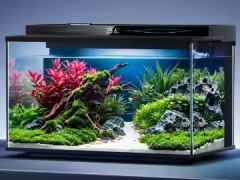
小米米家智能魚缸 2 Pro 開啟眾籌:支持自動餵食,眾籌價 599 元
米家智能魚缸 2 Pro 今日在小米有品開啟眾籌,售價 599 元。產品配備定製循環水路、自動餵食器及 1.47 寸 LCD 彩屏,支持米家 App 遠程操控與小愛同學語音控制,還可根據魚種信息智能匹配運行策略。#小米有品# 你心動了嗎?
泰康重磅發佈養醫大模型1.0,全面重塑全生命週期醫養服務
泰康保險集團近日正式發佈自研養醫垂類大模型1.0版本,依託其醫養康寧無縫對接服務體系、長壽醫療學科佈局及長壽隊列獨家數據積累,正探索具有自身特色的差異化垂類大模型發展道路。總裁劉挺軍表示,發佈不是終點而是全新起點;該模型是泰康新壽險在科技維度落地“全生命週期醫養康寧”的重要實踐。
Twitch 遭千名主播集體起訴:亞馬遜默認用直播內容"喂"AI,退出還不具追溯力
Twitch因未經同意、未付酬將主播直播、剪輯、聊天記錄等用於訓練亞馬遜生成式AI,遭集體訴訟。原告已提交37頁訴狀,指控平臺違反默示協議及不公平競爭法。爭議焦點是AI訓練默認開啟、退出機制形同虛設,引發創作者社區強烈不滿。
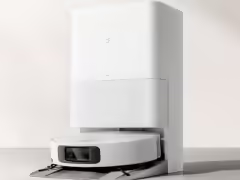
小米推出米家掃拖機器人 7C:滾筒活水增壓拖地,到手價 2069.1 元
作者:浩渺 責編:浩渺 評論: 感謝網友 很宅很怕生 的線索投遞!8 月 23 日消息,米家掃拖機器人 7C 現已在小米有品上架預約,官方標價 2299 元,券後到手價 2069.1 元,8 月 26 日 10 點現貨開售(點擊前往)。從商品頁面獲悉,這款新品支持滾筒活水拖地,配備恆壓恆溼滾筒拖布,200 轉 / 分鐘高速洗拖,強效清潔咖啡漬、油漬、寵物腳印等頑固汙漬; 配合活水邊拖邊洗,有效減少二次汙染。