LFM2.5-VL-3B:為邊緣運算帶來更快速、更卓越的視覺能力
Back to Articles LFM2.
5-VL-3B for Better and Faster Vision Capabilities for the Edge Team Article Published August 12, 2026 Upvote - Samuel Stevens samuelstevens Follow LiquidAI Ryan Shubert shubeydoo Follow LiquidAI Sina s-jse Follow LiquidAI Tianshu Yu tianshu-yu Follow LiquidAI Brandon Brandon3967 Follow LiquidAI Leonie Monigatti iamleonie Follow LiquidAI LFM2.
5-VL-3B is our most capable vision-language model you can run on your own hardware.It understands documents and screens alike, grounds objects, and can call tools.It answers directly instead of reasoning, so responses stay fast in real-time and on-device apps.LFM2.
5-VL-3B extends the vision-language capabilities of our previous releases with four major improvements: Screen/UI understanding: Strong understanding of digital screens across different devices.Grounding: Improved grounding and object detection with natural language queries.
Multi-image input: Improved reasoning across multiple images.Function calling: Significantly stronger at function calling, in text-only and vision-text situations.How we trained our most capable vision-language model LFM2.
5-VL-3B pairs a SigLIP2 400M NaFlex vision encoder with the same pre-trained backbone as our LFM2.5-2.6B text model.It is pre-trained on about 34T tokens, with 4x more vision data than before, drawn from curated and synthetic image-caption, OCR, grounding, and instruction-following sets.
To support non-Latin scripts, we doubled the vocabulary to 128K by extending the tokenizer in place rather than retraining from scratch.Post-training runs in two stages: First is supervised fine-tuning (SFT), with knowledge distillation from a larger teacher and Antidoom training.
Second is multi-reward reinforcement learning (RL).Benchmark results We evaluated LFM2.5-VL-3B across both vision and text benchmarks.
The vision benchmarks cover multilingual visual comprehension, instruction following, visual math and scientific reasoning, document understanding, object detection, multi-image understanding, and screen understanding.LFM2.
5-VL-3B leads its size class on real-world image tasks, while also reading digital content well, from documents and charts to on-screen UI elements.Task Benchmark LFM2.5-VL-3B (3.1B) LFM2-VL-3B (3.1B) gemma-4-E2B-it (5.1B) gemma-4-E4B-it (8B) InternVL 3.5 2B (2.4B) InternVL 3.5 4B (4.7B) Qwen3.
5-2B (2.3B) Qwen3.5-4B (4.7B) General MMStar 63.357.745.352.957.765.555.159.3 MME 73.173.054.967.673.681.076.279.5 RealWorldQA 73.171.160.064.361.667.765.167.1 SimpleVQA 35.433.027.330.430.533.735.240.7 SEED-Bench (image) 77.776.671.475.375.476.475.876.1 MMBench (dev EN v1.1) 81.080.064.271.676.281.
173.178.4 CountBenchQA 87.392.270.480.570.482.583.886.7 Multilingual MMMB 83.081.973.380.476.381.575.982.0 Multilingual MMBench 79.576.362.871.270.976.669.977.0 Multimodal IF MM-IFEval 60.651.465.668.247.154.555.463.1 STEM LogicVista 37.432.229.534.530.936.234.037.6 MathVista (mini) 68.562.137.845.
256.867.148.763.6 MMMU-Pro 30.528.726.932.621.322.724.936.0 MMMU (val) 48.445.641.149.352.060.744.150.3 Document, OCR & Chart ChartQA (test) 81.380.443.242.181.786.278.484.2 DocVQA (val) 91.189.885.787.488.491.892.694.8 InfographicVQA (val) 70.267.854.460.969.376.973.580.3 OCRBench v1 84.281.770.
273.583.982.084.485.6 OCRBench v2 (En) 47.543.944.448.845.549.147.758.7 TextVQA (val) 84.383.062.569.076.677.577.381.2 Grounding RefCOCO-avg 87.957.167.372.182.988.878.586.6 Multi-Image BLINK 61.550.245.252.252.057.248.658.7 MuirBench 58.334.932.951.845.053.548.262.0 Hallucination HallusionBench 47.
246.441.849.847.652.149.351.7 POPE 88.789.284.086.988.088.988.686.0 GUI ScreenSpot-v2 Desktop 78.76.028.145.879.982.063.876.3 ScreenSpot-v2 Mobile 81.27.642.960.386.287.869.781.4 ScreenSpot-v2 Web 82.22.522.447.679.982.665.977.8 Average - 69.457.252.059.764.669.463.770.
1 All values in the table are normalized to 0–100.Evaluation is done using vLLM 0.26.0 and each model’s recommended generation parameters when available.Non-reasoning mode is used everywhere, and models are prompted to directly answer without reasoning.We also evaluated LFM2.
5-VL-3B on text-only benchmarks for instruction following and tool use.Instruction following climbs across the board, and tool use improves sharply.On tool use, LFM2.5-VL-3B is on par with Gemma-4-E2B and Qwen3.5-2B.Task Benchmark LFM2.5-VL-3B (3.1B) LFM2-VL-3B (3.1B) gemma-4-E2B-it (5.
1B) gemma-4-E4B-it (8B) InternVL 3.5 2B (2.4B) InternVL 3.5 4B (4.7B) Qwen3.5-2B (2.3B) Qwen3.5-4B (4.7B) Instruction following IFEval 82.372.983.087.932.435.473.686.2 IFBench 25.820.834.139.224.424.528.933.5 Multi-IF 59.446.569.477.416.316.953.566.7 Tool use & function calling ToolSandbox 59.526.
456.561.6N/AN/A47.765.0 BFCL V4 32.520.533.240.0N/AN/A33.953.6 InternVL 3.5 models do not support function-calling.These results demonstrate that LFM2.5-VL-3B is a strong, general-purpose vision-language model.
It covers everyday tasks (captioning, visual question answering, document understanding) and is especially good at grounding objects, reading screens and documents, and calling tools.Inference speed on CPU and GPU LFM2.
5-VL-3B ships with day-one support across the inference ecosystem, including llama.cpp, MLX, vLLM, SGLang, and ONNX.On-device inference.LFM2.5-VL-3B decodes 228 tokens/s on an M5 Max and 116 tokens/s on a Ryzen AI Max+ 395, and fits in about 3 GB of memory.
It even reaches 20 tokens/s on a Galaxy S26 Ultra, so you can run it fully on-device.GPU inference.LFM2.5-VL-3B keeps latency consistently low and is the fastest on multi-frame inputs.LFM2.
5-VL-3B is also the fastest on output throughput out of all models we tested, reaching about 11K tokens per second at high concurrency.That is roughly 2× the larger 4B-class models and ahead of even the smaller 2B-class models, which adds up to nearly 1B output tokens per day on a single H100.
How to use LFM2.5-VL-3B Reach for LFM2.5-VL-3B when you need on-device intelligence for high-volume workloads.Install the latest version of transformers (compatible with transformers>=5.0.0): %pip install -q torch torchvision accelerate "transformers>=5.10.
1" Then load and run the model: import torch from transformers.imageutils import loadimage from transformers import AutoModelForImageTextToText, AutoProcessor from IPython.display import display MODELID = "LiquidAI/LFM2.5-VL-3B" processor = AutoProcessor.
frompretrained(MODELID) model = AutoModelForImageTextToText.frompretrained( MODELID, devicemap="auto", dtype="bfloat16", ) imgurl = "https://huggingface.co/datasets/huggingface/documentation-images/resolve/main/cocosample.
png" inputimage = loadimage(imgurl) display(inputimage) messages = [ { "role": "user", "content": [ {"type": "image", "image": inputimage}, {"type": "text", "text": "Describe this image in two concise sentences."}, ], } ] inputs = processor.
applychattemplate( messages, addgenerationprompt=True, tokenize=True, returndict=True, returntensors="pt", ).to(model.device) with torch.inferencemode(): outputs = model.generate( **inputs, dosample=True, temperature=0.2, topk=50, repetitionpenalty=1.0, maxnewtokens=256, ) output = processor.
batchdecode(outputs[:, inputs["inputids"].shape[1]:], skipspecial_tokens=True)[0] print(output) Two cats are sleeping on a pink couch with two remote controls.You can find more hands-on examples on how to use LFM2.
5-VL3B for multi-image inputs, grounding, OCR, tool calling, and more in our documentation.Check out our release blog for video examples.LFM2.5-VL-3B demo Check out this browser demo of LFM2.5-VL-3B powering a vision-capable chat interface.
It allows you to take or upload multiple images and let the model interact with them, including grounding, OCR, and tool use.Get Started LFM2.5-VL-3B is available on Hugging Face today.With LFM2.5, we're delivering on our vision of AI that runs anywhere.These models are: Download: LFM2.
5-VL-3B on Hugging Face.Try: run the WebGPU demo in your browser, no setup needed.Fine-tune: adapt LFM2.5-VL-3B to your task with our fine-tuning tutorials.We can't wait to see what you build.Citation Please cite this article as: Liquid AI, "LFM2.
5-VL-3B: A Better and Faster Vision-Language Model for the Edge", Liquid AI Blog, Aug 2026.Or use the BibTeX citation: @article{liquidAI2026VL3B, author = {Liquid AI}, title = {LFM2.
5-VL-3B: A Better and Faster Vision-Language Model for the Edge}, journal = {Liquid AI Blog}, year = {2026}, note = {www.liquid.ai/blog/lfm2-5-vl-3b}, } Models mentioned in this article 2 More from this author Deploy local agents everywhere with LFM2.5-2.6B 87 August 4, 2026 LFM2.
5-Encoders for Fast Long-Context Inference on CPU 68 July 28, 2026 Community EditPreview Upload images, audio, and videos by dragging in the text input, pasting, or clicking here.Tap or paste here to upload images Comment · Sign up or log in to comment Upvote - Models mentioned in this article 2
Related
相關文章
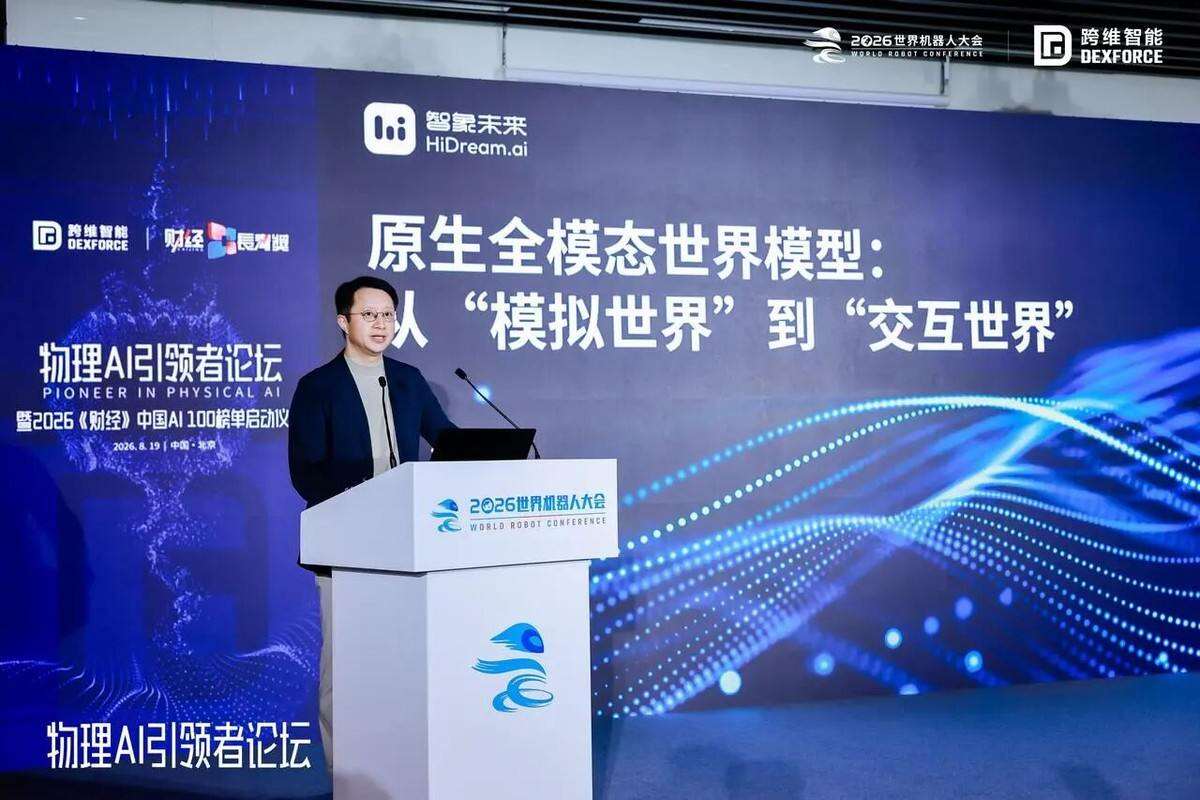
WRC 2026|原生全模態世界模型:從模擬世界到交互世界
世界機器人大會期間,智象未來創辦人梅濤於「物理AI引領者論壇」發表演講,提出原生全模態世界模型從「模擬世界」走向「交互世界」的觀點。他強調即使AI模型智商接近140,高IQ不代表全能,需具備在真實物理世界中穩定完成任務的能力,此為Physical AI發展的關鍵。論壇聚焦通用物理智慧的技術演進與產業路徑,匯聚眾多專家參與。

阿里巴巴達摩院推出肝癌 AI 模型:可精準識別 1 釐米微小腫瘤
作者:遠洋 責編:遠洋 評論: 感謝網友 HH_KK 的線索投遞!8 月 24 日消息,阿里巴巴達摩院聯合中國醫科大學附屬盛京醫院等機構研發出肝癌診斷 AI 模型 DAMO LiON,可通過 CT 影像識別微小的肝臟癌變病灶。在兩個月的真實世界前瞻臨床試驗中,該 AI 模型發現了 15 例原本被遺漏的惡性腫瘤,絕大部分為 1 釐米左右的病灶,幫助患者得到及時的手術或藥物治療。
數學自動形式化迎來重大突破:OpenBMB開源MathForm,8B模型憑實力逆襲大廠
OpenBMB團隊開源數學自動形式化框架、數據集與模型MathForm,目標是用Lean4讓機器準確讀懂並形式化驗證數學定理,攻克通用人工智能核心挑戰。其關鍵不是簡單翻譯自然語言,而是將每個數學概念精準映射到Mathlib庫中,為數學與AI交叉研究提供新工具。

加州伯克利數學教授撰文批評學生基礎差,卻被抓包“用 AI 寫的”
作者:清源 責編:清源 評論: 8 月 23 日消息,據英國《衛報》20 日報道,加州大學伯克利分校數學教授茲韋茲德利娜 · 斯坦科娃日前在《舊金山標準報》撰文批評部分學生存在“嚴重”的數學基礎缺失,卻又承認文章本身曾藉助 AI 編輯,由此引發爭議。

美國專家示警:學生依賴“AI 代寫”會削弱思考能力
作者:清源 責編:清源 評論: 8 月 23 日消息,美國學生使用 AI 完成作業、甚至代寫整篇論文的現象已經十分普遍,也有不少學校允許學生在一定範圍內藉助 AI 工具。據《紐約時報》當地時間 17 日報道,越來越多專家擔心,問題可能不只是學生會不會寫文章,而是長期依賴 AI 可能削弱他們本身的思考能力。