10個開源無程式碼AI平臺:用於構建LLM應用、RAG系統與AI代理
重點摘要
如今,建構LLM應用不再需要手動編寫編排程式碼。一系列開源平臺透過視覺化畫布、網頁UI以及自然語言提示,提供了檢索、代理和工作流程等功能。這些工具讓開發者可以在幾分鐘內完成原型開發,並可自行託管以掌控資料。本文回顧了十個開源專案,涵蓋三大類別:建構LLM應用、建構RAG系統,以及建構AI代理。每個條目介紹了該工具的功能、核心能力、適用對象,以及經過驗證的授權條款與儲存庫。
Introduction Building an LLM application no longer requires wiring orchestration code by hand. A class of open-source platforms now exposes retrieval, agents, and workflows through visual canvases, web UIs, and plain-English prompts. These tools let developers prototype in minutes and self-host for data control. This article reviews ten open-source projects across three jobs: building LLM apps, building RAG systems, and building AI agents. Each entry covers what the tool does, its core capabilities, who it suits, and its verified license and repository. (function(){ var frame=document.getElementById('mtp-nocode-hero'); if(!frame){return;} window.addEventListener('message',function(e){ if(e&&e.data&&e.data.mtpEmbed==='nocode-hero'&&e.data.height){ frame.style.height=e.data.height+'px'; } }); })(); HKUDS AutoAgent Repository: github.com/HKUDS/AutoAgent · License: MIT · Paper: arXiv:2502.05957 AutoAgent is a zero-code agent framework from the University of Hong Kong Data Intelligence Lab. You describe a goal in natural language. The system then constructs tools, agents, and multi-agent workflows without manual coding. It ships an agent editor, a workflow editor, and a ready-to-use research assistant mode. The project is research-backed. Its paper argues that agent frameworks exclude non-programmers, and it reports strong open-source results on the GAIA benchmark. AutoAgent also functions as an open alternative to hosted Deep Research products. It works with most major LLMs, including DeepSeek, Grok, and Gemini, and runs through a Docker-based CLI. Best for: researchers and practitioners who want to spin up agents and Deep Research-style assistants from natural language, with a paper and benchmarks behind the framework. Mintplex Labs AnythingLLM Repository: github.com/Mintplex-Labs/anything-llm · License: MIT · Site: anythingllm.com AnythingLLM is an all-in-one, self-hosted platform for RAG, agents, and document chat. It runs as a desktop app or Docker container. The design targets non-technical users while keeping a privacy-first, local-first posture. A no-code Agent Flows builder handles agent logic without scripting. Capabilities include full MCP compatibility, multi-modal input, and embeddable chat widgets. It supports 30-plus LLM providers and multiple vector databases. Documents stay in your environment, which suits teams with strict data rules. The Y Combinator-backed project uses a permissive MIT license, so commercial and multi-tenant use is straightforward. Best for: individuals and small teams that want private document Q&A, agents, and a simple deployment without stitching components together. LangChain Open Agent Platform (OAP) Repository: github.com/langchain-ai/open-agent-platform · License: MIT Open Agent Platform is LangChain’s no-code, web-based interface for building and managing LangGraph agents. It targets non-developers but stays extensible for engineers. Each agent is a configuration layered on a LangGraph graph, so power users can drop into code when needed. Core features include first-class RAG through LangConnect, tool access via MCP servers, and multi-agent orchestration through an Agent Supervisor. Authentication and access control are built in, with Supabase as the default provider. The platform ships pre-built agents, including a Tools Agent and a Supervisor, and can be forked and customized. It is a newer, smaller project than the other entries here. Best for: teams already invested in the LangChain and LangGraph ecosystem that want a GUI layer over their agents. Sim (Sim Studio) Repository: github.com/simstudioai/sim · License: Apache-2.0 · Site: sim.ai Sim is a visual, agent-first workflow builder with a Figma-like canvas. You drag blocks such as Start, Agent, Function, API, Router, and Loop to compose pipelines. An AI Copilot helps assemble workflows, and you can also build in plain English. Built-in tracing and live execution make debugging explicit. The project is Apache-2.0 licensed and YC-backed. It connects to 1,000-plus tools and every major LLM provider, and supports MCP for custom integrations. You can run the hosted version or self-host with Docker. Recent work extends it toward a broader “AI workspace” with conversational orchestration. Best for: teams that want a clean visual canvas, an AI copilot, and production traction under a permissive license. LangGenius Dify Repository: github.com/langgenius/dify · License: Modified Apache-2.0 (SaaS restricted) · Site: dify.ai · Dify is a production-oriented LLM application platform. It combines visual workflow building, RAG pipelines, agent capabilities, and LLMOps monitoring. A Prompt IDE lets you compare model outputs side by side. Fifty-plus built-in tools cover search, image generation, and computation. Dify emphasizes the full lifecycle, from prototyping to observability. Document ingestion handles formats such as PDF and PPT. The project has a large contributor base and is available as Dify Cloud or self-hosted. Note the license: it is a modified Apache-2.0 that restricts multi-tenant SaaS use and requires a commercial license for those cases. Review terms before reselling it as a service. Best for: teams building and operating production LLM apps that need prompt management, RAG, agents, and runtime monitoring in one place. FlowiseAI Flowise Repository: github.com/FlowiseAI/Flowise · License: Apache-2.0 core · Site: flowiseai.com Flowise is a drag-and-drop builder for LLM apps, built on LangChain. You assemble chatbots, RAG pipelines, and multi-agent systems on a canvas. Three builder modes, Assistant, Chatflow, and Agentflow, match rising levels of complexity. Ready-made templates shorten the path from idea to prototype. Flowise is RAG-ready and integrates with 100-plus tools, vector databases, and memory modules. Enterprise features include RBAC, audit logs, observability, and SSO/SAML. You can embed assistants via an SDK or widget. The core is Apache-2.0, but files under its enterprise directory carry a separate commercial license, so check which features you need. Deployment runs locally, in Docker, on major clouds, or through managed Flowise Cloud. Best for: developers who want the lowest barrier to a working LLM app, with an easy jump to embeddable, production-grade assistants. Langflow Repository: github.com/langflow-ai/langflow · License: MIT · Maintained by DataStax Langflow is a visual platform for building AI agents and workflows. Every flow can be exposed as an API or an MCP server, then integrated into apps on any framework. The drag-and-drop editor speeds prototyping, while full Python source access allows deep customization. Features include multi-agent orchestration and integrations with observability tools such as LangSmith and LangFuse. It supports all major LLMs, including local models, and ships a desktop app for Windows and macOS. Its permissive MIT license makes commercial and multi-tenant deployments simple. Treat it as low-code: visual by default, but code-friendly for advanced logic. Best for: developers who want a visual interface over flexible, code-extensible agent and workflow building, with strong observability options. InfiniFlow RAGFlow Repository: github.com/infiniflow/ragflow · License: Apache-2.0 · Demo: demo.ragflow.io RAGFlow is a RAG engine built on deep document understanding. Its DeepDoc layer parses layout, tables, figures, and scanned PDFs before anything reaches a vector store. That parsing depth is its main differentiator for messy enterprise documents. Recent versions fuse RAG with agent capabilities for a stronger context layer. Capabilities include GraphRAG-style knowledge extraction, chunk visualization for human review, and grounded answers with traceable citations. It supports Word, slides, Excel, images, and web pages. An MCP server and a Python SDK extend it, and deployment runs through Docker. A web UI handles knowledge bases without code, though setup is more infrastructure-heavy. The Apache-2.0 license is
Related
相關文章
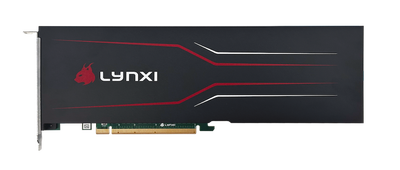
亮相WAIC|靈汐科技LynAInfra(靈琍)類腦超節點重磅登場,重構大模型推理新格局
本屆世界人工智能大會WAIC期間,靈汐科技正式重磅發佈自研類腦超節點集群產品——LynAInfra(靈琍),以全鏈路自研的類腦算力方案,破解當下AI推理行業痛點,為國產高速推理賽道帶來全新選擇。 當前人工智能行業發展遇到明顯桎梏,能耗過高、推理延遲偏高兩大難題,持續阻礙AI推理業務大規模落地。即便GPU產品迭代更新,傳統芯片架構的底層侷限依舊無法被打破;但市場端推理需求迎來爆發,未來推理業務將佔據AI基礎設施市場80%以上份額。 伴隨著Token經濟興起,AI編程加速、AI視頻生成、多智能體協同等高價值場景,對推理時延和使用成本提出更高標準,GPU方案運營開銷大、首token延遲偏高的短板愈發突出,英偉達佈局Groq加碼高速推理賽道,也印證行業正在急切尋找推理架構革新方案。 立足行業現狀,靈汐科技依託自研類腦芯片存算一體、事件驅動、眾核並行的先天特質,發揮低功耗、低時延核心優勢,傾力打造面向高速推理場景的LynAInfra類腦高性能超節點,對標創新版Groq。 相較傳統GPU方案,產品推理能效比提升3-10倍,首token延遲壓縮至幾十到百毫秒級別,兼顧強悍推理性能與出色能耗水平,樹立起“瓦特換比特”的算力全新標杆。 LynAInfra靈琍一體化超節點集群由靈汐科技完全自主研發,依託國內已實現規模化商用落地的類腦芯片構建。LynAInfra128算力櫃搭載128張HP640系列板卡,單櫃級聯數千顆類腦芯片,釋放近100P@FP16算力,整機功耗控制在30kW以內。 依託自研LynxLink高速互聯協議以及統一內存地址編譯技術,產品既支持單機櫃算力提升(Scale up),也可以多機櫃橫向擴展(Scale out),打破單卡、單節點顯存和算力上限,適配不同體量大模型部署任務。設備採用風冷散熱方案,模塊化設計兼容現有智算中心機櫃、供電、網絡配套設施,大幅降低客戶部署改造成本。

千里科技在 WAIC 公佈多項進展:階躍 Step AOS 將應用於汽車,年底推 ASD 5.0
首頁 > 智車之家>汽車新聞 千里科技在 WAIC 公佈多項進展:階躍 Step AOS 將應用於汽車,年底推 ASD 5.0 2026/7/19 22:18:48 來源:IT之家 作者:浩渺 責編:浩渺 評論: IT之家 7 月 19 日消息,在 2026 世界人工智能大會(WAIC 2026)舉辦期間,千里科技公佈多項項目進展。千里科技公佈了未來 ASD 4.

蘋果AI入華,能成功嗎?
蘋果AI入華,能成功嗎?影子備忘錄2026.07.19 20:41 · 來自未知全文5214字00:00 / 14:18蘋果Siri AI,借殼重生。文 | 影子備忘錄2026年7月15日,“網信中國”微信公眾號發佈了一則公告,7款手機端側生成式人工智能服務完成備案。

圍觀WAIC模型「讀心術」!現場火火火火火
< img id="wx_img" src="https://www.qbitai.com/wp-content/uploads/imgs/qbitai-logo-1.png" width="400" height="400"> 圍觀WAIC模型「讀心術」!
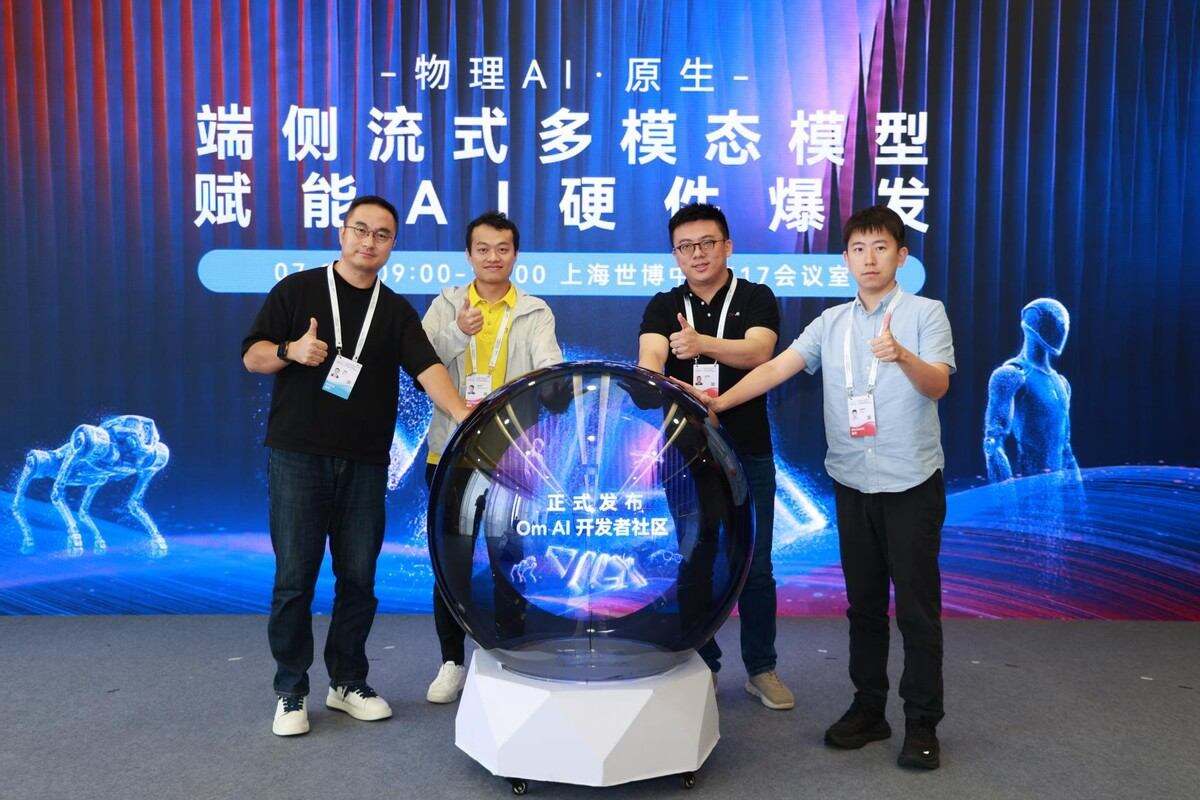
聚焦WAIC|端側原生架構獲產業共識,Om AI聯匯正式發起物理AI協同發展倡議
Om AI聯匯在WAIC分論壇上正式發起《端側多模態基座與AI硬體協同發展倡議》,並同步上線VLX開發者社區,推動端側原生技術標準化與產業生態協同。與會專家認為,端側原生架構更適合物理AI場景的低延遲、離線運作與隱私安全需求,是解決當前產業落地瓶頸的關鍵。