Claude內容標記上線
Anthropic has signed the EU AI Act's Article 50(2) Code of Practice on Transparency of AI-Generated Content, as a provider of both generative AI models and generative AI systems.
This article describes how we’re planning to put those commitments into practice, how marking works, and what its limitations are.We’ll update this article and publish more detailed technical guidance as it becomes available.
Anthropic’s commitments under the EU AI Act’s Code of Practice on Transparency of AI-Generated Content What our marking commitments mean for Claude:New models will mark AI-generated content from day one.
Claude models launched in the EU on or after August 2, 2026 will support machine-readable marking at launch.Generated text will carry embedded watermarks, and generated files will include digitally signed provenance metadata where supported.Marking works everywhere you use Claude.
Marks will apply to output from supported Claude models across Claude Platform (API), Claude, Claude Code, Claude Cowork, and Claude Tag, and wherever Claude is offered, worldwide.Some platforms or features may not support certain marking types.We'll help you detect Claude's marks.
We'll support users and other third parties to detect Claude’s marks, as the Code requires, and we’ll share details in forthcoming documentation.Existing models are in progress.
The law includes a transition period for Anthropic models launched before August 2, 2026, and we’re working to add marking support for those models as well.More details about our marking plans are below.
Machine-readable marks in Claude-generated contentAs AI-generated content becomes commonplace, greater transparency and signals about where content comes from can give people useful context about the information they consume.
To support transparency and comply with our legal obligations, Anthropic is working to include machine-readable marks in content that Claude generates.What’s coveredModels.Claude models launched on or after August 2, 2026 support marking at launch.
We’re also working to add marking support to Claude models released before that date, and we’ll update this article as that becomes available.Products.
Claude markings cover output from supported models everywhere you use Claude, including Claude Platform (API), Claude, Claude Code, Claude Cowork, and Claude Tag.Embedded watermarks will apply to all generated text.Provenance metadata will apply where Claude supports processing files.Cloud partners.
Embedded watermarks will apply when supported Claude models are accessed through AWS, Google Cloud, or Microsoft Foundry.Signed provenance metadata may not be supported on every platform, depending on the features each platform offers.Regions.
Marking will apply to output from supported models wherever Claude is offered, worldwide.How Claude marks contentClaude uses two complementary techniques to mark content generated and processed by Claude: (1) watermarks embedded in text, and (2) signed provenance metadata attached to files.1.
Embedded watermarks in text When a supported Claude model generates text, it weaves an imperceptible watermark directly into the text itself.You won’t see it, and it doesn’t change the meaning, quality, or readability of Claude’s response.
Because the watermark is part of the text, it will travel with the text when it’s copied and pasted elsewhere, and may persist through some editing.Watermarking will be applied at the model level, which means it will be present no matter which Claude product or surface the text comes from.2.
Signed provenance metadata When Claude generates a supported file type, such as a .svg, .png, or .jpg, it will attach signed provenance metadata.
This metadata follows the Coalition for Content Provenance and Authenticity (C2PA) open standard, which is used across the industry to record information about content provenance.
If a signed metadata label is present, it signals that a file was processed by Claude and lets you detect whether the file has been tampered with.Detecting Claude’s marks We’re also working to enable users and other third parties to detect Claude’s embedded watermarks and provenance metadata.
Detection checks whether a piece of text or a file carries a supported Claude mark.If a supported mark is found, it indicates that the content may have been processed by Claude.We’ll share details on detection mechanisms in forthcoming technical documentation.
LimitationsMachine-readable marks provide important signals about content, but it’s worth understanding their limitations across all content types.A detected mark provides a signal that content was processed by Claude, but is not fully conclusive.
Detecting a Claude mark tells you that the content may have been processed by Claude.It does not, on its own, confirm the full provenance of the content.For example: Claude may not be the original author.People often use Claude to proofread, translate, summarize, or convert files.
The output can carry a Claude mark even if the underlying ideas, text, or data originated from another source;The content may have changed after Claude processed it.Marked content may be modified, excerpted, or combined with other material after Claude processed it.
Lack of a detected mark doesn’t mean the content wasn’t AI-generated or processed.
Content generated by Claude may not carry a detectable mark if, for example: It was generated by a model released before marking was supported;The text has been heavily edited, paraphrased, translated, or mixed into other writing;The passage is very short, leaving too little text for a reliable signal;A file’s metadata was stripped through format conversion, re-saving, screenshots, or other means;It was produced through a platform, feature, or file type where a particular marking type wasn’t supported.
If you build with ClaudeIf you deploy Claude in your own product, you should independently assess what Article 50 requires of your products and services.
Consistent with our commitments under the EU Code, our goal is to support you in meeting your own transparency obligations, and we'll share technical guidance on our marking and detection approach as it becomes available.Did this answer your question?
Related ArticlesClaude is providing incorrect or misleading responses.What’s going on?Create and edit files with ClaudeCan I use my Outputs to train an AI model?Log in to your Claude accountGet started with Claude for Government
Related
相關文章

王興興“錯配”梁文鋒?
王興興“錯配”梁文鋒?字母榜2026.08.24 17:44 · 來自河北全文4818字00:00 / 13:21關於世界模型,宇樹和DeepSeek理念分歧明顯。文 | 字母榜宇樹科技的股價還在持續下跌。市值從上市首日的4449億元高點,跌至2400億元,截至8月24日收盤,市值較最高點蒸發了2000億元。然而比股價更值得關注的是,宇樹接下來要怎麼走。8月20日,也就是宇樹上市第二天,王興興出現在北京世界機器人大會論壇。十多分鐘的分享裡,AI成為了高頻詞彙。他談到AI實時生成、實時識別,也談到AI模型投入,更透露了宇樹正在預研的一件事:讓物理AI機器人實現“自進化”。王興興講的每一件事,最後都指向一個關鍵要素:AI大模型。特別是最後一點,王興興說,要實現“物理AI自進化”,要用目前最前沿、最頂尖的AI大模型來驅動。而這恰恰是宇樹目前不太擅長的部分。不過,宇樹找到了DeepSeek。今年8月,兩家公司已經達成合作,圍繞AI大模型與具身智能相關技術展開合作。說到具身智能公司和AI大模型公司的合作,就不得不提當年Figure AI和OpenAI的合作。2024年,OpenAI在投資Figure AI後,雙方簽署了三年合作協議,合作開發人形機器人AI模型。但是僅一年後,FigureAI終止合作,轉向自研。於是問題來了:王興興和梁文鋒,會不會重走Figure AI和OpenAI的老路?01為什麼宇樹需要DeepSeek?對於宇樹來說,過去幾年,模型研發已經有了一些積累,但顯然投入不足,進展緩慢,所以找到一個頂尖的AI大模型公司合作,是一個比較自然的選擇。先來看宇樹目前的模型研發進展。當前,具身智能大模型沒有一個統一的技術路線,但VLA和世界模型,是行業重點探索的兩個方向。行業甚至也在探索兩者融合的技術路線。宇樹也在摸索,採取了“兩條腿走路”的策略,並行研發兩種模型。所謂VLA(視覺
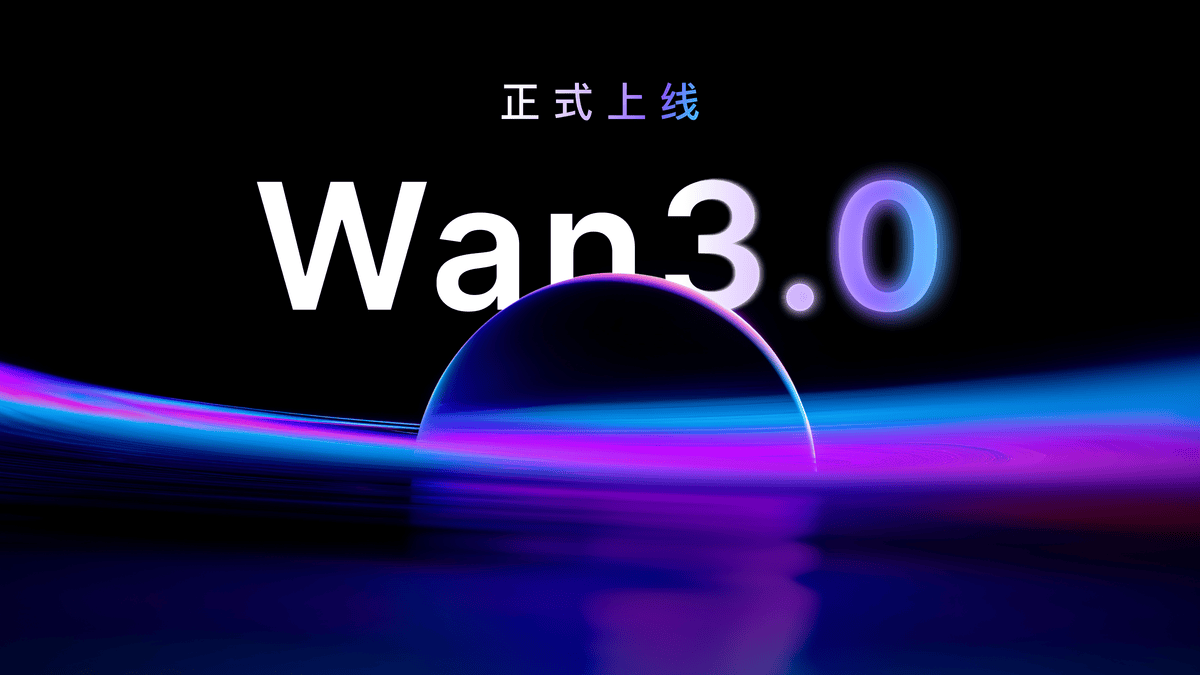
阿里視頻大模型Wan3.0正式上線,行業評價“穩定、真實、有質感”
阿里巴巴影片生成大模型Wan3.0正式上線,單次可生成30秒影片,並首次支援doc、xls、ppt、pdf、md等文檔輸入。企業用戶普遍評價其「穩定、真實、有質感」,能穩定保持角色與場景一致性,並已進入短劇、影視、廣告等生產流程。即日起可於阿里雲百鍊、千問等平台體驗,標準版並推出限時7折優惠。
月之暗面第一代萬億參數多模態模型 Kimi K2.5 官宣月底結束服役
作者:歸瀧 責編:歸瀧 評論: 8 月 24 日消息,月之暗面 Kimi 官方微博今日宣佈,其第一代萬億參數多模態模型 —— Kimi K2.5 本月底即將結束服役。據此前報道,今年 1 月,月之暗面宣佈推出並開源了其最新的 Kimi K2.
消息稱知名 AI 研究員 Luke Metz 離開 OpenAI,加入 Meta 超級智能實驗室
作者:遠洋 責編:遠洋 評論: 感謝網友 華南吳彥祖 的線索投遞!8 月 24 日消息,據知情人士向 Axios 證實,知名 AI 研究員 Luke Metz 已加入 Meta 的超級智能實驗室(Superintelligence Labs)。
Anthropic 最強大模型 Fable 5 遇冷,企業用戶轉向更便宜 AI 產品
作者:遠洋 責編:遠洋 評論: 8 月 24 日消息,據英國《金融時報》報道,Anthropic 的美國客戶正在使用更便宜的替代品來替代其最強大的 AI 工具,這在其預計將實現有史以來規模最大的 IPO 之前,對其高支出的商業模式提出了質疑。

阿里雲視頻生成模型 Wan3.0 正式上線,支持單次生成 30 秒視頻、文檔輸入
作者:遠洋 責編:遠洋 評論: 8 月 24 日消息,阿里雲消息,今天,視頻生成模型 Wan3.0 正式上線。官方稱,Wan3.0 在生成時長、萬能創作、全能參考以及真實世界還原等維度全面升級,單次可生成 30 秒視頻,並首次支持 doc、xls、ppt、pdf、md 等文檔格式輸入,力求準確還原真實世界。