Poolside 發布 Laguna S 2.1:118B 開源權重編碼模型,效能匹敵數倍於其規模的競品
重點摘要
Poolside 推出 Laguna S 2.1,這是一款專為自主編碼設計的 118B 參數開源權重模型。它採用混合專家(MoE)架構,每個 token 僅激活 8B 參數,支援最高 1M token 的上下文視窗,並提供思考與非思考兩種模式。模型權重已以 OpenMDW-1.1 授權在 Hugging Face 上釋出,體積小巧,可單靠一張 NVIDIA DGX Spark 運行。在長時程編碼基準測試中,Laguna S 2.1 能與 DeepSeek-V4-Pro-Max、NVIDIA 的 Nemotron 3 Ultra 以及 Thinking Machines 的 Inkling 等數倍於其規模的模型一較高下。此模型是 Laguna XS 系列的擴展,使用與 XS 2.1 相同的預訓練資料。Laguna S 2.1 的每個 token 僅激活約 6.8% 的參數,總參數為 118B。
Poolside has released Laguna S 2.1, a 118B-parameter open-weight model built for agentic coding. It is a Mixture-of-Experts (MoE) model with 8B activated parameters per token. It supports a context window of up to 1M tokens in both thinking and no-thinking modes. The weights are on Hugging Face under an OpenMDW-1.1 license, and the model is small enough to run on a single NVIDIA DGX Spark. On long-horizon coding benchmarks, Laguna S 2.1 holds its own against models several times its size, including DeepSeek-V4-Pro-Max, NVIDIA’s Nemotron 3 Ultra, and Thinking Machines’ Inkling. Laguna S 2.1 is a scale-up of the Laguna XS family, trained on the same pre-training data as XS 2.1. What is Laguna S 2.1 The model activates roughly 6.8% of its parameters on any given token. All 118B parameters remain resident in memory, but only ~8B route through the network per step. That sparsity is why a mid-size model can behave like a larger one while staying cheap to serve. Poolside team publishes weights in BF16, FP8, INT4, and NVFP4, along with official GGUF and MLX conversions and DFlash draft models. It went from the start of training to launch in under nine weeks. Pre-training began on 22 May 2026 on 4,096 NVIDIA H200 GPUs. It is the first Poolside model where reinforcement learning ran in FP8 precision. (function(){var f=document.getElementById("mtp-x1c-p");window.addEventListener("message",function(e){if(f&&e.source===f.contentWindow&&e.data&&e.data.__mtpH){f.style.height=e.data.__mtpH+"px";}});})(); Performance Laguna S 2.1 scores 70.2% on Terminal-Bench 2.1 with thinking enabled. That places it first among open, disclosed-size models on Poolside’s compiled leaderboard, behind only larger or closed systems. On SWE-Bench Multilingual it scores 78.5%, topping the published table outright. The full comparison Poolside released is below. BenchmarkLaguna S 2.1 (118B-A8B)Tencent Hy3 (295B-A21B)Inkling (975B-A41B)Nemotron 3 Ultra (550B-A55B)DeepSeek-V4-Pro-Max (1.6T-A49B)Kimi K3 (2.8T-A50B)Qwen 3.7 MaxMuse Spark 1.1Claude Fable 5Terminal-Bench 2.170.271.763.856.464.088.374.580.088.0SWE-Bench Multilingual78.575.8–67.776.2–78.3––SWE-Bench Pro (Public)59.457.954.3–55.4–60.661.580.3DeepSWE v1.140.4–––9.069.0–53.370.0SWE Atlas (Codebase QnA)46.2–––27.2––42.2–Toolathlon Verified49.7–45.534.355.9––75.6– The clearest signal is DeepSWE v1.1, which still has real headroom. There, Laguna S 2.1 scores 40.4% against DeepSeek-V4-Pro-Max’s 9.0%, with roughly one-sixth the active parameters. Closed frontier models such as Claude Fable 5 and Kimi K3 still lead on several benchmarks. Poolside’s claim is about the weight class, not the outright top. Trajectories from the final evaluation set is published at trajectories.poolside.ai. Two thinking modes, and where the score comes from Laguna S 2.1 has two modes: off and max, with max enabled by default. In max mode the model sets its own test-time compute budget. Poolside is shipping without user-configurable low/medium/high effort control for now. Max thinking lifts Terminal-Bench 2.1 from 60.4% to 70.2%. It lifts DeepSWE from 16.5% to 40.4%. Those gains cost tokens: DeepSWE trajectories run about 249k completion tokens in thinking mode against 99k without. Poolside team reports coherent, productive reasoning running for hours and hundreds of thousands of tokens. Three published runs Poolside team shared three unedited trajectories to show behavior rather than scores. In one, the model built a working HTML/CSS browser engine from an empty folder. That run took 181 steps across a 50-minute session, with no human intervention, and it validated its own output against headless Chromium. In a second, the model optimized Poolside’s own agent harness. It made the harness 5.2% faster with roughly 71% lower memory allocation, replacing O(n²) string concatenation with buffers. In a third, it re-derived Erdős Problem #397 offline in Perl over 68 minutes, since the sandbox had no Python. That result is an independent rediscovery; GPT-5.2 Pro solved the same problem in January 2026, and Laguna’s knowledge cutoff is November 2025. Can you actually deploy it? Sizing uses the full 118B parameters, not the 8B active count, because every expert stays in memory. At 4-bit (NVFP4 or INT4) the weights need about 59 GB, which fits comfortably on a single DGX Spark’s 128 GB of unified memory. At FP8 they need about 118 GB, still within a single Spark or a single H200. At BF16 they need about 236 GB, which calls for two linked Sparks or a multi-GPU datacenter node. (function(){var f=document.getElementById("mtp-x2c-p");window.addEventListener("message",function(e){if(f&&e.source===f.contentWindow&&e.data&&e.data.__mtpH){f.style.height=e.data.__mtpH+"px";}});})(); Poolside worked with NVIDIA to optimize inference from TRT-LLM serving to NVFP4 on Blackwell, down to a single DGX Spark. It shipped day-one support for vLLM, SGLang, and Ollama. Hosted access runs through OpenRouter, free at 256K context and paid at the full 1M context for $0.10 / $0.20 / $0.01 per 1M input / output / cache-read tokens. The model is also on Baseten, Kilo, Prime Intellect Prime Lab, and ZML. Key Takeaways Laguna S 2.1 is a 118B-total / 8B-active MoE coding model with a 1M-token context, open under OpenMDW-1.1. It scores 70.2% on Terminal-Bench 2.1 and 78.5% on SWE-Bench Multilingual, leading open disclosed-size models. At 4-bit it runs on a single NVIDIA DGX Spark; FP8 fits one Spark or H200, BF16 needs two. Default ‘max thinking’ drives most of the score, at a real token cost (DeepSWE: 16.5% → 40.4%). Trained in under nine weeks on 4,096 H200 GPUs, it is Poolside’s third model in under three months. Sources: Poolside Technical— Introducing Laguna S 2.1, Robert McHardy on X, Poolside on X and Hugging Face model card. The post Poolside releases Laguna S 2.1, a 118B open-weight coding model that matches rivals many times its size appeared first on MarkTechPost.
Related
相關文章
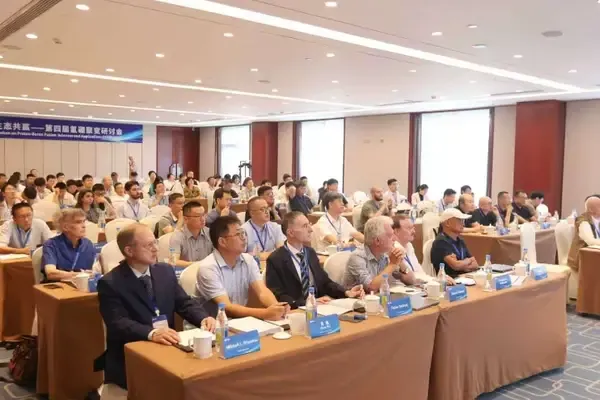
最前線|新奧聚變主辦第四屆氫硼聚變研討會,企業估值已超百億
第四屆氫硼聚變研討會廊坊開幕 新奧聚變估值超百億持續領跑 2026年7月21日,第四屆氫硼聚變研討會在河北廊坊正式啟幕。本屆研討會由北京新奧聚變能源科技有限公司主辦,為期四天,吸引了來自全球11個國家、50餘家科研機構的上百位頂尖專家與會。與會者圍繞氫硼核反應物理、等離子體診斷、聚變技術與材料等前沿議題展開深入交流,共同推動氫硼聚變從科學探索走向工程實踐。作為主辦方,新奧聚變在會議期間披露了一個重大訊息:公司已於本月初完成Pre-A輪融資,投後估值達106億元人民幣,一舉成為當前國內估值最高的民營聚變能源企業。

Agent 賽馬結束,超級工作臺上位
# Agent 赛马终结,超级工作台时代开启:阿里、腾讯、字节的战略收缩与合流 过去一个月,中国科技巨头腾讯、阿里巴巴、字节跳动几乎同步做出了一个耐人寻味的决定:它们没有继续发布新的Agent产品,反而开始系统性地缩减和整合已有的Agent项目。这一连串动作标志着AI Agent领域从“百花齐放的赛马阶段”正式迈入“收敛整合的超级工作台时代”——这是该赛道诞生以来第一次真正形成产品共识,也预示着一场更深刻的产业变革正在加速展开。
英偉達詳解 Vera CPU:專為智能體 AI 構建,88 個 Olympus 核心、1.2 TB/s LPDDR5X 內存
首頁 > 智能時代>人工智能 英偉達詳解 Vera CPU:專為智能體 AI 構建,88 個 Olympus 核心、1.2 TB/s LPDDR5X 內存 2026/7/22 8:20:48 來源:IT之家 作者:故淵 責編:故淵 評論: 感謝IT之家網友 華南吳彥祖 的線索投遞!
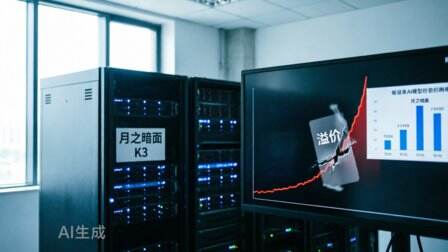
月之暗面K3,撕裂全球AI溢價敘事
月之暗面K3,撕裂全球AI溢價敘事AGI-Signal2026.07.22 08:18 · 來自北京全文5758字00:00 / 15:43英偉達一夜蒸發1111億美元、Anthropic緊急讓利、硅谷掀起路線大辯論。一個2.8萬億參數的開源模型,似乎改寫了全球AI的定價邏輯。上週五深夜,月之暗面發佈Kimi K3。此後的48小時,全球AI行業的平靜被徹底打破。

Kimi“熔斷”,楊植麟也“摸高”
近期,国产大模型明星产品Kimi再次出现“熔断”现象,引发市场关注。这并非Kimi首次因流量激增而触发服务限制,其背后是用户需求的持续爆发和对长文本处理能力的强烈认可。“熔断”作为一种技术层面的被动响应,实际上成为了产品热度的另类注脚,反映出市场对高质量AI助手的渴求已远超预期。 与此同时,月之暗面创始人杨植麟也被外界形容为“摸高”。

上海WAIC深度觀察:模型隱身,Agent瘋野
2026 年世界人工智能大會(WAIC)呈現出一個鮮明的轉變:過去被視為大會核心的各大模型,如今正悄悄從展臺中央退場,取而代之的是集體走向前臺的「智能體」(Agent)。今年的大會現場,模型不再獨佔鰲頭,智能體產品成為各家廠商爭相展示的焦點,也揭示了 AI 產業從技術競賽轉向實際應用的新階段。 在參展陣容方面,昔日被稱為「AI 六小龍」的企業中,有五家到場,分別是 Kimi、階躍星辰、MiniMax、百川智能與零一萬物。值得注意的是,近幾個月聲勢浩大的智譜並未參展,而向來低調的 DeepSeek 也一如既往地缺席。