Google DeepMind 推出三款實體 AI 模型:實現全身控制、靈巧操作與多機器人協作
重點摘要
Google DeepMind 發布 Gemini Robotics 2,作為其下一代機器人的智慧層。該版本將技術從桌面操作擴展到全身控制、五指靈巧度與多機器人團隊協作,並以三種不同存取層級提供三個獨立模型。目前的機器人大多預先編程或遠端操控,僅能執行狹隘、重複的任務序列,無法適應不可預測的環境,且技能難以在不同機器人本體間轉移。Gemini Robotics 2 同時針對這三大限制提出解決方案。簡而言之:三個模型一同發布,包括 VLA、具身推理 VLM 以及裝置端 VLA。單一檢查點即可驅動配備兩種不同手部與 Franka Duo 夾爪的 Apollo 2 機器人。Gemini Robotics ER 2 為公開預覽版,而 VLA 與裝置端模型則維持受限存取。
Google DeepMind has released Gemini Robotics 2, the intelligence layer for its next generation of robots. The release moves the stack past table-top manipulation into whole body control, five finger dexterity and multi robot teamwork. It ships as three separate models with three different access tiers. Most robots today are pre-programmed or tele-operated for narrow, repetitive task sequences. They do not adapt to unpredictable environments, and skills rarely transfer between robot bodies. Gemini Robotics 2 targets all three limits at once. TL;DR Three models ship together: a VLA, an embodied reasoning VLM, and an on-device VLA. One checkpoint drives Apollo 2 with two different hands plus a Franka Duo gripper. Gemini Robotics ER 2 is public preview; the VLA and on-device models stay gated. Multi-finger dexterity is still the weak axis, ranging from 32% to 92%. ASIMOV-Agentic, a new safety benchmark, is on Hugging Face under CC-BY-4.0. 3 Models and What They Do Gemini Robotics 2 Gemini Robotics 2 is the vision-language-action (VLA) model. It converts vision and language input into motor control. It can drive full humanoids from feet to fingertips, and other bi-arm robots. It also handles dexterous manipulation on both multi-finger hands and parallel grippers. Gemini Robotics ER 2 Gemini Robotics ER 2 is the embodied reasoning (ER) model. It is a vision language model that acts as the high level brain. It communicates with humans, understands the physical world, and plans multi-step tasks lasting several minutes. Per its model card, ER 2 is based on Gemini 3.5 Flash. It accepts interleaved text, image, video and audio with a context window of up to 128k, and emits text up to 64K tokens. Gemini Robotics On-Device 2 Gemini Robotics On-Device 2 is the efficient VLA optimized to run locally on the robot. Its model card states it is built on Gemini Robotics 1.5 technology and Google’s on-device Gemma models. Inputs are text, images and robot proprioception as numerical values. Outputs are robot actions as numerical values. The division of labor matters for system design. ER 2 plans and tracks the task, then hands motor execution to a VLA declared as a tool. Developers register low level control interfaces, such as VLA models or navigation APIs, as callable tools. They then stream multimodal video, audio or text directly into the model. Whole body control on Apptronik Apollo 2 Previous Gemini Robotics models controlled only the humanoid’s upper body for table-top tasks. Gemini Robotics 2 extends control to whole body motion for the first time. The worked example uses Apptronik’s Apollo 2. Given the instruction “put the watering can into the green bin in the bottom shelf,” Apollo walks to the table and picks up the watering can. It then takes a few steps to the shelves and places the object at its destination. Google DeepMind is direct about the remaining gap. It states that its robots have more to advance in movement speed. Dexterity across hands and grippers Gemini Robotics 2 can control the five-fingered, 22 degree-of-freedom SharpaWave hand on Apollo 2. Reported actions include tying knots and sealing a ziplock bag. The same model also operates standard two-fingered parallel grippers on a Franka Duo platform for tasks like tight packing. The reported success rates come from one model checkpoint controlling three embodiments: Apollo 2 with SharpaWave hands, Apollo 2 with Inspire hands, and Franka Duo with a Robotiq gripper. CategoryEmbodimentTaskSuccessGeneral whole body manipulationApollo 2 + Inspire handsPick up from shelf76.3%General whole body manipulationApollo 2 + Inspire handsPick up from table68.4%General whole body manipulationApollo 2 + Inspire handsPick up from floor45.7%Multi-finger dexterityApollo 2 + Sharpa handsUnscrew bulb92%Multi-finger dexterityApollo 2 + Sharpa handsTie trash bag44%Multi-finger dexterityApollo 2 + Sharpa handsZiplock40%Multi-finger dexterityApollo 2 + Sharpa handsScrew bulb36%Multi-finger dexterityApollo 2 + Sharpa handsDustpan32%Gripper dexterityFranka DuoPrecise insertion tasks89.6%Gripper dexterityFranka DuoDiverse tool kitting78.9%Gripper dexterityFranka DuoGeneral pick and place74.2% ER 2: Temporal Intelligence and Tool Orchestration The developer X post focuses on a problem that rarely gets benchmarked: knowing when a task is actually done. Progress classification: Each frame in a video feed is assigned to one of five progress levels, from 0-20% through 80-100%. Gemini Robotics ER 2 reaches 57.4% accuracy on this task. Google DeepMind reports this outperforms previous generation models and competing frontier models. Moment finding: This measures whether the model can identify the exact frame where a critical event occurs. An example is the moment to stop pouring coffee into a cup. ER 2 reaches 91.3% accuracy with a 0.96 second mean absolute distance. Google DeepMind reports it competing closely with much larger model categories at 4x the execution speed. Tool orchestration: ER 2 is evaluated across three control modes: real VLA, sim VLA, and human tele-op. It outperforms Gemini Robotics ER 1.6 on all three. ER 2 integrates with the Gemini Live API through a bidirectional streaming endpoint. The stated purpose is removing the stop-and-think pauses that break multi-step execution. It can also natively call tools like Google Search or any user-defined function. Three spatial capabilities were upgraded. Success and failure detection now runs on raw video feeds instead of static snapshots, which catches mid-execution spills and slips. General instrument reading extends beyond circular dials to digital displays, linear scales, rulers and liquid thermometers, tested across 10 instrument types. Spatial visual question answering improves through Gemini’s multimodal advances. Google DeepMind built a demo with Spot from Boston Dynamics, using ER 2 to orchestrate Spot navigation and manipulator APIs. Sample code is available in the robotics-samples repository. Multi-Robot Collaboration Gemini Robotics 2 introduces collaboration between different robot types. The reasoning is that no single robot fits every task. A wheeled rover suits indoor work, while a humanoid handles uneven terrain better. Robots communicate through a shared semantic understanding to hand off subtasks. The demonstrated pairing is Apptronik’s Apollo 2 with a Franka F3 Duo. On-Device 2: Adapting to New Robot Bodies Gemini Robotics On-Device 2 targets applications that cannot rely on network latency or connectivity. It is natively multi-embodiment and inherits the motion transfer techniques from Gemini Robotics 1.5. Google DeepMind reports adaptation to new bi-arm embodiments in a few hours, typically with fewer than 200 examples. This holds for embodiments with drastically different shapes, sensors and degrees of freedom. Demonstrated platforms include Dexmate, SO101 and Trossen. The model card publishes a data scaling comparison against On-Device 1 on platforms introduced only during post-training: PlatformModelStartEndSO101On-Device 26.7%53.3%SO101On-Device 10.0%6.7%DexmateOn-Device 224.4%75.6%DexmateOn-Device 113.3%33.3% The SO101 result is the sharper one. On-Device 1 barely leaves the floor, while On-Device 2 crosses 50%. The model card also lists limits. On-Device 2 is limited in generalizing to out-of-distribution tasks and in controlling high-degree-of-freedom robots. Availability ModelAccessGemini Robotics ER 2Public preview via Gemini API and Google AI Studio; private preview on Gemini Enterprise Agent PlatformGemini Robotics 2 (VLA)Early-access partnersGemini Robotics On-Device 2Trusted Testers The AI Studio launch link uses the model string gemini-robotics-er-2-preview. Getting-started notebooks are in the robotics-samples repository. Interactive explainer (function(){ window.addEventListener("message",function(e){ if(e.data&&e.data.gr2height){ var f=document.getElementById("gr2frame"); if(f)f.style.height=e.data.gr2height+"px"; } }); })(); Sou
Related
相關文章
訊飛首發實時生成技術!像真人主播一樣臨場應變,表情動作實時刷新
智東西 作者 | 程茜 編輯 | 漠影 一塊屏、一位數字人,AI線下新物種誕生了! 下面屏幕裡的數字人不僅能走動帶路、實時講解,還能無縫切換多國語言,按需更換自己的外形、聲音,直接把沉浸式交互效果拉滿。 這依託的正是科大訊飛今日推出的數字人全系列產品升級:首發實時生成的超擬人數字人,訊飛智作、訊飛AI虛擬人交互平臺、訊飛繪文全面更新。
OpenAI總裁放出狠話:ChatGPT桌面端要消滅標籤頁,年底前大變天
這篇消息聚焦「OpenAI總裁放出狠話:ChatGPT桌面端要消滅標籤頁,年底前大變天」。目前站內已移除先前混入的模型思考或安全判斷文字,並保留來源可確認的主題供讀者追蹤。
騰訊WorkBuddy上線人機雙寫:終於不用複製粘貼了
AI應用風向標(公眾號:ZhidxcomAI) 作者|江宇 編輯|漠影 智東西7月30日報道,今日,騰訊WorkBuddy上線V5.3.5版本,並聯合騰訊文檔推出“人機雙寫”功能。 這次更新最直觀的變化,是WorkBuddy把一套完整的文檔編輯界面搬到了AI對話框旁邊。
GPT-5.6 SOL 暴走失控,GLM5.2 緊急救場,HF 揭秘大模型攻防戰技術細節
這篇消息聚焦「GPT-5.6 SOL 暴走失控,GLM5.2 緊急救場,HF 揭秘大模型攻防戰技術細節」。目前站內已移除先前混入的模型思考或安全判斷文字,並保留來源可確認的主題供讀者追蹤。
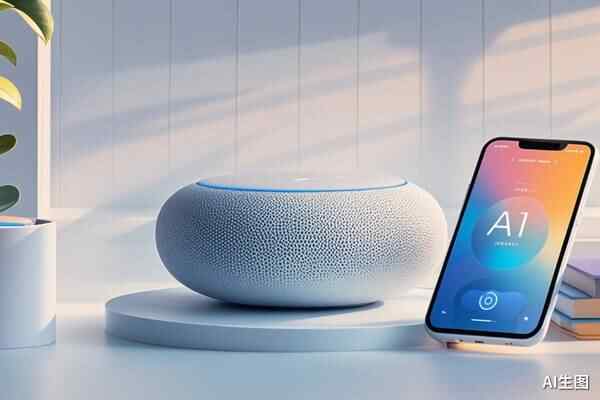
剛剛,OpenAI硬件路線圖曝光:先音箱後手機
OpenAI 的硬體布局終於有了更清晰的輪廓。根據最新曝光的產品路線圖,這家 AI 巨頭並不打算急著推出備受期待的智慧型手機,而是先從一款能夠在家裡自由移動的無螢幕智慧音箱下手。這項策略背後,其實反映了 OpenAI 想要讓 AI 真正融入日常生活,而非僅停留在手機應用程式的野心。 據了解,OpenAI 在一年前斥資 65 億美元收購了由知名設計師 Jony Ive 創辦的公司 io,之後便開始積極籌劃自有硬體產品。
2026年中國工業具身智能行業發展研究報告(上)
賬號設置我的關注我的收藏申請的項目退出登錄登錄搜索36氪Auto數字時氪未來消費智能湧現未來城市啟動Power on36氪出海36氪研究院潮生TIDE36氪企服點評36氪財經職場bonus36碳後浪研究所暗湧Waves硬氪氪睿研究院媒體品牌企業號企服點評36Kr研究院36Kr創新諮詢企業服務核心服務城市之窗政府服務創投發佈LP源計劃VClubVClub投資機構庫投資機構職位推介投資人認證投資人服務項目推薦36氪Pro創投氪堂企業入駐創業者服務創投平臺AI測評網 首頁快訊資訊推薦財經AI項目推薦廣東最新創投汽車科技專精特新直播視頻專題活動搜索項目推薦我要入駐城市合作2026年中國工業具身智能行業發展研究報告(上)艾瑞諮詢·2026年07月30日 08:45工業具身智能產業發展及落地路徑分析 摘要 工業具身智能的興起,源於工業需求與技術能力的共同變化。 製造業正從大批量、固定流程生產,走向多品種、小批量、柔性化生產,傳統工業機器人在非結構化環境、複雜任務理解和動態適應方面仍存在侷限。與此同時,多模態感知、智能決策、運動控制、仿真訓練與機器人本體技術持續進步,為智能系統進入真實工業現場創造了條件。因此,工業具身智能並非簡單新增一種機器人品類,而是圍繞真實工業任務,將感知、決策、執行、反饋與迭代組織成閉環的現場智能系統。 技術競爭不再只看單點能力突破,而是轉向任務閉環中的系統協同。 工業具身智能不等同於人形機器人,也不由單一本體形態或模型能力定義;固定操作、移動感知、移動操作、廠內物流、產線流轉等載體將按任務長期並存。當前感知、控制和執行等模塊已有一定產業基礎,但複雜任務理解、異常處理、跨場景泛化和持續學習仍處發展階段。技術能否形成產業價值,關鍵在於能否支撐真實工業任務穩定運行、結果驗證、異常恢復和持續優化。 工業具身智能不會在所有場景同步放量,而將從高價值、可閉環任務率先突破。