使用 NVIDIA NeMo Automodel 與 🤗 Diffusers 大規模微調視訊與影像模型
重點摘要
本篇文章由 NVIDIA 與 Hugging Face 合作撰寫,感謝 Hugging Face 的 Sayak Paul 在整合工作上的貢獻及共同撰稿。Diffusion 模型驅動了過去兩年來最令人振奮的開源專案,例如用於文字生成影像的 FLUX.1-dev,以及用於文字生成視訊的 Wan 2.1 與 HunyuanVideo。🤗 Diffusers 程式庫已成為這些模型開發與部署的核心工具。本文將介紹如何結合 NVIDIA NeMo Automodel 與 🤗 Diffusers,實現大規模的視訊與影像模型微調,幫助企業級應用更有效率地客製化生成式 AI 模型。
Back to Articles Fine-tune video and image models at scale with NVIDIA NeMo Automodel and 🤗 Diffusers Enterprise + Article Published July 17, 2026 Upvote 1 Pranav Prashant Thombre pthombre Follow nvidia linnan wang linnanwang Follow nvidia Alexandros Koumparoulis akoumpa Follow nvidia Wenwen Gao wgao2021 Follow nvidia Sylendran Arunagiri Sylendran95 Follow nvidia Bernard Nguyen bernardwin Follow nvidia A joint post from NVIDIA and Hugging Face. Special thanks to Sayak Paul from Hugging Face for their contributions to the integration work and for co-authoring this blog. Diffusion models power some of the most exciting open-source releases of the last two years — such as FLUX.1-dev for text-to-image and Wan 2.1 and HunyuanVideo for text-to-video. The 🤗 Diffusers library has become the de facto home for these models, giving researchers and builders a single, consistent interface for inference, adaptation, and pipeline composition. In addition, training and fine-tuning diffusion models are also on the rise, requiring utilities that offer memory-efficient sharding, latent caching, multiresolution bucketing, and configurations that scale gracefully from one GPU to hundreds. To cater to these technical demands, we offer the NVIDIA NeMo Automodel open-source library. Today, we're highlighting the collaboration between NVIDIA and Hugging Face that brings production-grade, distributed diffusion training to any Diffusers-format model on the Hugging Face Hub — with no checkpoint conversion and no model rewrites for any new model. The integration is documented in the Diffusers training guide and is fully open source under Apache 2.0. Table of contents What is NeMo Automodel? Supported diffusion models What this collaboration unlocks A look at the fine-tuning workflow 1. Pre-encode the dataset 2. Launch training with the existing FLUX YAML 3. Generate from the fine-tuned checkpoint 4. Performance Other Finetuned/LoRA examples Try it today Coming next: Pythonic recipe APIs Resources What is NeMo Automodel? NeMo Automodel is an open-source PyTorch DTensor-native training library, part of the NVIDIA NeMo framework, built around two design principles that matter for the Diffusers ecosystem: Hugging Face native. Point pretrained_model_name_or_path at any Diffusers model ID on the Hub and start training. NeMo Automodel uses Diffusers model classes (e.g. WanTransformer3DModel) for loading and Diffusers pipelines (WanPipeline) for generation. Checkpoints round-trip cleanly back into the Diffusers ecosystem. One program, any scale. The recipes and training scripts can be easily modified to suit training at any scale. Parallelism is a configuration choice, not a code rewrite — switch between FSDP2, tensor parallel, expert parallel, context parallel, and pipeline parallel by declaring configurations, not rewriting models. AutoModel currently supports flow-matching models only. Under the hood, it uses flow matching as the training objective, with latent-space training (via pre-encoded VAE outputs) and multiresolution bucketed dataloading to accelerate throughput. Supported diffusion models NeMo Automodel integration ships with ready-to-use fine-tuning recipes for the open diffusion models below. The list reflects the recipes currently in examples/diffusion/finetune. Model Hugging Face ID Task Parameters LoRA recipe Wan 2.1 T2V 1.3B / 14B Wan-AI/Wan2.1-T2V-1.3B-DiffusersWan-AI/Wan2.1-T2V-14B-Diffusers Text-to-Video 1.3B (fits on a single 40GB A100) / 14B Yes Wan 2.2 T2V A14B Wan-AI/Wan2.2-T2V-A14B-Diffusers Text-to-Video 27B total (MoE), 14B active per step No FLUX.1-dev black-forest-labs/FLUX.1-dev Text-to-Image 12B Yes FLUX.2-dev black-forest-labs/FLUX.2-dev Text-to-Image 32B Yes HunyuanVideo 1.5 hunyuanvideo-community/HunyuanVideo-1.5-Diffusers-720p_t2v Text-to-Video 13B Yes Qwen-Image Qwen/Qwen-Image Text-to-Image 20B (MMDiT) Yes What this collaboration unlocks For Diffusers users, the practical gains break down into a few concrete capabilities. No checkpoint conversion. Pretrained weights from the Hub work out of the box. There's no separate "training format" to convert to, then convert back. Your fine-tuned checkpoint loads directly into a DiffusionPipeline for inference, or back to the Hub for sharing. Downstream tools — quantization, compilation, LoRA adapters, custom samplers — all keep working. Fast path to new model support. When a new diffusion model lands in Diffusers, enabling it in NeMo Automodel takes a small, contained code addition — a data preprocessing handler and a model adapter — rather than a full custom training script. The rest of the recipe stack (FSDP2, bucketed dataloading, checkpointing, generation) carries over unchanged, and the same YAML-driven workflow applies. Full and parameter-efficient fine-tuning. Both full fine-tuning and LoRA-style PEFT are supported, so you can choose between maximum quality (full FT on a large cluster) or maximum efficiency (LoRA on a single node). The same recipe structure handles both. Scalable training that goes beyond what built-in scripts offer. NeMo Automodel adds sharding schemes such as FSDP2, tensor, context, and pipeline parallelisms, multi-node orchestration (SLURM today, Kubernetes coming), and multiresolution bucketing. These capabilities make training larger models like FLUX.1-dev (12B) and HunyuanVideo (13B) possible. A look at the fine-tuning workflow In this section, we walk through the typical workflow for fine-tuning any of the supported models. The recommended way to install Automodel is the NeMo Automodel Docker container (nvcr.io/nvidia/nemo-automodel:26.06), which ships with PyTorch, TransformerEngine, and other CUDA-compiled dependencies pre-built. Alternatively, install with pip3 install nemo-automodel or from source (pip3 install git+https://github.com/NVIDIA-NeMo/Automodel.git); see the installation guide for all options. This guide walks through a full-transformer fine-tune of FLUX.1-dev on the 78-card Rider–Waite tarot dataset, then generating from the resulting checkpoint. It reuses the checked-in YAML configs and applies run-specific settings as command-line overrides, so no new config files are required. 1. Pre-encode the dataset The diffusion recipe consumes cached VAE latents and text embeddings instead of encoding source images during every training step. Stream the 78 Rider–Waite images directly from Hugging Face and distribute preprocessing across all visible GPUs: uv run --locked --no-default-groups \ --extra diffusion \ --extra diffusion-media \ python -m tools.diffusion.preprocessing_multiprocess image \ --dataset_name multimodalart/1920-raider-waite-tarot-public-domain \ --dataset_media_column image \ --dataset_caption_column caption \ --dataset_streaming \ --max_images 78 \ --output_dir /cache/flux_tarot \ --processor flux \ --model_name black-forest-labs/FLUX.1-dev \ --max_pixels 245760 The captions already contain the trtcrd trigger token. With this pixel budget and the dataset's portrait aspect ratio, preprocessing assigns the samples to the 384×640 bucket used by the showcase run. For image training, preprocessing produces .pt cache files and sharded metadata: /cache/flux_tarot/ ├── 384x640/ │ ├── <hash1>.pt │ └── ... ├── metadata_shard_0000.json ├── metadata.json └── _hf_dataset/ └── images/ 2. Launch training with the existing FLUX YAML Use examples/diffusion/finetune/flux_t2i_flow.yaml directly. The YAML already selects FLUX.1-dev, full transformer fine-tuning, the FLUX flow-matching adapter, an effective batch size of 32, and eight-way FSDP2. Supply the tarot-specific paths and settings as command-line overrides: uv run --locked --no-default-groups --extra diffusion \ torchrun --nproc-per-node=8 \ examples/diffusion/finetune/finetune.py \ -c examples/diffusion/finetune/flux_t2i_flow.yaml \ --model.transformer_engine_fp8 false \ --data.dataloader.cache_dir /cache/flux_tarot \ --data.dataloader.base_resolution '[384,640]' \ --lr_scheduler.lr_decay_style constant \ --lr_scheduler.lr_warmup_steps 20 \ --step_scheduler.max_steps 200 \ --step_scheduler.ckpt_every_steps 50 \ --checkpoint.checkpoint_dir /tmp/flux_tarot/checkpoints/full \ --checkpoint.save_consolidated true \ --seed 2026 The run produces checkpoints at steps 50, 100, 150, and 200. The final checkpoint is labeled epoch_66_step_199; the label is zero-based even though it represents the completed 200th optimizer step. 3. Generate from the fine-tuned checkpoint Use the existing FLUX generation YAML and point model.checkpoint at the complete training checkpoint: uv run --locked --no-default-groups --extra diffusion \ python examples/diffusion/generate/generate.py \ -c examples/diffusion/generate/configs/generate_flux.yaml \ --model.checkpoint /tmp/flux_tarot/checkpoints/full/epoch_66_step_199 \ --inference.height 640 \ --inference.width 384 \ --inference.prompts '["a trtcrd of an astronaut tending a rose garden on Mars, \"the gardener\""]' \ --output.output_dir /tmp/flux_tarot/generations/full/step_200 \ --seed 2026 Include trtcrd to invoke the learned tarot style. For a control comparison, keep the seed and scene fixed but omit the trigger: uv run --locked --no-default-groups --extra diffusion \ python examples/diffusion/generate/generate.py \ -c examples/diffusion/generate/configs/generate_flux.yaml \ --model.checkpoint /tmp/flux_tarot/checkpoints/full/epoch_66_step_199 \ --inference.height 640 \ --inference.width 384 \ --inference.prompts '["an astronaut tending a rose garden on Mars, \"the gardener\""]' \ --output.output_dir /tmp/flux_tarot/generations/control \ --seed 2026 Results At step 200, the triggered astronaut prompts retain their requested content while acquiring a cream, red, and black vintage palette, heavy ink contours, flat color fields, aged-paper tones, and allegorical card composition. The untriggered astronaut remains photographic, demonstrating that the learned effect is substantially associated with trtcrd rather than replacing the base model globally. Prompt (seed) Baseline Fine-tuned (step 200) Astronaut tending a rose garden on Mars (seed 2026) Astronaut in a moonlit garden on Mars (seed 2028) Astronaut planting a sapling beneath two moons (seed 2029) 4. Performance All measurements were collected on one node with 8× NVIDIA H100 80GB GPUs. Results are means ± sample standard deviation over three steady-state 10-step windows. Text-to-image — 512×512(see if seconds can be aligned) Model Training Parallelism GBS / LBS Step time Images/s Images/s/GPU Peak allocated/GPU FLUX.1-dev Full FSDP2 32 / 4 0.902 ± 0.039 s 35.51 ± 1.55 4.44 ± 0.19 63.88 GiB FLUX.1-dev LoRA r64 DDP 48 / 6 0.894 ± 0.008 s 53.73 ± 0.48 6.72 ± 0.06 67.43 GiB Qwen-Image Full FSDP2 40 / 5 0.974 ± 0.075 s 41.21 ± 3.06 5.15 ± 0.38 53.55 GiB Qwen-Image LoRA r64 DDP 24 / 3 0.515 ± 0.006 s 46.63 ± 0.54 5.83 ± 0.07 66.33 GiB Text-to-video — 512×512×49 frames Each sample is one 49-frame video clip. Model Training GBS / LBS Activation checkpointing Step time Clips/s Clips/s/GPU Peak allocated/GPU Wan 2.1 1.3B Full 8 / 1 Off 0.942 ± 0.038 s 8.50 ± 0.35 1.06 ± 0.04 6.09 GiB Wan 2.1 14B Full 8 / 1 On 3.798 ± 0.017 s 2.107 ± 0.006 0.263 ± 0.006 33.35 GiB Wan 2.1 14B LoRA r64 16 / 2 On 7.585 ± 0.014 s 2.110 ± 0.000 0.263 ± 0.000 24.07 GiB Wan 2.2 A14B, high-noise Full 8 / 1 On 4.628 ± 0.031 s 1.730 ± 0.010 0.217 ± 0.006 23.57 GiB HunyuanVideo 1.5 Full 8 / 1 On 5.926 ± 0.046 s 1.350 ± 0.010 0.170 ± 0.000 15.90 GiB HunyuanVideo 1.5 LoRA r64 8 / 1 On 5.575 ± 0.006 s 1.433 ± 0.006 0.180 ± 0.000 10.58 GiB Measurement details Hardware: 8× H100 80GB HBM3, fully NVLink-connected. Image dataset: lambda/naruto-blip-captions, 256 cached samples. Video dataset: svjack/Lelouch_Vi_Britannia_FramePack_First_Last_Frame_Video_Captioned, 112 cached samples. Full batches were enforced with drop_last=true. Checkpoint writes were disabled. Step time includes dataloading, forward, backward, gradient clipping, optimizer, and scheduler work. Memory is peak PyTorch CUDA allocator us
Related
相關文章

WAIC首日,無論你是否來了,都應該知道這些變化
WAIC首日,無論你是否來了,都應該知道這些變化TechHorizon2026.07.17 22:52 · 來自廣西全文8139字00:00 / 24:12AI技術創新進入到群體性突破,AI產業創新也進入到前所未有的活躍期。AI,正在從聊天升級到幹活。這就是我們探完2026年WAIC展會第一天之後,最直觀的感受。這是一年一度中國AI領域最重要的盛會,沒有之一。

獵聘數據發佈《2026人工智能行業人才供需趨勢洞察》:AI不是“青春行業”,行業人才流向產業集群
智東西(公眾號:zhidxcom) 作者 | ZeR0 編輯 | 漠影 智東西7月17日報道,今日,在世界人工智能大會WAIC 2026期間,獵聘大數據研究院發佈《2026人工智能行業人才供需趨勢洞察》。基於2026年上半年平臺招聘與求職全量數據,報告從崗位需求、人才結構、薪資變化、城市流動和跨專業遷移等維度,描繪AI產業進入規模化應用階段後的人才新格局。

國家超算互聯網招募科學智能體開發者,可享受全國首個十萬卡 AI 超集群算力
首頁 > 智能時代>人工智能 國家超算互聯網招募科學智能體開發者,可享受全國首個十萬卡 AI 超集群算力 2026/7/17 22:03:59 來源:IT之家 作者:浩渺 責編:浩渺 評論: IT之家 7 月 17 日消息,7 月 17 日,在 2026 世界人工智能大會(WAIC)上,國家超算互聯網發佈了科學計算智能體生態共創與開發者招募合作計劃(以下簡稱“智能體共創計劃”)。

達卯科技WAIC首發算電協同2.0,實現智算中心全生命週期綠電智慧運營
智東西(公眾號:zhidxcom) 作者 | ZeR0 編輯 | 漠影 智東西7月17日報道,今日,世界人工智能大會WAIC 2026開幕,在“構築AI算力與綠色能源融合發展新範式”算電協同專題研討會上,達卯科技全新推出算電協同2.
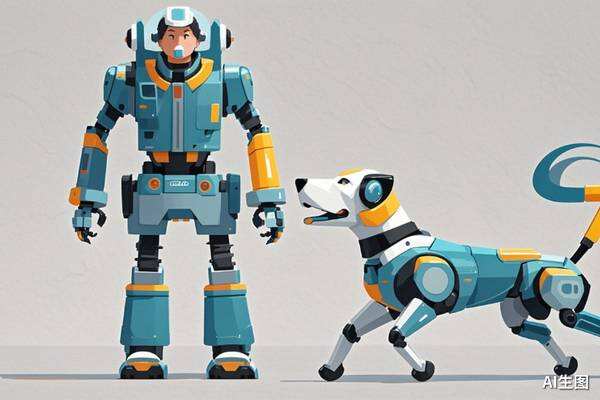
全球首個“變形金剛”,中國企業造出來了
中國企業上緯新材旗下啟元機器人發布全球首款可變形個人機器人啟元T1,可在人形與四足形態間切換。該產品由智元機器人聯合創始人彭志輝關聯公司打造,但尚未公布售價與正式開賣時間,市場驗證仍待觀察。

什麼國產模型,都能跟Fable 5掰手腕了?全方位實測Kimi K3
Kimi 昨晚發表了旗下迄今為止能力最強的模型 Kimi K3,並宣布將於 7 月 27 日全面開源,同時釋出技術報告。消息一出,立刻在 AI 圈引起轟動,社群平台充斥著對其性能的驚嘆與討論。Kimi 官方在發佈公告時,還特意以文言文「犯其至難而圖其至遠者,發之以勇,守之以專,達之以強」開場,這種充滿文化底蘊的開場白,也讓不少網友聯想到其他大模型公司近期類似的手法,引發熱議。 更令人關注的是,根據 Arena.