Best Open Speech Recognition (ASR) Models in 2026: WER, Languages, Latency, and License Compared
重點摘要
Open speech recognition stopped being a Whisper monoculture some time in the last twelve months. In March 2026 Cohere released Transcribe, a 2B Apache 2.0 model that took the top of the Hugging Face Open ASR Leaderboard at 5.42% average word error rate. Five weeks later IBM shipped Granite Speech 4.1 2B at 5.33%. Since then ARK-ASR-3B and MOSS-Transcribe-preview-2B have posted lower numbers still. The top of that leaderboard is now separated by less than one WER point. That has a specific consequence for anyone choosing a model: rank is no longer the deciding variable. License, language coverage, streaming support, and cost per audio-hour are. This roundup compares the field on all four. (function(){ window.addEventListener("message", function(e){ if(!e.data || typeof e.data.mtpAsrHeight !
Open speech recognition stopped being a Whisper monoculture some time in the last twelve months. In March 2026 Cohere released Transcribe, a 2B Apache 2.0 model that took the top of the Hugging Face Open ASR Leaderboard at 5.42% average word error rate. Five weeks later IBM shipped Granite Speech 4.1 2B at 5.33%. Since then ARK-ASR-3B and MOSS-Transcribe-preview-2B have posted lower numbers still. The top of that leaderboard is now separated by less than one WER point. That has a specific consequence for anyone choosing a model: rank is no longer the deciding variable. License, language coverage, streaming support, and cost per audio-hour are. This roundup compares the field on all four. (function(){ window.addEventListener("message", function(e){ if(!e.data || typeof e.data.mtpAsrHeight !== "number") return; var f = document.getElementById("mtp-asr-explorer"); if(f) f.style.height = e.data.mtpAsrHeight + "px"; }); })(); First, a problem with the leaderboard number everyone quotes The Open ASR Leaderboard average is not a single fixed quantity, and the models currently listed side by side were not all scored the same way. Cohere’s 5.42% is an average across eight English test sets, including TED-LIUM. That checks out: AMI 8.13, Earnings-22 10.86, GigaSpeech 9.34, LibriSpeech clean 1.25, LibriSpeech other 2.37, SPGISpeech 3.08, TED-LIUM 2.49, VoxPopuli 5.87 averages to exactly 5.42. ARK-ASR-3B’s 5.04% is an average across seven sets. TED-LIUM is absent. The MOSS-Transcribe-preview-2B card states this explicitly: TED-LIUM is not currently part of the leaderboard run and is therefore excluded. TED-LIUM is one of the easier sets in the suite, so dropping it raises the average. Recompute Cohere’s published per-dataset scores over the same seven sets ARK reports and Cohere lands at 5.84, not 5.42. Do the same to Granite Speech 4.1 2B and it moves from 5.33 to 5.65. On a like-for-like basis ARK’s lead is larger than the headline numbers imply, not smaller — but the point is that you cannot subtract one published figure from another and get a meaningful answer. Two further caveats belong on the same page: Some scores are openly leaderboard-fitted: The MOSS-Transcribe-preview-2B card states the model was fine-tuned with reinforcement learning on the Open ASR Leaderboard training splits. That is disclosed, which is more than most, but it means the score measures the benchmark rather than the capability. Private-track data reorders the board: Appen contributed held-back evaluation sets covering Australian, Canadian, Indian, and American accents in scripted and conversational conditions. When those private sets are toggled on, zoom/scribe_v1 moves from #4 to #1 and the public-leaderboard leader drops a position. Models tuned for clean read speech degrade disproportionately on spontaneous conversational audio. Use the leaderboard to build a shortlist. Do not use it to pick a winner. The accuracy tier Cohere Transcribe (2B, Apache 2.0, 14 languages) is the model that actually shipped into production. It has been downloaded over 620,000 times in the past month and has runtime support across transformers, vLLM, mlx-audio for Apple Silicon, a Rust port, and a WebGPU build. It is a Conformer encoder with a lightweight Transformer decoder, trained from scratch. Cohere also ran human preference evaluation, where trained annotators scored transcripts for meaning preservation, hallucination, and named entities: a 61% average win rate, 78% against IBM Granite 4.0 1B Speech and 64% against Whisper large-v3. The limitations section of its model card is unusually honest and should be read before committing. There is no automatic language detection, no timestamps, and no diarization, and the model is eager to transcribe silence, so Cohere recommends prepending a VAD or noise gate. The repo is also gated behind a contact-information agreement despite the Apache 2.0 license. Granite Speech 4.1 2B (2B, Apache 2.0) is the better pick if you need capability rather than a lower number. Six languages for ASR plus bidirectional speech translation, keyword-list biasing for names and jargon, punctuation and truecasing including German noun capitalization. Trained on 174,000 hours. RTFx 231.29. IBM also ships two siblings: -plus adds speaker-attributed ASR and word-level timestamps, and -nar is discussed below. Canary-Qwen-2.5B (2.5B, CC-BY-4.0, English) pairs a FastConformer encoder with a Qwen3-1.7B decoder and runs in two modes — pure transcription, or LLM mode where the decoder summarizes and answers questions about the transcript. 5.63% WER at RTFx 418. Note that AMI was oversampled to roughly 15% of training data, which biases output toward verbatim disfluency-preserving transcripts. That is a feature for legal work and a nuisance for meeting notes. Qwen3-ASR-1.7B (Apache 2.0) covers 52 languages and dialects — 30 languages plus 22 Chinese dialects — at 5.76%. It ships with a full inference toolkit and a separate forced-alignment model for timestamps in 11 languages. For anything touching Mandarin or Chinese regional speech this is the obvious starting point. The throughput tier Accuracy across the top of the field now varies by about one WER point. Throughput varies by more than an order of magnitude, which means throughput usually decides the invoice. Parakeet TDT 0.6B v3 (0.6B, CC-BY-4.0) is the throughput leader among multilingual open models at RTFx 3332.74 across 25 European languages with automatic language ID, handling up to 24 minutes in a single pass on an A100 80GB. It costs 6.32% WER — roughly one point more than Granite 4.1 2B for roughly fourteen times the audio per GPU-second. Granite Speech 4.1 2B-NAR is the more interesting engineering result. It is non-autoregressive: it edits a CTC hypothesis in a single forward pass using a bidirectional LLM, reaching RTFx ~1820 on one H100 at batch size 128. It gives up Japanese, speech translation, and keyword biasing to get there. Qwen3-ASR-0.6B keeps all 52 languages and reaches 2000× throughput at concurrency 128. The streaming tier A batch WER seems to be the wrong test for a streaming model, and the leaderboard scores them anyway. Voxtral Realtime sits at 7.68% and Kyutai STT 2.6B at 6.40% — both below Whisper — and neither number tells you anything useful about their intended use. Voxtral Mini 4B Realtime 2602 (Apache 2.0, 13 languages) is a 3.4B language model along with a 970M causal audio encoder trained from scratch, with sliding-window attention on both halves for effectively unbounded streaming. Transcription delay is configurable in 80ms steps from 80ms to 1200ms, plus a standalone 2400ms option; Mistral recommends 480ms as the sweet spot and reports that at that setting it matches leading offline open models. It runs on a single 16GB GPU and had day-0 vLLM Realtime API support. Kyutai STT (CC-BY-4.0) comes in two shapes: a ~1B English/French model with a 0.5s delay and a built-in semantic voice activity detector, and a 2.6B English-only model with a 2.5s delay. For voice agents, the semantic VAD matters more than the transcription delay — it predicts when the speaker has actually finished, which is what governs perceived turn-taking latency. An H100 serves 400 concurrent streams in real time. The coverage tier Meta’s Omnilingual ASR (Apache 2.0, corpus CC-BY) is not competing on WER and should not be evaluated as if it were. It covers 1,600+ languages natively and extends to 5,400+ through zero-shot in-context learning, built on a wav2vec 2.0 encoder scaled to 7B and pre-trained on about 4.3M hours. The 7B LLM-ASR variant achieves character error rate below 10% on 78% of supported languages, including 500+ never previously served by any ASR system. Encoder sizes run from 300M to 7B. Meta also released the Omnilingual ASR Corpus covering 350+ underserved languages. Whisper large-v3 (1.55B, MIT, 99 languages) has been overtaken on accuracy by roughly ten open models, and it remains the correct default for a large
Related
相關文章
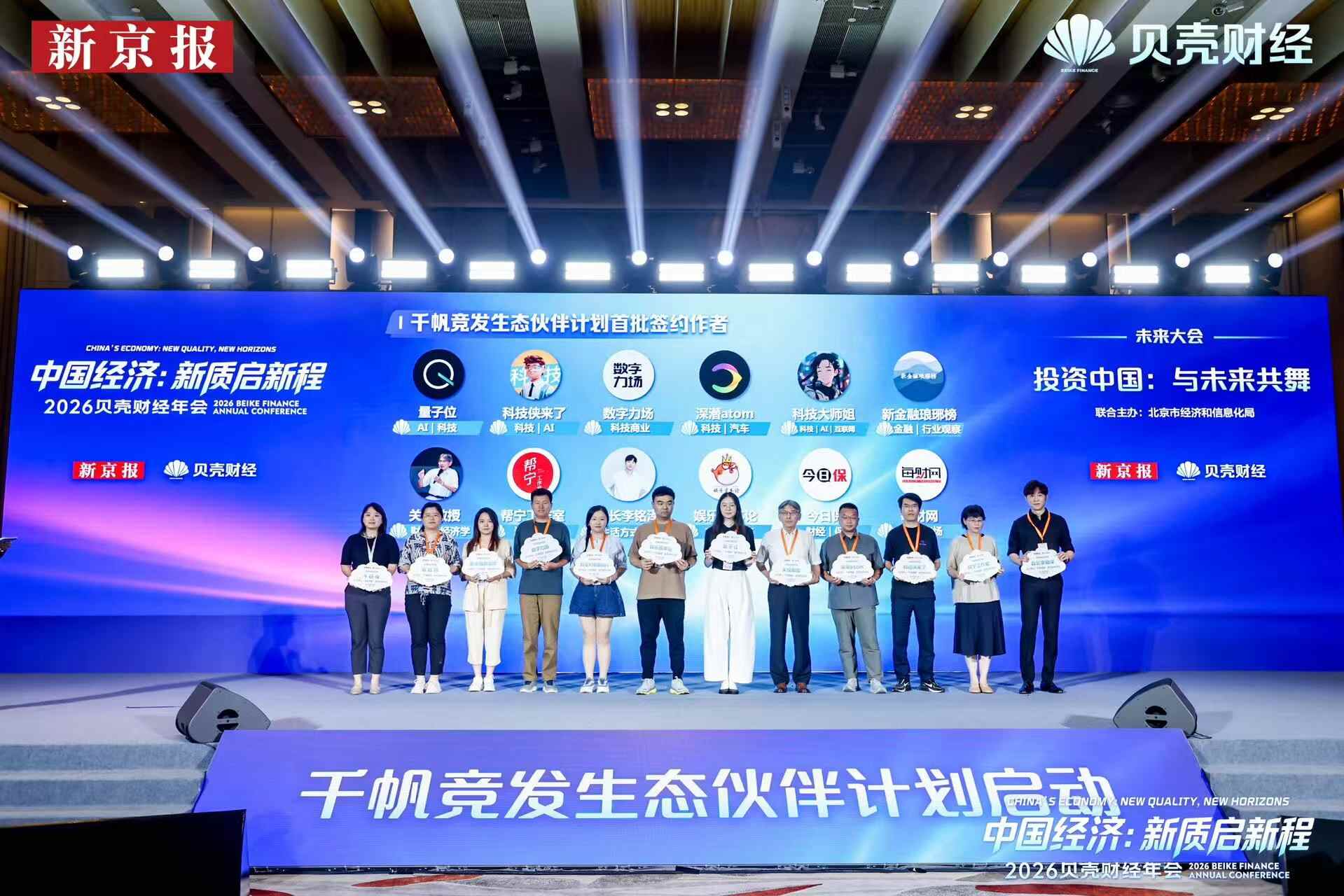
貝殼財經啟動“千帆競發”計劃,將徵集百位優質創作者共建內容新生態
這篇消息聚焦「貝殼財經啟動“千帆競發”計劃,將徵集百位優質創作者共建內容新生態」。目前站內已移除先前混入的模型思考或安全判斷文字,並保留來源可確認的主題供讀者追蹤。
一人薅羊毛致全縣被電商拉黑:男子用AI生成爛果圖騙取1. 6 萬元水果"僅退款"獲刑一年
AI資訊AI新閒資訊正文一人薅羊毛致全縣被電商拉黑:男子用AI生成爛果圖騙取1. 6 萬元水果"僅退款"獲刑一年發布於AI新閒資訊時間 :Jul 23, 2026閱讀 :1分鐘據央視新聞報道,湖南衡山縣人民法院近日審結一起利用AI偽造水果腐爛圖片騙取電商平臺"僅退款"的案件。
Alphabet發佈最新財報:AI功能推動谷歌搜索收入增長17%,月活突破10億
AI資訊AI新閒資訊正文Alphabet發佈最新財報:AI功能推動谷歌搜索收入增長17%,月活突破10億發布於AI新閒資訊時間 :Jul 23, 2026閱讀 :1分鐘Alphabet首席執行官桑達爾·皮查伊在週三的財報電話會議上宣佈,AI Overview及AI Mode等生成式人工智能功能正在強力拉動谷歌搜索查詢量增長,打破了市場對AI將取代傳統搜索的擔憂。
Synthesia 不再只做視頻:它要讓 AI 化身當場回懟你,再給你打分
這篇消息聚焦「Synthesia 不再只做視頻:它要讓 AI 化身當場回懟你,再給你打分」。目前站內已移除先前混入的模型思考或安全判斷文字,並保留來源可確認的主題供讀者追蹤。
無線感知項目利用普通無線電重構空間
無線感知項目利用普通無線電重構空間。 全新無線感知項目能夠將信號轉為空間理解。我們可在無線感知項目(AI資訊)查閱83.8k代碼。該技術可以在 ���️ 保護隱私的情況下偵測體徵。整個過程完全不需要藉助任何傳統的攝像頭。智能家居 and 健康監測場景將因此產生新變革。
Bringing Nunchaku 4-bit Diffusion Inference to Diffusers
Back to Articles Bringing Nunchaku 4-bit Diffusion Inference to Diffusers Published July 23, 2026 Update on GitHub Upvote 1 Pham Hong Vinh rootonchair Follow guest Sayak Paul sayak。