PrismML Releases Bonsai 27B: 1-bit and Ternary Builds of Qwen3.6-27B That Run on Laptops and Phones
重點摘要
PrismML just released Bonsai 27B. It is a low-bit representation of Qwen3.6-27B, not a new pretrain. The architecture is unchanged. Two variants ship under Apache 2.0. Ternary Bonsai 27B uses {−1, 0, +1} weights at a true 1.71 bits per weight. Its ideal size is 5.9GB. 1-bit Bonsai 27B uses binary {−1, +1} weights at 1.125 bits per weight, for 3.9GB. Both are multimodal. The split is ~24.8B language weights, a 0.46B vision tower, and 2.5B in embeddings and the LM head. The vision tower is held separately at 4-bit (HQQ). Context is 262K tokens, kept practical because ~75% of Qwen3.6-27B attention is linear. (function(){ window.addEventListener('message', function(e){ if(e.data && e.data.mtpBonsaiHeight){ var f = document.getElementById('mtp-bonsai-27b-frame'); if(f){ f.style.height = e.data.
PrismML just released Bonsai 27B. It is a low-bit representation of Qwen3.6-27B, not a new pretrain. The architecture is unchanged. Two variants ship under Apache 2.0. Ternary Bonsai 27B uses {−1, 0, +1} weights at a true 1.71 bits per weight. Its ideal size is 5.9GB. 1-bit Bonsai 27B uses binary {−1, +1} weights at 1.125 bits per weight, for 3.9GB. Both are multimodal. The split is ~24.8B language weights, a 0.46B vision tower, and 2.5B in embeddings and the LM head. The vision tower is held separately at 4-bit (HQQ). Context is 262K tokens, kept practical because ~75% of Qwen3.6-27B attention is linear. (function(){ window.addEventListener('message', function(e){ if(e.data && e.data.mtpBonsaiHeight){ var f = document.getElementById('mtp-bonsai-27b-frame'); if(f){ f.style.height = e.data.mtpBonsaiHeight + 'px'; } } }); })(); That architecture shapes the compression method below. How the Compression Works Each weight is a code, with one shared FP16 scale per group of 128. The effective weight is w_i = s_g · t_i. A ternary value carries log2(3) ≈ 1.585 bits. One FP16 scale per 128 weights adds 16/128, giving ≈1.71 bits per weight. That is a ~9.4× reduction against FP16. Binary costs 1 + 16/128 = 1.125 bits, a ~14.2× reduction. The representation runs end to end across the matrix-heavy components. Those are embeddings, attention projections, MLP projections, and the LM head. Only a negligible tail of normalization and scale parameters stays higher precision. Measured as a true average, the Qwen3.6-27B “4-bit” build (Q4_K_XL) is 5.2 bits per weight. The “2-bit” build (IQ2_XXS) is 2.8. Bonsai also departs from BitNet, which avoids collapse only by pretraining from scratch. The obvious question is what compression costs in accuracy. Performance PrismML evaluated 15 benchmarks in thinking mode, using EvalScope with vLLM on H100 GPUs. Ternary Bonsai 27B retains 94.6% of the FP16 baseline, and 1-bit Bonsai 27B retains 89.5%. VariantTrue bpwFootprintThinking avgDensity (1/GB)Qwen3.6-27B FP1616.054GB85.070.051Qwen3.6-27B Q4_K_XL (“4-bit”)5.217.6GB84.990.155Qwen3.6-27B IQ2_XXS (“2-bit”)2.89.4GB72.730.199Ternary Bonsai 27B1.715.9GB80.490.4001-bit Bonsai 27B1.1253.9GB76.110.530 CategoryFP16Ternary1-bitMath95.3393.4091.66Coding88.7485.9681.88Knowledge and reasoning83.1576.9673.39Agentic and tool calling80.0074.0166.03Instruction following78.4771.7765.74Vision72.6165.1959.57 Conventional sub-4-bit builds fail differently. IQ2_XXS falls to 57.5 on AIME26 and 56.4 on LiveCodeBench. It still scores 88.93 on MMLU-Redux, so short-form benchmarks mask the collapse. Gemma-4-31B Q2_K_XL repeats that pattern on a second base model. Scores alone, however, do not explain the release. Memory does. Memory is the Binding Constraint Fitting a phone is stricter than storage numbers suggest. iOS limits a single app to roughly half of physical memory. A 12GB iPhone therefore exposes about 6GB. The KV cache is the second budget. Only 16 of 64 layers carry a growing full-attention cache, so FP16 costs ≈64 KiB/token. A 262K window costs ≈17.2GB, and a 4-bit KV cache cuts that to ≈4.3GB. Tolerance is measured. Against its own FP16-KV baseline, Ternary Bonsai shows 0.0011 nats of output forward-KL on MATH-500. Q4_K_XL shows 0.0146. Peaks follow. At 100K tokens with an FP16 cache, 1-bit peaks at 11.6GB and ternary at 14.7GB. The derived Q4_K_XL row needs ≈25.6GB. Once a model fits, throughput is the next question. Throughput and DSpark Speculative Decoding PlatformVarianttg128pp512M5 MaxBinary66.4874M5 ProTernary26.2393iPhone 17 Pro MaxBinary11.0111H100 (CUDA)Binary104.82755 Generation is memory-bandwidth-bound, so fewer bytes per step means more tokens per second. Prefill is compute-bound and gains less. PrismML also ships a DSpark drafter trained against the Bonsai 27B target. On an H100 at draft depth k=4, the binary target reaches accepted length τ=3.6. That is 143.8 tok/s, a 1.37× speedup. Verification is lossless, so output stays distribution-identical. On Apple Silicon the drafter is off by default at batch size 1. Running It Ternary 27B is the demo repo default. Start the server, or generate directly: Copy CodeCopiedUse a different Browser./scripts/start_llama_server.sh # OpenAI-compatible API + chat/vision UI on :8080 ./llama-cli -m ./Ternary-Bonsai-27B-gguf/Ternary-Bonsai-27B-Q2_0.gguf \ --mmproj ./Ternary-Bonsai-27B-gguf/mmproj.gguf -c 0 \ -p "Explain KV cache growth." mlx_lm.generate --model prism-ml/Ternary-Bonsai-27B-mlx-2bit \ --prompt "Explain KV cache growth." Tool calling uses the standard OpenAI-style tools array: Copy CodeCopiedUse a different Browsercurl http://localhost:8080/v1/chat/completions \ -H "Content-Type: application/json" \ -d '{ "messages": [{"role": "user", "content": "What is the weather in Lisbon?"}], "tools": [{ "type": "function", "function": { "name": "get_weather", "parameters": {"type": "object", "properties": {"city": {"type": "string"}}, "required": ["city"]} } }] }' The call returns in choices[0].message.tool_calls. Thinking mode is on by default; thinking_budget_tokens toggles it per request. That maps onto four deployment patterns. Use Cases Laptop-local agents run the ternary build for full-repository code work over 262K tokens. Phone-local reasoning runs the 1-bit build; the whitepaper measures 672 tokens per 1% of iPhone battery. Privacy-sensitive and offline workflows keep prompts on-device by construction. Combined with the 4-bit KV cache, single-GPU serving fits 27B-class quality on a 24GB card. Key Takeaways Bonsai 27B moves Qwen3.6-27B into binary or ternary weights, not a new pretrain. Ternary retains 94.6% of FP16 at 5.9GB; 1-bit retains 89.5% at 3.9GB. PrismML claims the 1-bit build is the first 27B-class model to fit a phone. Conventional sub-4-bit builds collapse selectively on AIME, LiveCodeBench, and agentic tasks. Everything ships under Apache 2.0, on llama.cpp (CUDA, Metal) and MLX. Check out the Technical details, GitHub Repo and Model Weight. Also, feel free to follow us on Twitter and don’t forget to join our 150k+ML SubReddit and Subscribe to our Newsletter. Wait! are you on telegram? now you can join us on telegram as well. Need to partner with us for promoting your GitHub Repo OR Hugging Face Page OR Product Release OR Webinar etc.? Connect with us The post PrismML Releases Bonsai 27B: 1-bit and Ternary Builds of Qwen3.6-27B That Run on Laptops and Phones appeared first on MarkTechPost.
Related
相關文章

Edge AI Daily 早報(7月15日)
Edge AI Daily 早報(7月15日)Edge AI Daily2026.07.15 08:16 · 來自北京全文7197字00:00 / 18:29谷歌DeepMind CEO Demis Hassabis提議建立FINRA式AI監管機構,標誌AGI製造者主動尋求行業規範。英偉達Q1營收816億美元逼近千億大關,黃仁勳親自澄清ASIC圍剿傳聞。OpenAI Codex周活用戶突破500萬,正從編程助手升級為企業知識工作平臺。谷歌Jules V2編程智能體以異步架構挑戰Cursor和Copilot主導的AI編程市場。硅谷前沿:一、AGI製造者Hassabis率先要求上枷鎖1.谷歌DeepMind CEO哈薩比斯提出建立類似FINRA的AI監管框架,呼籲美國主導建立前沿AI安全評估機構,計劃年底前投入運作,旨在應對AGI可能帶來的“十次工業革命以十倍速度壓縮”的文明轉型風險。2.哈薩比斯警告AGI可能在5年內到來,當前AI系統呈現“鋸齒形智能”,而18個月內危險能力可能出現在開源模型中,超過200名經濟學家和AI研究人員聯名警告AI經濟轉型窗口期極短。3.監管提案採用“行業資金+政府監督+技術專家執行”的FINRA模式,旨在繞過傳統監管瓶頸,但面臨國際協調挑戰,中國已發佈《人工智能安全治理框架》2.0版,歐盟也有AI Act,全球監管體系可能碎片化。二、81.6億、91億、千億:英偉達狂奔中,黃仁勳為何被迫親自“滅火”1.財務表現與市場地位:英偉達2027財年Q1營收816.1億美元(同比增長85.2%),數據中心業務貢獻752.5億美元(佔比超92%),Q2指引910億美元逼近千億大關。網絡業務同比增長199%,以太網交換機市場份額從兩年前的4%飆升至21.5%,首次登頂數據中心以太網交換機市場榜首。毛利率75%、單季自由現金流490億美元,標普評級上調至AA。2.
曝DeepSeek擬今年啟動IPO!再融資100億
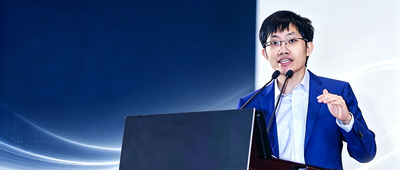
DeepSeek計劃今年啟動IPO,最快2027年完成上市,並在上市前於私募市場再融資至少100億元人民幣。該公司密集融資主要為加速算力基礎設施擴張,並承諾將專注於突破性AI研究及實現通用人工智慧。目前DeepSeek正與會計師事務所合作,力爭年底前完成財務報告。

谷歌 DeepMind CEO 哈薩比斯呼籲美國牽頭建立全球 AI 監管機構
谷歌 DeepMind 執行長德米斯·哈薩比斯(Demis Hassabis)近日公開呼籲,美國政府應站出來主導成立一個全球性的人工智慧監管機構,以便在前沿 AI 模型出現緊急風險時,能夠即時介入並「踩下煞車」。哈薩比斯認為,隨著 AI 技術發展速度日益加快,現有的國家級監管框架已不足以應對可能跨越國界的系統性威脅,因此有必要建立一個具備國際協調能力的專責機構。 哈薩比斯具體建議,這個機構可參考美國金融業監管局(FINRA)的運作模式。

消息稱 DeepSeek 以 710 億美元投前估值開啟新一輪融資初步談判
DeepSeek 近期開始與新投資者初步磋商新一輪融資,計畫以 710 億美元的投前估值募集資金。距上一輪融資僅間隔約兩個月,主因為大規模數據中心建設與 AI 晶片採購需要雄厚資金支持。
AI進入“重工業時代”:萬億算力基建,如何賺錢?
AI進入“重工業時代”:萬億算力基建,如何賺錢?智訊智庫2026.07.14 19:25 · 來自雲南全文13224字科技巨頭豪擲萬億建算力,泡沫有多大?利潤在哪裡?文 | 智訊智庫分析師 許倍2026上半年的資本市場,大盤震盪之下,電力、芯片、IDC液冷等“AI基建”板塊逆勢走強,成為資金追逐的絕對主線。
中國機器人,讓美國人焦慮了
中國機器人,讓美國人焦慮了世界模型工場2026.07.14 19:20 · 來自北京全文4875字00:00 / 15:20這場仗到底誰會贏?文 | 世界模型工廠全球機器人的風向,正在悄無聲息地翻盤。 近日美國艾倫人工智能研究院創始CEO Oren Etzioni公開發文,標題直指中美對比:《馬斯克承諾了人形機器人,中國完成了交付》。大意是,美國機器人靠畫餅賺估值,中國機器人靠交付賺真金。