Skyfall AI 推出 MORPHEUS:一個讓持續強化學習在結構性非平穩環境中成為必要的持久性企業模擬基準
重點摘要
大多數強化學習基準在每次回合後會重置世界,但真實營運從不重置。Skyfall AI 的 MORPHEUS 正是為填補此缺口而設計,它是一個專為持續強化學習(CRL)打造的持久性企業模擬平臺。MORPHEUS 基於「大世界假說」(Javed & Sutton, 2024),該假設認為世界的複雜度超越任何智能體的表示能力,因此即使動態固定,環境仍呈現非平穩性。為強制進行持續學習,MORPHEUS 需具備三項特性:持久性、非平穩性與營運複雜度。持久性指過往決策會累積影響未來動態;非平穩性指任何固定策略最終都會變為次佳;營運複雜度則指不存在固定的最佳策略。
Most reinforcement learning benchmarks reset the world after every episode. Real operations never reset. Skyfall AI’s MORPHEUS targets that gap. It is a persistent enterprise simulation platform for continual reinforcement learning (CRL). What is MORPHEUS? MORPHEUS is grounded in the Big World Hypothesis (Javed & Sutton, 2024). It says the world’s complexity exceeds any agent’s representational capacity. As a result, the environment looks non-stationary even under fixed dynamics. To force continual learning, MORPHEUS requires three properties: persistence, non-stationarity, and operational complexity. Persistence means past decisions compound into future dynamics. Non-stationarity means any fixed policy eventually becomes suboptimal. Operational complexity means no fixed optimal policy exists. Each environment is a self-contained TypeScript world plugin. It exports Operational Descriptors (ODs), a simulation scheduler, seed data, and documentation. An OD defines the step-by-step execution plan for a capability. Agents act through a capability API, and each call triggers an OD execution. How the Platform Works? Building on that architecture, non-stationarity comes from two engines. First, a failure injection engine inserts typed disruptions between OD steps. It draws from eleven failure types, including missing_data, dependency_failure, and rate_limit. It runs at four preset rates: light (5%), realistic (8%), moderate (15%), and aggressive (30%). Second, an asynchronous configuration shift controller changes failure presets and demand at fixed timestamps. It runs independently of the training loop, so shifts never align with gradient updates. This stops the agent from using update periodicity as a proxy clock. Alongside these engines, reward comes from three operational verifiers logged natively by the platform. These are failure event signals, financial ledger status, and resource throughput. The composite reward combines them. Default weights are w_f = 0.5 and w_l = w_p = 0.25. Copy CodeCopiedUse a different Browser# Composite reward — MORPHEUS, Appendix C (default weights). def clip(x, lo, hi): return max(lo, min(hi, x)) def composite_reward(tickets, actual_cost, planned_cost, units, capacity, w_f=0.5, w_l=0.25, w_p=0.25): r_f = -sum(t["severity"] for t in tickets) # failure event signal r_l = clip(1 - actual_cost / planned_cost, -1, 1) # financial ledger r_p = clip(units / capacity, 0, 1) # resource throughput return w_f * r_f + w_l * r_l + w_p * r_p Under the upper-bound assumptions (zero failures, minimum cost, full throughput), the bound per configuration equals 0.50. Policy Initialisation Because the action space is large, pure RL from scratch is impractical. Therefore MORPHEUS uses a two-stage pipeline. A frontier model (Gemini 3.1 pro) collects trajectories using the ReAct framework. These traces then fine-tune Qwen3-14B via supervised fine-tuning (SFT). Consequently, every RL run starts from this shared SFT checkpoint. This isolates continual learning behaviour from basic operational competence. All baselines then use PPO as the base optimizer for online post-training. The Six-Metric Evaluation Protocol With training defined, cumulative reward alone is not enough. A scalar sum hides performance across a non-stationary horizon. So the research team propose six metrics instead. These are per-configuration reward, adaptation speed, forgetting, recovery time, stability, and performance gap. Among these, adaptation speed is the headline metric. It counts steps until the running-average reward reaches half the upper bound. Two supplementary diagnostics also track relative adaptation advantage (RAA) and plasticity via effective rank. Baseline Results Using this protocol, the research team tests four algorithm families from the shared SFT checkpoint. Two tasks are defined. Task 1 is dynamic resource allocation under structured drift. Task 2 is scheduling under drift with delayed effects. FamilyMechanismOutbound Task 1Outbound Task 2Inbound Task 2PPONo CL mechanismFailure baselineAdapts only earlyBaseline rewardHERHindsight replayMid rewardBest rewardBest reward, top rankEWCWeight consolidationBest rewardBest adaptationWeakest rewardLCMLatent context modelFastest adaptationNo advantageBest adaptation Across these results, no single family dominates. On process-outbound Task 1, EWC leads reward and LCM adapts fastest. On Task 2, HER leads reward while LCM loses its edge under delayed reward. Meanwhile, mean performance gaps sit near 1.0 for every method. That signals a large settled-state deficit, not a minor tuning gap. Notably, PPO and HER generally adapt only in the first configuration. They then fail to adapt in later regimes, even without label signals. Use Cases with Examples In practice, MORPHEUS suits several reader roles. For AI engineers, it tests whether an agent detects regime shifts without labels. For example, demand switches from low to bursty, and the policy must adapt with no signal. For data scientists, it stresses delayed credit assignment. For example, On-Time In-Full (OTIF) delivery is observable only days after the dispatch decision. For software engineers, the TypeScript plugin format allows swapping rewards or toggling observability without changing dynamics. Strengths and Weaknesses Strengths: Persistent worlds with no resets, matching deployed enterprise systems. Parameterisable, reproducible regime shifts for fair cross-algorithm comparison. Rewards from native operational verifiers, needing no external annotation. Open-sourced evaluation code (Skyfall-Research/morpheus-evals). Weaknesses: Only two of five environments are evaluated so far. The upper bound assumes zero failures, so it stays optimistic. Shifts are externally triggered, not driven by compounding decisions. Reward weights are research variables, not validated industry objectives. Key Takeaways MORPHEUS runs persistent enterprise worlds that never reset, unlike episodic RL benchmarks. It ships five environments; two are evaluated here: process-outbound and process-inbound. A six-metric protocol scores per-configuration reward, adaptation, forgetting, recovery, stability, and gap-to-upper-bound. Four baselines (PPO, HER, EWC, LCM) all sit far below the theoretical upper bound. No single algorithm wins; reward and adaptation speed pick different winners. Check out the Paper and Project Page. Also, feel free to follow us on Twitter and don’t forget to join our 150k+ML SubReddit and Subscribe to our Newsletter. Wait! are you on telegram? now you can join us on telegram as well. Need to partner with us for promoting your GitHub Repo OR Hugging Face Page OR Product Release OR Webinar etc.? Connect with us The post Skyfall AI Releases MORPHEUS: A Persistent Enterprise Simulation Benchmark That Makes Continual Reinforcement Learning Necessary Under Structured Non-Stationarity appeared first on MarkTechPost.
Related
相關文章

當 AI Agent 開始自主決策,誰為其財稅後果負責?
賬號設置我的關注我的收藏申請的報道退出登錄登錄搜索36氪Auto數字時氪未來消費智能湧現未來城市啟動Power on36氪出海36氪研究院潮生TIDE36氪企服點評36氪財經職場bonus36碳後浪研究所暗湧Waves硬氪氪睿研究院媒體品牌企業號企服點評36Kr研究院36Kr創新諮詢企業服務核心服務城市之窗政府服務創投發佈LP源計劃VClubVClub投資機構庫投資機構職位推介投資人認證投資人服務尋求報道36氪Pro創投氪堂企業入駐創業者服務創投平臺AI測評網 首頁快訊資訊推薦財經AI自助報道安徽最新創投汽車科技專精特新直播視頻專題活動搜索尋求報道我要入駐城市合作當 AI Agent 開始自主決策,誰為其財稅後果負責?時氪分享·2026年07月14日 09:30近期,提供加密貨幣財務及稅務解決方案及其AI基礎設施的金融科技公司FinTax,與專注於可信AI基礎設施建設的 Stair AI 達成戰略合作。 如果說2025 年是AI Agent從技術概念走向大眾認知的一年,那麼進入2026年,AI已經不再只是提供信息和生成內容的對話工具,而是開始以更高程度的自主性參與現實經濟活動。 根據Coinbase 與 Chainalysis數據,截至2026年上半年,僅在機器支付協議 x402 網絡中,AI Agent之間已累計完成約1.65億筆交易,活躍Agent數量接近7萬個。隨著AI Agent開始自主發起交易、執行結算並參與經濟活動,一個更深層次的問題逐漸顯現:當Agent開始自主發起經濟活動,誰應為其行為負責? 近期,提供加密貨幣財務及稅務解決方案及其AI基礎設施的金融科技公司FinTax,與專注於可信AI基礎設施建設的 Stair AI 達成戰略合作。雙方將圍繞AI財稅場景下的可信執行、業務知識沉澱與責任追溯能力展開建設,核心目的是:使 AI 的推理、決策和執行過程能夠被記錄
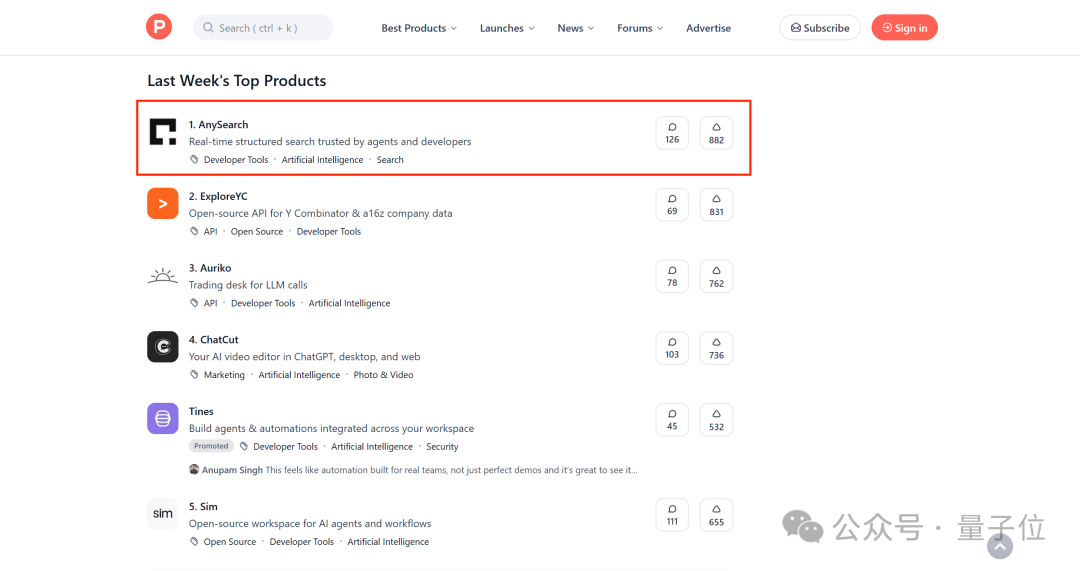
Agent專用搜索登頂Product Hunt,Token更省搜得更準
這篇消息聚焦「Agent專用搜索登頂Product Hunt,Token更省搜得更準」。目前站內已移除先前混入的模型思考或安全判斷文字,並保留來源可確認的主題供讀者追蹤。

從前沿創新到產業落地:西門子將亮相2026世界人工智能大會
2026年世界人工智能大会(WAIC 2026)将于7月17日至20日在上海举行,西门子今年将再度亮相这一盛会,集中展示其在工业AI领域的前沿创新与多行业落地成果。面对工业AI从技术验证走向规模化应用的关键阶段,西门子将面向中国市场首发Eigen工程智能体(Eigen Engineering Agent),并首展工业AI编排软件Intelligence Center X,推动AI智能体真正融入工业生产的核心流程。

百度和騰訊,開始搶打工人的開機畫面
百度與騰訊正競逐AI辦公入口,百度推出通用智能體「百度搭子」,強調直接交付任務結果,減少中間步驟;騰訊則將AI整合進群聊,從溝通環節切入。這場卡位戰反映了兩家公司不同的生態策略,誰能將用戶一句話無縫轉化為成品,就有望掌握下個辦公時代的入場券。
Prime Intellect 發布 Verifiers v1:用於代理強化學習訓練與評估的可組合任務集、工具套件及運行環境
Prime Intellect 推出了 verifiers 0.2.0 版本,並預覽了重新編寫的核心,以新的 verifiers.v1 命名空間發布。現代的評估能夠透過工具、壓縮和子代理來運行編碼代理。因此,v1 重建了環境,以規模化處理這些代理工作負載。什麼是 verifiers v1?首先,需瞭解 verifiers:它是 Prime Intellect 用於代理強化學習與評估的環境堆疊。過去,環境將數據、代理邏輯與基礎設施綑綁在一起。相比之下,v1 將這個綑綁拆分為三個可組合的部分:任務集定義工作內容(數據、工具與評分);工具套件解決任務並產生展開(可為 ReAct 迴路、CLI 代理或自訂);展開則在運行環境中執行(可為本地或雲端)。