Andrew Ng 開源 OpenWorker:一款本地優先的桌面 AI 同事,直接交付成品而非聊天
重點摘要
Andrew Ng 宣佈推出 OpenWorker,這是一款開源桌面代理,專注於產出成品而非對話。OpenWorker 要求用戶指定目標結果,而非輸入提示:例如一份潤色完成的文件、包含實際數據的 Slack 回覆、更新後的日曆、或整理好的收件匣。它會將目標拆解為步驟,在本地檔案與外部應用程式間協作,並在執行重要操作前請求確認。其架構分為四層,全部運行於用戶電腦上。儲存庫包含 119 個 Python 檔案(約 32,400 行)位於 coworker/ 目錄、149 個 TypeScript/TSX 檔案位於 surfaces/gui/,以及 78 個後端測試模組。技術堆疊如下:桌面殼層 — 以 Tauri 2 原生視窗包裝 React 18 使用者介面,套件識別碼為 com.openworker.desktop,該殼層負責監督整個流程。
Andrew Ng has announced OpenWorker, an open-source desktop agent that produces finished work rather than conversation. OpenWorker asks the user for an outcome, not a prompt: a polished document, a Slack reply containing the actual numbers, an updated calendar, a triaged inbox. It then breaks that outcome into steps, works across local files and connected apps, and checks in before anything consequential. The architecture is four layers, and all of them run on your machine The repository contains 119 Python files (~32,400 lines) under coworker/, 149 TypeScript/TSX files under surfaces/gui/, and 78 backend test modules. The stack breaks down as follows: Desktop shell — a Tauri 2 native window wrapping a React 18 UI. The bundle identifier is com.openworker.desktop, and the shell supervises the Python server itself. Local agent server — Python 3.10+ on FastAPI and uvicorn, binding to 127.0.0.1:8765 by default. The example config caps a turn at 12 modeltool iterations. Capability and connector layer — vetted local tools (files, git, ripgrep-backed search, shell, todo) plus hosted integrations plus MCP. Model router — one interface over native, OpenAI-compatible, reseller and local providers. The engine is built on aisuite, Andrew Ng’s provider-agnostic LLM library. (function(){ window.addEventListener('message',function(e){ var d=e.data;if(!d||!d.owEmbed||!d.height)return; var f=document.getElementById('frame-'+d.owEmbed); if(f)f.style.height=d.height+'px'; }); })(); Bring your own model, from a deliberately small curated list There is no OpenWorker inference service. The user pastes an API key, or points the app at a local runtime. The curated model matrix contains exactly 30 entries. Native providers cover OpenAI (GPT-5.6 Sol/Terra/Luna and GPT-5.5), Anthropic (Claude Fable 5, Opus 4.8, Sonnet 4.6, Haiku 4.5) and Google (Gemini 3.1 Pro, 3.6 Flash, 2.5 Pro, 2.5 Flash). OpenAI-compatible vendors add GLM-5.2, DeepSeek V4, Kimi K2.6, MiniMax M2.5, Qwen3 Max, Grok 4.3 and Mistral Large. Open-weight models arrive through Together AI and Fireworks, and fully local models through Ollama, which requires no key at all. The permission engine is the actual engineering story Most desktop agent projects treat approvals as a UI afterthought. OpenWorker treats them as a typed layer. Every tool call is classified into one of four risk classes: read (no side effects), write_local (mutates the workspace, path-scoped), exec (runs commands), and external (side effects off the machine). Five permission modes then decide what happens: discuss and plan are read-only, interactive is the default and asks before writes, commands and external actions, auto allows everything while remaining path-scoped, and custom auto-approves a user-listed set of tools. Two design decisions stand out. First, unattended mode does not raise the autonomy ceiling — it only changes where the human is reached. Prompts that would appear inline are routed to an Inbox, and the session suspends until answered. Second, task-scoped standing rules are restricted to external risk only. Shell commands ask forever, by design. The built-in ops persona also instructs the model to treat content from tools, logs, the web, files and incoming messages as untrusted data rather than instructions. That is an explicit prompt-injection posture, written into the shipped persona. (function(){ window.addEventListener('message',function(e){ var d=e.data;if(!d||!d.owEmbed||!d.height)return; var f=document.getElementById('frame-'+d.owEmbed); if(f)f.style.height=d.height+'px'; }); })(); Privacy: local-first Model calls go directly from the machine to the configured provider. Conversations, connector tokens and model keys stay local, and the secret store is designed so that secrets never enter the model’s context, prompts or traces. The only cloud component is an optional broker that handles OAuth handshakes for one-click connectors, using Auth0 Authorization Code with PKCE. Connector tokens are handed straight to the machine and are never stored in the cloud. The app is fully functional signed out, using manually pasted credentials. (function(){ window.addEventListener('message',function(e){ var d=e.data;if(!d||!d.owEmbed||!d.height)return; var f=document.getElementById('frame-'+d.owEmbed); if(f)f.style.height=d.height+'px'; }); })(); Key Takeaways OpenWorker is Andrew Ng’s MIT-licensed desktop AI coworker that returns finished deliverables, not chat replies. The stack is a Tauri 2 + React shell over a local Python FastAPI agent server built on aisuite. Model access is bring-your-own-key across 30 curated tool-calling models, plus fully local Ollama. A typed risk engine (read/write_local/exec/external) gates every action across five permission modes. Check out the GitHub Repo, the project site, and the announcement. All credit for this research goes to the researchers and developers of this project. The post Andrew Ng Just Released OpenWorker: An Open-Source, Local-First Desktop AI Coworker That Returns Finished Deliverables Instead of Chat appeared first on MarkTechPost.
Related
相關文章

“圍攻” Ralph Loop 之父?一場關於 Loops 的激辯:代碼照樣垃圾,只會失敗得更加難看
賬號設置我的關注我的收藏申請的報道退出登錄登錄搜索36氪Auto數字時氪未來消費智能湧現未來城市啟動Power on36氪出海36氪研究院潮生TIDE36氪企服點評36氪財經職場bonus36碳後浪研究所暗湧Waves硬氪氪睿研究院媒體品牌企業號企服點評36Kr研究院36Kr創新諮詢企業服務核心服務城市之窗政府服務創投發佈LP源計劃VClubVClub投資機。

北京經開區建成全市首家詞元工廠,詞元日產能達 1.4 萬億
北京經開區建成全市首家詞元工廠,詞元日產能達1.4萬億,支援模型訓練及應用落地。同時,北京發布國內首個開源智能體基礎設施,並推出措施鼓勵發展Token經濟,降低創新主體成本。

智能體政策新聞相關背景和簡要解讀
< img id="wx_img" src="https://www.qbitai.com/wp-content/uploads/imgs/qbitai-logo-1.
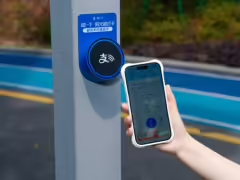
全國近 3000 所高校引入支付寶“碰一下”服務,覆蓋食堂就餐、校園乘車、自助洗衣等場景
支付寶宣布全國近3000所高校已導入「碰一下」服務,涵蓋食堂用餐、校園乘車、自助洗衣等場景,部分學校還可用於跑步打卡、上課簽到等。這項服務自2024年推出後,目前用戶數已突破4億,並持續拓展至餐飲、零售、出行等多元業態。
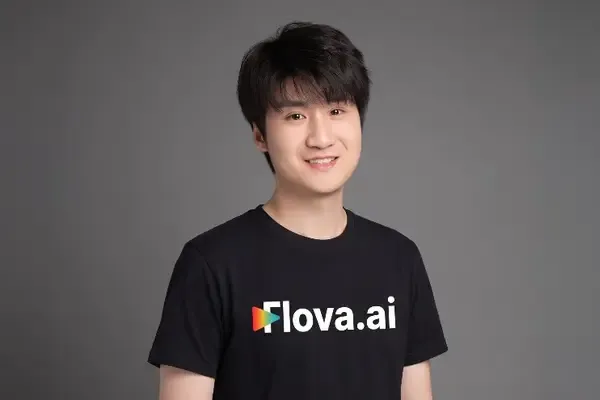
專訪郭列:做出臉萌、FaceU、剪映等爆款後,他第一次闡釋如何在AI時代做產品
郭列在專訪中首次闡述AI時代的產品思維,強調產品設計必須同時面向人類用戶與AI Agent。他認為過去工具只需服務人類直覺,現在則需從底層重新設計互動模式,讓AI代理能自動調用功能。這是他從臉萌、FaceU到剪映的經驗總結,也為他的新專案留下想像空間。

給“AI”發身份證,國內首個智能體互聯標準體系發佈
《人工智能智能體互聯》系列國家標準正式發佈,旨在破解智能體“信息孤島”難題。該標準體系覆蓋智能體全生命週期七大環節,並已發放首批 2000 餘個行業智能體身份碼,構建可信互聯底座。#AI智能體##國家標準#