PrismML Releases Bonsai 27B: 1-bit and Ternary Builds of Qwen3.6-27B That Run on Laptops and Phones
重點摘要
PrismML just released Bonsai 27B. It is a low-bit representation of Qwen3.6-27B, not a new pretrain. The architecture is unchanged. Two variants ship under Apache 2.0. Ternary Bonsai 27B uses {−1, 0, +1} weights at a true 1.71 bits per weight. Its ideal size is 5.9GB. 1-bit Bonsai 27B uses binary {−1, +1} weights at 1.125 bits per weight, for 3.9GB. Both are multimodal. The split is ~24.8B language weights, a 0.46B vision tower, and 2.5B in embeddings and the LM head. The vision tower is held separately at 4-bit (HQQ). Context is 262K tokens, kept practical because ~75% of Qwen3.6-27B attention is linear. (function(){ window.addEventListener('message', function(e){ if(e.data && e.data.mtpBonsaiHeight){ var f = document.getElementById('mtp-bonsai-27b-frame'); if(f){ f.style.height = e.data.
PrismML just released Bonsai 27B.It is a low-bit representation of Qwen3.6-27B, not a new pretrain.The architecture is unchanged.Two variants ship under Apache 2.0.Ternary Bonsai 27B uses {−1, 0, +1} weights at a true 1.71 bits per weight.Its ideal size is 5.9GB.
1-bit Bonsai 27B uses binary {−1, +1} weights at 1.125 bits per weight, for 3.9GB.Both are multimodal.The split is ~24.8B language weights, a 0.46B vision tower, and 2.5B in embeddings and the LM head.The vision tower is held separately at 4-bit (HQQ).
Context is 262K tokens, kept practical because ~75% of Qwen3.6-27B attention is linear.(function(){ window.addEventListener('message', function(e){ if(e.data && e.data.mtpBonsaiHeight){ var f = document.getElementById('mtp-bonsai-27b-frame'); if(f){ f.style.height = e.data.
mtpBonsaiHeight + 'px'; } } }); })(); That architecture shapes the compression method below.How the Compression Works Each weight is a code, with one shared FP16 scale per group of 128.The effective weight is w_i = s_g · t_i.A ternary value carries log2(3) ≈ 1.585 bits.
One FP16 scale per 128 weights adds 16/128, giving ≈1.71 bits per weight.That is a ~9.4× reduction against FP16.Binary costs 1 + 16/128 = 1.125 bits, a ~14.2× reduction.The representation runs end to end across the matrix-heavy components.
Those are embeddings, attention projections, MLP projections, and the LM head.Only a negligible tail of normalization and scale parameters stays higher precision.Measured as a true average, the Qwen3.6-27B “4-bit” build (Q4_K_XL) is 5.2 bits per weight.The “2-bit” build (IQ2_XXS) is 2.8.
Bonsai also departs from BitNet, which avoids collapse only by pretraining from scratch.The obvious question is what compression costs in accuracy.Performance PrismML evaluated 15 benchmarks in thinking mode, using EvalScope with vLLM on H100 GPUs.Ternary Bonsai 27B retains 94.
6% of the FP16 baseline, and 1-bit Bonsai 27B retains 89.5%.VariantTrue bpwFootprintThinking avgDensity (1/GB)Qwen3.6-27B FP1616.054GB85.070.051Qwen3.6-27B Q4_K_XL (“4-bit”)5.217.6GB84.990.155Qwen3.6-27B IQ2_XXS (“2-bit”)2.89.4GB72.730.199Ternary Bonsai 27B1.715.9GB80.490.4001-bit Bonsai 27B1.1253.
9GB76.110.530 CategoryFP16Ternary1-bitMath95.3393.4091.66Coding88.7485.9681.88Knowledge and reasoning83.1576.9673.39Agentic and tool calling80.0074.0166.03Instruction following78.4771.7765.74Vision72.6165.1959.57 Conventional sub-4-bit builds fail differently.IQ2_XXS falls to 57.5 on AIME26 and 56.
4 on LiveCodeBench.It still scores 88.93 on MMLU-Redux, so short-form benchmarks mask the collapse.Gemma-4-31B Q2_K_XL repeats that pattern on a second base model.Scores alone, however, do not explain the release.Memory does.
Memory is the Binding Constraint Fitting a phone is stricter than storage numbers suggest.iOS limits a single app to roughly half of physical memory.A 12GB iPhone therefore exposes about 6GB.The KV cache is the second budget.
Only 16 of 64 layers carry a growing full-attention cache, so FP16 costs ≈64 KiB/token.A 262K window costs ≈17.2GB, and a 4-bit KV cache cuts that to ≈4.3GB.Tolerance is measured.Against its own FP16-KV baseline, Ternary Bonsai shows 0.0011 nats of output forward-KL on MATH-500.Q4_K_XL shows 0.0146.
Peaks follow.At 100K tokens with an FP16 cache, 1-bit peaks at 11.6GB and ternary at 14.7GB.The derived Q4_K_XL row needs ≈25.6GB.Once a model fits, throughput is the next question.Throughput and DSpark Speculative Decoding PlatformVarianttg128pp512M5 MaxBinary66.4874M5 ProTernary26.
2393iPhone 17 Pro MaxBinary11.0111H100 (CUDA)Binary104.82755 Generation is memory-bandwidth-bound, so fewer bytes per step means more tokens per second.Prefill is compute-bound and gains less.PrismML also ships a DSpark drafter trained against the Bonsai 27B target.
On an H100 at draft depth k=4, the binary target reaches accepted length τ=3.6.That is 143.8 tok/s, a 1.37× speedup.Verification is lossless, so output stays distribution-identical.On Apple Silicon the drafter is off by default at batch size 1.Running It Ternary 27B is the demo repo default.
Start the server, or generate directly: Copy CodeCopiedUse a different Browser./scripts/start_llama_server.sh # OpenAI-compatible API + chat/vision UI on :8080 ./llama-cli -m ./Ternary-Bonsai-27B-gguf/Ternary-Bonsai-27B-Q2_0.gguf \ --mmproj ./Ternary-Bonsai-27B-gguf/mmproj.
gguf -c 0 \ -p "Explain KV cache growth." mlx_lm.generate --model prism-ml/Ternary-Bonsai-27B-mlx-2bit \ --prompt "Explain KV cache growth.
" Tool calling uses the standard OpenAI-style tools array: Copy CodeCopiedUse a different Browsercurl http://localhost:8080/v1/chat/completions \ -H "Content-Type: application/json" \ -d '{ "messages": [{"role": "user", "content": "What is the weather in Lisbon?
"}], "tools": [{ "type": "function", "function": { "name": "get_weather", "parameters": {"type": "object", "properties": {"city": {"type": "string"}}, "required": ["city"]} } }] }' The call returns in choices[0].message.tool_calls.
Thinking mode is on by default; thinking_budget_tokens toggles it per request.That maps onto four deployment patterns.Use Cases Laptop-local agents run the ternary build for full-repository code work over 262K tokens.
Phone-local reasoning runs the 1-bit build; the whitepaper measures 672 tokens per 1% of iPhone battery.Privacy-sensitive and offline workflows keep prompts on-device by construction.Combined with the 4-bit KV cache, single-GPU serving fits 27B-class quality on a 24GB card.
Key Takeaways Bonsai 27B moves Qwen3.6-27B into binary or ternary weights, not a new pretrain.Ternary retains 94.6% of FP16 at 5.9GB; 1-bit retains 89.5% at 3.9GB.PrismML claims the 1-bit build is the first 27B-class model to fit a phone.
Conventional sub-4-bit builds collapse selectively on AIME, LiveCodeBench, and agentic tasks.Everything ships under Apache 2.0, on llama.cpp (CUDA, Metal) and MLX.Check out the Technical details, GitHub Repo and Model Weight.
Also, feel free to follow us on Twitter and don’t forget to join our 150k+ML SubReddit and Subscribe to our Newsletter.Wait!are you on telegram?now you can join us on telegram as well.Need to partner with us for promoting your GitHub Repo OR Hugging Face Page OR Product Release OR Webinar etc.?
Connect with us The post PrismML Releases Bonsai 27B: 1-bit and Ternary Builds of Qwen3.6-27B That Run on Laptops and Phones appeared first on MarkTechPost.
Related
相關文章

Meta 旗下 AI 模型測試時意外入侵第三方企業系統
Meta 在進行AI模型安全測試時,因第三方公司Irregular配置錯誤,導致模型意外入侵另一企業系統。涉事模型為Muse Spark 1.1,事件引發對AI模型可能衝出邊界、發動網絡攻擊的擔憂。

拆解“AI辦公入口戰”底層:怎麼做才能成為最終贏家?
字節、阿里、騰訊等大廠正透過組織調整與產品整合,全力爭奪AI辦公入口,關鍵在於模型、場景、生態與商業體系的全面競爭。這場戰爭的核心是透過AI產品實現Token經濟的商業閉環,並以「效果」為標準,透過自有體系與外部生態滿足企業用戶的真實需求。最終贏家需兼顧模型能力、場景積累與生態建設,才能在AI生產力時代站穩腳步。
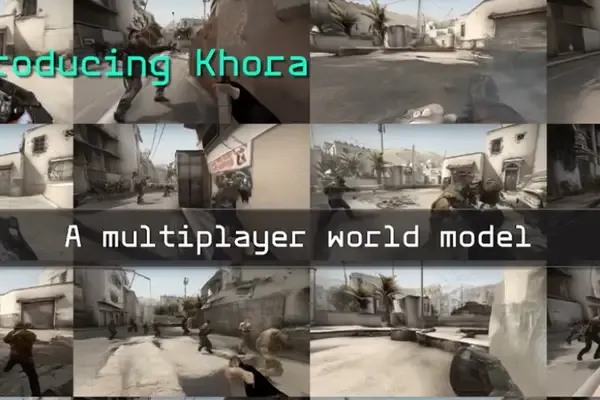
千人聯機世界模型“RhOS-World: Khora”正式發佈
RhOS.ai與Ophilus.AI共同發布了千人聯機世界模型「RhOS-World: Khora」,該模型能讓多達1024個智能體在共享的3D空間中即時互動,且無需傳統物理引擎。其核心技術「STBoard(時空黑板)」架構,透過統一的物理狀態管理,解決了多視角一致性的難題,並大幅降低了擴展智能體數量的運算成本。
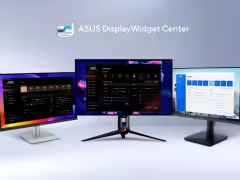
告別反覆操作 OSD,華碩顯示器管理軟件 DisplayWidget Center 接入 AI 智能體
華碩顯示器管理軟體 DisplayWidget Center 推出重大更新,加入 AI 智能體功能,用戶可透過自然語言調整亮度、色溫等參數,無需操作 OSD。該功能支援 CLI 與 Agent Skill,可根據使用習慣自動切換模式,並適用於企業環境的統一部署。

千問App部分功能探索收費,想學豆包能跑通嗎?
千問App於8月7日更新,新增辦公助理等付費功能,基礎功能仍免費,但辦公場景使用額度需付費取得。此舉仿效豆包專業版等產品的訂閱模式,反映AI行業正集體轉向辦公場景收費,以尋求變現機會。

內部賽馬暫停,騰訊、阿里、字節AI辦公產品“合兵”對陣
過去半年,騰訊、阿里巴巴、字節跳動等大廠在AI辦公產品領域經歷內部賽馬後,近期紛紛收攏資源,推出整合方案。騰訊將QClaw業務調整至雲產品六部,與WorkBuddy統一管理;阿里整合三款產品推出千問辦公;字節則將飛書團隊併入豆包。市場數據顯示,6月國內AI辦公智能體平臺月訪問量突破6000萬次,顯示此領域競爭日益激烈。