Mistral發佈開源安全小模型
重點摘要
法國AI公司Mistral推出開源安全模型Shieldstral,僅有30億參數,但在標準文字安全基準上與規模約七倍大的OpenAI模型表現相當,並在圖文分類任務創新高。該模型允許營運者以自然語言問題自訂審查規則,並回傳單一標記來計算安全分數。Shieldstral以Apache 2.0授權開源,採用合成資料訓練,在適應性基準上略遜於生成較長推理序列的模型,但更具成本效益。
Shieldstral, a 3-billion-parameter model from French AI company Mistral, matches models three times its size on standard text safety benchmarks, according to the paper.Mistral says the model also sets a new high score for joint text and image classification.
Runtime rules let operators tailor safety checks Many guardrail models sort content using fixed taxonomies.
The paper's authors, including Mistral co-founder Guillaume Lample, point to two problems with this approach: public safety datasets group risks too differently to support one common taxonomy, and the same rules don't fit every use case.
Content suitable for a cybersecurity tool could be harmful on a mental health platform.Ad Operators write the review criteria in plain language.Shieldstral returns one token, which produces a safety score between zero and one.
| Image: Mistral Operators tell Shieldstral what to check with plain-language questions such as "Does this content promote violence?" The model answers only "yes" or "no," and the system uses the probability of each response to calculate a safety score between zero and one.
AdDEC_D_Incontent-1 Synthetic data helps the model handle new rules The researchers combined about 54.1 million examples covering safety, harmful content, and manipulation attempts into one format.
They applied strict standards to targeted manipulation, moderate standards to general safety data, and lenient standards to response quality.Each training example includes task instructions, a specific yes or no question, and the content being reviewed.The answer is a single token.
| Image: Mistral To teach Shieldstral finer distinctions, the team used another language model to rewrite safe text into unsafe variants.
Each example also included a similar but different category that had to be rejected, which trained the model to separate closely related rules rather than make only a broad safe or unsafe judgment.
Ad The authors created the adaptability test categories separately from the training set, using different names and levels of detail.None of the fine-grained test categories directly matches a training category, though 10 of the 12 broader classes have rough counterparts, they say.
The 3B model ties one nearly seven times larger Across the combined text benchmarks, Shieldstral posts an F1 score of 84.9 percent.F1 combines precision and recall into one metric, with 100 percent representing a perfect score.
That result ties OpenAI's GPT-OSS-Safeguard-20B, which is about seven times larger, and beats Qwen3Guard-8B at 84.0 percent, Nemotron-3.5-Safety-4B at 83.3 percent, and LlamaGuard-4-12B at 69.1 percent.AdDEC_D_Incontent-2 On images and image-text combinations, Shieldstral scores 83.
8 percent, ahead of OmniGuard-7B at 77.6 percent and LlavaGuard-7B at 71.6 percent.Ad Across the text benchmarks, Shieldstral ties an OpenAI model roughly seven times its size.| Image: Mistral GPT-OSS-Safeguard-20B leads the adaptability benchmark with 94.1 percent, compared with Shieldstral's 91.
3 percent.This test uses rules that differ from the training categories or are entirely new.The authors still consider Shieldstral more practical than GPT-OSS-Safeguard-20B and Nemotron-3.
5-Safety, since both generate long intermediate reasoning sequences that raise compute costs, while Shieldstral returns a single word.On policies absent from training, Shieldstral trails the two models that generate intermediate reasoning before answering.
| Image: Mistral Shieldstral is based on Mistral's Ministral-3B with the Pixtral vision encoder.In a validation test with fine-grained categories, synthetic category data raised the F1 score by 23.
3 percentage points, which the researchers say was the main driver of the model's ability to adapt to new rules.Shieldstral is available as an open-weight model under the Apache 2.0 license.
Custom rules could limit costly filtering mistakes Safety classifiers sit on either side of the main language model, screening prompts before processing and responses before they reach users.Operators can update these rules without retraining the main model.
But because every request passes through the classifier, its size, speed, and cost add up quickly.Anthropic's Claude Fable 5 showed how poorly tuned filters can affect real use.Artificial Analysis found that the system automatically routed eight to nine percent of tasks to a weaker model.
One medical physicist called Fable 5 unusable because his work often includes the word "nuclear." Other users reported that the system flagged MRI analysis as bioterrorism.Anthropic tightened the filter after locating a safety issue and says it has since blocked harmless coding tasks more often.
Shieldstral gives operators more control over that tradeoff.They can write screening criteria at runtime and tailor the filter to a specific app instead of adopting someone else's categories.These classifiers already play a growing role across the industry.
OpenAI uses them for automatic age detection in ChatGPT and routes emotional requests through a safety filter to stricter models.Claude Code uses a classifier to block external scripts, production deployments, and force pushes.
Anthropic's Fable 5 review also requires the company to store inputs and outputs for up to 30 days, or up to two years after rule violations.
AI News Without the Hype – Curated by Humans Subscribe to THE DECODER for ad-free reading, a weekly AI newsletter, our exclusive "AI Radar" frontier report six times a year, full archive access, and access to our comment section.
Subscribe now Source: Arxiv | Mistral BETA-TEST × wpDiscuzInsert BETA-TEST × wpDiscuzInsert
Related
相關文章

Meta 旗下 AI 模型測試時意外入侵第三方企業系統
Meta 在進行AI模型安全測試時,因第三方公司Irregular配置錯誤,導致模型意外入侵另一企業系統。涉事模型為Muse Spark 1.1,事件引發對AI模型可能衝出邊界、發動網絡攻擊的擔憂。

拆解“AI辦公入口戰”底層:怎麼做才能成為最終贏家?
字節、阿里、騰訊等大廠正透過組織調整與產品整合,全力爭奪AI辦公入口,關鍵在於模型、場景、生態與商業體系的全面競爭。這場戰爭的核心是透過AI產品實現Token經濟的商業閉環,並以「效果」為標準,透過自有體系與外部生態滿足企業用戶的真實需求。最終贏家需兼顧模型能力、場景積累與生態建設,才能在AI生產力時代站穩腳步。
千人聯機世界模型“RhOS-World: Khora”正式發佈
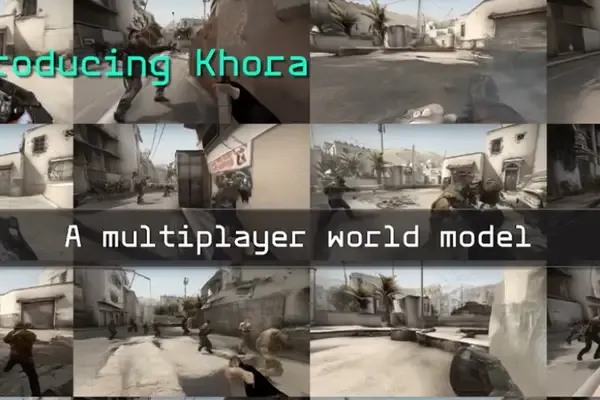
RhOS.ai與Ophilus.AI共同發布了千人聯機世界模型「RhOS-World: Khora」,該模型能讓多達1024個智能體在共享的3D空間中即時互動,且無需傳統物理引擎。其核心技術「STBoard(時空黑板)」架構,透過統一的物理狀態管理,解決了多視角一致性的難題,並大幅降低了擴展智能體數量的運算成本。
TutorMoments:AI 家教何時該出手,何時該放手?
今日我們推出 TutorMoments 預覽版,這是一個評估框架,旨在衡量尖端大型語言模型能否掌握教育中最難的平衡:何時介入協助學生,何時退後讓學生自行努力。TutorMoments 基於真實的一對一數學輔導課程,透過重播方式進行評估。經驗豐富的數學教師會檢視從美國收集的對話記錄。

告別反覆操作 OSD,華碩顯示器管理軟件 DisplayWidget Center 接入 AI 智能體
華碩顯示器管理軟體 DisplayWidget Center 推出重大更新,加入 AI 智能體功能,用戶可透過自然語言調整亮度、色溫等參數,無需操作 OSD。該功能支援 CLI 與 Agent Skill,可根據使用習慣自動切換模式,並適用於企業環境的統一部署。
千問App部分功能探索收費,想學豆包能跑通嗎?
千問App於8月7日更新,新增辦公助理等付費功能,基礎功能仍免費,但辦公場景使用額度需付費取得。此舉仿效豆包專業版等產品的訂閱模式,反映AI行業正集體轉向辦公場景收費,以尋求變現機會。