Meta AI 推出 Muse Code(Beta 版):由全新 Muse Spark 1.2 模型驅動的終端編碼代理
重點摘要
Meta AI 已發布 Muse Code(Beta 版),這是一款基於全新 Muse Spark 1.2 模型的終端編碼代理。Meta 將此組合定位為邁向技術前沿的下一步,未來還將推出更大規模的模型。Muse Code 專注於大型程式碼庫中的複雜軟體工程:它能夠規劃變更、編寫程式碼並驗證結果。一組非同步背景代理會在整個工作階段中保持活躍,而非每次任務重新生成。本機僅允許附加的事件日誌會記錄每次模型呼叫、工具執行、核准與編輯,Meta 稱其可精確重播且重啟安全。Muse Spark 1.2 是與該 harness 共同訓練的。Meta 還發布了一個核心優化案例研究,在長達 24 小時內執行超過 1,000 次工具呼叫。是否可部署?是的。Muse Code 以 Beta 版形式提供給 macOS 和 Linux 使用者,透過 vi 下載。
Meta AI has released Muse Code (in beta), a terminal coding agent in beta, powered by its new Muse Spark 1.2 model.Meta positions the pair as its next step toward the frontier, with larger models on the way.
Muse Code targets complex software engineering across large repositories: it plans changes, writes code, and validates the results.A set of async background agents stays alive for the whole session instead of spawning per task.
A local append-only event log records every model call, tool run, approval, and edit, which Meta calls replay-exact and restart-safe.Muse Spark 1.2 was co-trained with the harness itself.Meta also published a kernel-optimization case study running 1,000+ tool calls over as long as 24 hours.
Is it deployable Yes.Muse Code ships in beta for macOS and Linux via curl -fsSL https://dev.meta.ai/install.sh | bash.Muse Spark 1.2 is available in Muse Code and the Meta Model API, with expanded global access.
The launch post does not mention downloadable weights, so treat this as a hosted dependency.Company level: The API path fits any size.The Muse Code path fits teams already running agents in sandboxes with review gates.
Industries: Software and SaaS, developer tooling, fintech engineering, GPU and inference infrastructure, semiconductors and HPC.Applications: Repository-scale refactors and migrations, long-running bug triage, test generation, and GPU kernel optimization.
Async background agents Muse Code runs a simple agent loop plus a set of async background agents.These specialized agents remain active throughout each session.They are not spawned for individual tasks, which Meta says avoids redundant information gathering.
They carry out next steps and choose when to report back to the main agent.Meta states this persistence reduces latency and steering on difficult, multi-step tasks.Runtime design Muse Code uses a local event log.Every model call, tool run, approval, and edit is appended to it.
Meta calls this single source of truth replay-exact and restart-safe.After a crash, the agent resumes precisely where it stopped, letting long-running tasks survive failures.Bundled skills Three default skills ship with the agent./plan turns a task into an approval-gated plan.
/grill stress-tests that plan until it holds up./goal works toward successful completion of the specified objective.What changed in Muse Spark 1.2 Muse Spark 1.2 is a coding-focused update to Muse Spark 1.1.
Meta reports gains in code generation, complex debugging, codebase understanding, and end-to-end developer workflows.The research team significantly scaled up training compute on coding tasks and expanded environment diversity.The model keeps its strength in other areas, including general agents.
Three important training details: Co-training with the harness: Muse Spark 1.2 was co-trained with Muse Code.Training included rejection-sampled harness trajectories and recipe optimizations for goals, compaction, and subagents.The Muse Code toolset was integrated to maximize harness compatibility.
Long-horizon training: Training covered whole-repository generation, large end-to-end projects, and auto-research.The model uses planning, goal conditioning, and context compaction to sustain progress.Self-improvement: Muse Spark 1.
1 generated challenging coding environments and instruction-following templates, then graded candidate solutions against those requirements.That produced a scalable training dataset for 1.2.https://research.meta.
ai/blog/introducing-muse-code-and-muse-spark-1-2 Evaluation Meta’s methodology report is unusually specific.Terminal-Bench 2.1 uses all 89 tasks, pass@1 over five attempts.DeepSWE v1.1 covers 113 tasks across 91 repositories and five languages.
Meta Internal Coding Bench holds 440 tasks derived from real internal pull requests.Runs execute in isolated Daytona cloud sandboxes.Comparisons include Grok 4.5, Claude Opus 5, GPT-5.6 Terra, Gemini 3.6 Flash, and Kimi K3, each with its own agent product.
Meta notes its harness may not be tuned for third-party models.For reference, Meta’s model page lists Muse Spark 1.1 at 80.0 on Terminal-Bench 2.1.(function(){ var f=document.getElementById("mtp-muse-frame"); window.addEventListener("message",function(e){ var d=e.data||{}; var h=d.mtpHeight||d.
height; if(!h||typeof h!=="number")return; if(d.type&&d.type!=="mtp-resize"&&!d.mtpHeight)return; if(h>200&&h<6000){f.style.height=h+"px";} },false); })(); Case study: kernel optimization Meta tested iterative GPU kernel optimization over 1,000+ tool calls, running up to 24 hours.
The model writes, compiles, profiles, and progressively improves kernels against a provided baseline.Benchmarks covered KDA and MLA kernels on NVIDIA Hopper GPUs.For KDA, the baseline is the FLA Triton implementation, with third-party kernel libraries prohibited.Muse Spark 1.
2 paired a chunk-parallel preparation kernel with a sequential inter-chunk scan.For MLA, the reference is PyTorch at batch size 1, 64 heads, sequence length 8192, and latent dimension 512.The model built a two-kernel Triton pipeline that reuses the shared KV latent as both K and V.
Key Takeaways Muse Code is a beta terminal coding agent for macOS and Linux, powered by Muse Spark 1.2.Persistent async background agents replace per-task spawning to cut redundant information gathering.An append-only local event log makes the runtime replay-exact and restart-safe after crashes.
Muse Spark 1.2 was co-trained with the harness and trained on long-horizon, repository-scale work.Kernel case study ran 1,000+ tool calls over 24 hours on NVIDIA Hopper KDA and MLA kernels.Check out the Technical details, Model (Muse Spark 1.2) and Evaluation Methodology.
Also, feel free to follow us on Twitter and don’t forget to join our 150k+ML SubReddit and Subscribe to our Newsletter.Wait!are you on telegram?now you can join us on telegram as well.Need to partner with us for promoting your GitHub Repo OR Hugging Face Page OR Product Release OR Webinar etc.?
Connect with us The post Meta AI Releases Muse Code (Beta): A Terminal Coding Agent Powered by the New Muse Spark 1.2 Model appeared first on MarkTechPost.
Related
相關文章

當 human in the loop 變成“閉著眼睛點確認”,企業Agent 安全還能靠誰?
專家指出,AI Agent 從內容安全轉向行為安全,提示詞注入、工具濫用與過度授權成為主要風險。企業應建立可視、可管、可追溯的安全基線,並對工具權限進行最小化與臨時化管理,避免 human in the loop 淪為形式。安全防護需從靜態入口轉向動態行為約束,以因應 Agent 自主執行帶來的全新挑戰。

開源Agent框架刷爆ARC-AGI-3,「自我改進」的RLM harness引爭議
一套開源Agent框架在ARC-AGI-3基準測試中創下超過85%的正確率,大幅領先其他解決方案,其核心是名為「RLM harness」的自我改進機制。然而,該方法引發學術爭議,部分研究者批評它透過反覆試錯「鑽漏洞」,不符合ARC-AGI評測一次性推理的精神。這場討論促使AI社群重新審視評測標準,並可能影響未來ARC-AGI版本的設計方向。
騰訊是在“賽馬”,還是在打造 “Agent工廠”?
騰訊內部正在探討其發展策略究竟是「賽馬」機制還是打造「Agent工廠」。相關討論聚焦於公司如何平衡內部競爭與統一平台建設。目前站內已移除相關混雜文字,保留原始主題供讀者參考。
ChinaJoy 2026 AI遊戲規模化落地,邊緣雲與API安全重構產業底層邏輯
2026年ChinaJoy展館,“與AI同遊”的主題隨處可見。行業調查顯示,僅有21%的企業擁有完整的API資產清單,大量後臺AI接口仍在無人監控的狀態下裸奔。合規與安全也同步下沉。算力下沉還不夠,API安全必須同步前移邊緣雲解決了體驗問題,但AI交互入口的安全,同樣需要前置到邊緣。算力與安全,缺一不可Akamai的判斷很明確:遊戲AI轉型不能割裂算力與安全。這也是遊戲廠商規模化落地AI智能體、構建AI原生遊戲的標準化底層方案。
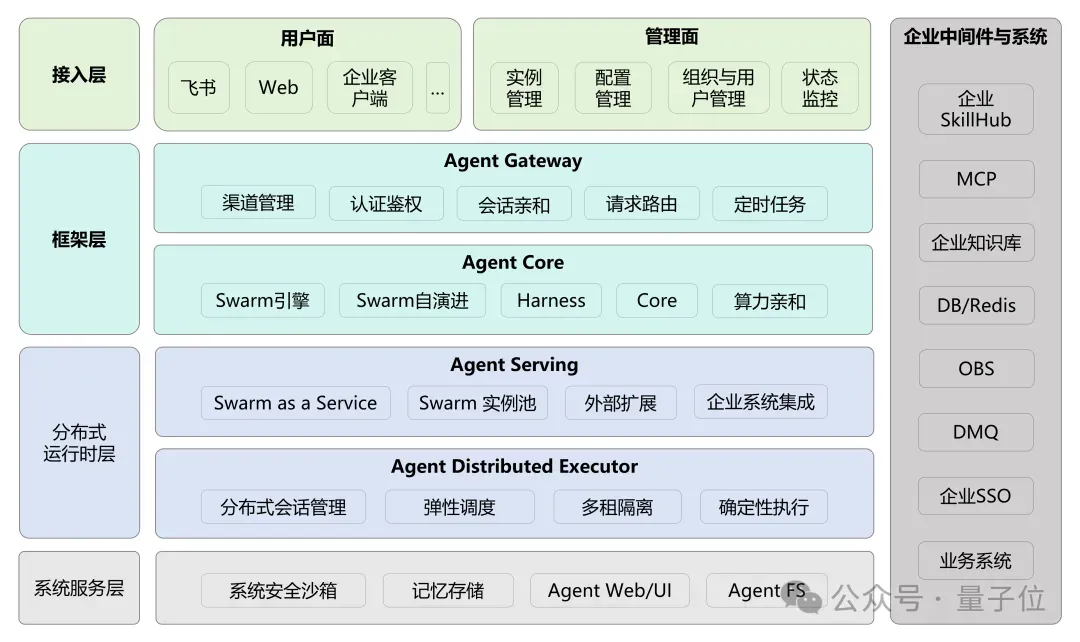
openJiuwen發佈業界首個企業級分佈式蜂群架構,聯合郵儲成功落地金融生產環境
< img id="wx_img" src="https://www.qbitai.com/wp-content/uploads/imgs/qbitai-logo-1.
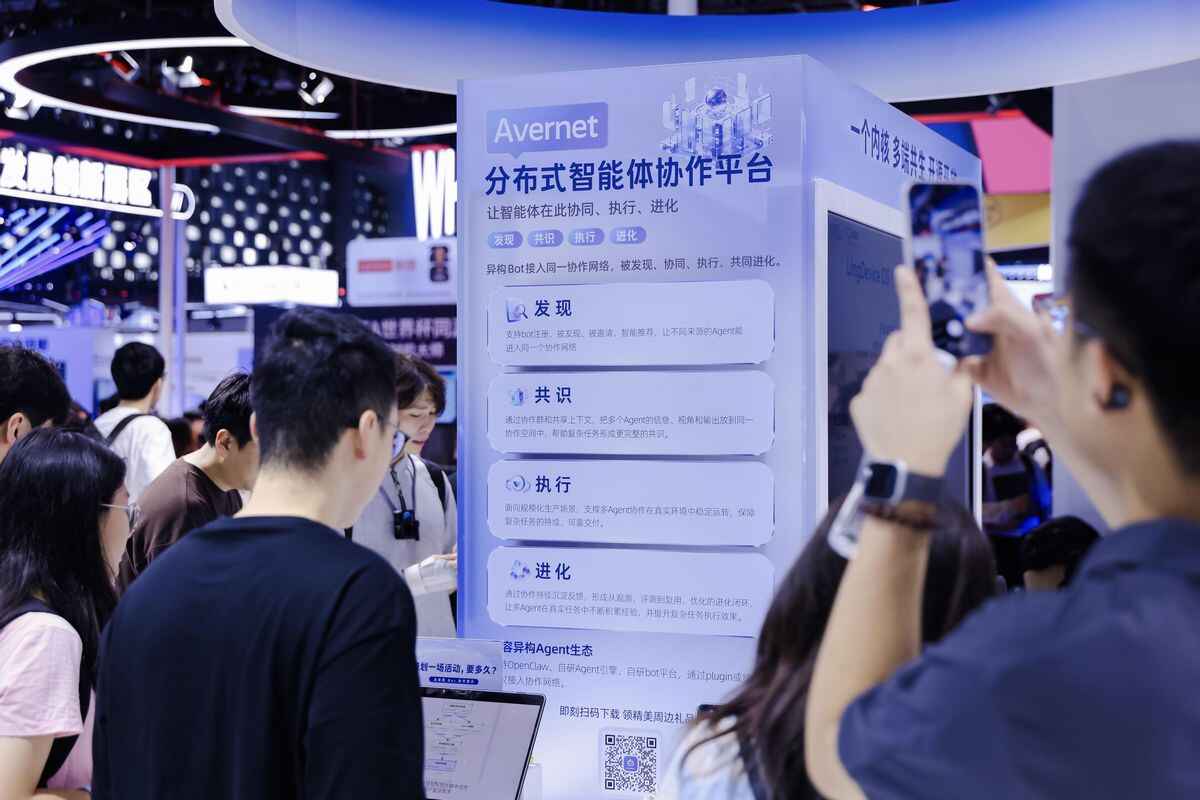
螞蟻集團開源Avernet,讓人與智能體像組織一樣高效協作
**螞蟻集團開源Avernet:打造人與智能體高效協作的“組織級”基礎設施** **來源:量子位** **2026-08-07 11:08:51** 近日,螞蟻集團正式宣佈開源多智能體協作基礎設施Avernet,其社區版本已同步上線。作為業界首個聚焦於“組織級協作”的智能體基礎設施,Avernet的首個版本重點開放了智能體協作網絡能力,旨在支持不同智能體之間的發現、共識達成、跨團隊協作與治理,為人工智能從“單點智能”走向“系統智能”提供關鍵支撐。