LFM2.5-2.6B:讓本地代理無所不在
重點摘要
LFM2.5-2.6B 專為在裝置端運行高效能代理而設計,支援工具呼叫與多步驟工作流程,同時保持輕量高速,適用於從筆電到手機的日常硬體。開發者因此能隨處部署代理、確保資料隱私,並無需雲端運算成本即可擴展使用。在工具使用、指令遵循及多步驟代理任務上,其效能可與規模大四倍的模型匹敵,堪稱同級最佳代理。
Back to Articles Deploy local agents everywhere with LFM2.5-2.
6B Team Article Published August 4, 2026 Upvote 1 Leonie Monigatti iamleonie Follow LiquidAI Sergei Tilga tilgasergey Follow LiquidAI Sinoué GAD GAD-cell Follow LiquidAI Song Duong sduong Follow LiquidAI Tim Seyde tseyde Follow LiquidAI Maxime Labonne mlabonne Follow LiquidAI LFM2.5-2.
6B is built to power capable agents entirely on-device.It supports tool calling and multi-step workflows while staying small and fast enough for everyday hardware, from laptops to phones.
This enables developers to deploy agents everywhere, keep data private on the device, and scale usage without a cloud inference bill.Best-in-class agent: Competitive with models 4x larger on tool use, instruction following, and multi-step agentic tasks.
Agentic reinforcement learning: Trained inside the most popular agentic harnesses to improve compatibility.Efficient inference: 220 tok/s on an Apple M5 Max and 113 tok/s on an AMD Ryzen CPU, in under 2.5 GB of memory.How we built a reliable agentic model for edge devices LFM2.5-2.
6B is pre-trained on ~34T tokens, with a mid-training phase that extends the context window to 128K.
Post-training then turns the base model into an agent in four stages: Supervised fine-tuning (SFT): two rounds of SFT, weighted heavily toward agentic data like tool use, web search, and harness trajectories.
Teacher specialization: train one specialist teacher per domain (math, code, tool use, and more).Multi-domain on-policy distillation (MOPD): distill the specialist teachers into a single student.
Agentic Reinforcement Learning (Agentic RL): run multi-turn RL inside real agent harnesses, where the model learns to work across different tools, system prompts, and multi-turn task environments.
The Agentic RL pipeline separates model optimization, inference, and environment execution into distinct components.The Training Engine optimizes the model, while the Rollout Engine generates actions using the latest policy.
The RL framework orchestrates the training loop by launching rollouts, collecting trajectories and rewards, and updating the model.Actions are executed within a Sandbox Service, where the Blackbox Harness hosts the agent (e.g.
, OpenClaw or Hermes Agent) and coordinates interactions with the task environment.The Harness Proxy lets us treat agentic harnesses as black boxes with no modification, while transparently capturing the token-level trajectories needed to reconstruct and validate RL training samples.
Benchmark results We evaluated LFM2.5-2.6B against models up to ~4x its size on STEM, instruction following, tool use, and agentic tasks.It is the smallest model in the group, yet it competes with and often beats the rest.Benchmark LFM2.5-2.6B (2.6B) gemma-4-E2B-it (5.1B) gemma-4-E4B-it (8B) Qwen3.
5-4B (4.7B) Qwen3.5-9B (9.7B) AA Omniscience -29.50 -74.47 -49.03 -54.30 -50.43 AIME25 51.87 26.33 34.27 49.33 56.07 LiveCodeBenchv6 59.41 54.92 63.77 60.85 69.86 IFBench 59.17 34.08 39.24 48.40 56.47 Multi-IF 80.07 69.44 77.35 55.67 62.55 IFStruct 85.49 64.85 76.65 36.25 78.50 BFCLv4 56.88 36.
98 46.39 50.56 60.13 ToolSandbox 77.83 52.40 65.00 75.55 76.44 τ³-Bench Banking 5.67 3.35 4.12 5.45 5.15 Claw-Eval average (EN) 62.85 53.14 58.02 62.28 66.53 PinchBench 68.22 44.24 55.09 71.26 71.45 BrowseComp+ (OpenClaw) 26.89 8.31 15.90 24.46 27.
23 For your app, the strengths are instruction following and tool use.LFM2.5-2.6B tops every instruction-following benchmark here, and every tool-use benchmark except BFCLv4, where only the 9.7B Qwen edges ahead.On agentic tasks, it beats both Gemma models and stays even with the Qwens.
It also leads on knowledge and stays close on math.Coding is the one place the larger models keep a clear lead, so reach for something bigger there.Inference speed on CPU and GPU LFM2.5-2.6B ships with day-one support across the inference ecosystem, including llama.cpp, MLX, vLLM, SGLang, and ONNX.
CPU inference.Due to its efficient LFM2 architecture, LFM2.5-2.6B is the fastest model we tested, with decode speeds of 220 tokens/s on an M5 Max and 113 tokens/s on a Ryzen AI Max+ 395.At 30 tokens/s, it allows you to run capable agents even on a phone.GPU inference.LFM2.5-2.
6B is the fastest model in its size class, reaching almost 15K output tokens per second at high concurrency, roughly 1.3B tokens per day on a single H100.How to use LFM2.5-2.6B Reach for LFM2.5-2.6B when you need on-device agents for high-volume workloads.
Install the latest version of transformers (compatible with transformers>=5.0.0): pip install -U transformers Then load and run the model: from transformers import AutoModelForCausalLM, AutoTokenizer model_id = "LiquidAI/LFM2.5-2.6B" model = AutoModelForCausalLM.
from_pretrained( model_id, device_map="auto", dtype="bfloat16", # attn_implementation="flash_attention_2" # uncomment on a compatible GPU ) tokenizer = AutoTokenizer.from_pretrained(model_id) prompt = "What is C.elegans?" input_ids = tokenizer.
apply_chat_template( [{"role": "user", "content": prompt}], add_generation_prompt=True, return_tensors="pt", tokenize=True, ).to(model.device) output = model.generate( input_ids, do_sample=True, temperature=0.2, top_k=80, repetition_penalty=1.05, max_new_tokens=512, ) print(tokenizer.
decode(output[0], skip_special_tokens=False)) LFM2.5-2.6B demo Check out this browser demo of LFM2.5-2.6B powering a research agent.The agent helps you research specific questions and generates a summary.Get Started Both LFM2.5-2.6B and LFM2.5-2.6B-Base are available on Hugging Face today.With LFM2.
5, we're delivering on our vision of AI that runs anywhere.These models are: Download: LFM2.5-2.6B-Base and LFM2.5-2.6B on Hugging Face.Try: run the WebGPU demo in your browser, no setup needed.Use in your harness: follow our guide on how to run a local agent, like OpenClaw, Hermes Agent, and Pi.
We can't wait to see what you build.Citation Please cite this article as: Liquid AI, "LFM2.5-2.6B: Deploy Agents Everywhere", Liquid AI Blog, Aug 2026.Or use the BibTeX citation: @article{liquidAI202626B, author = {Liquid AI}, title = {LFM2.5-2.
6B: Deploy Agents Everywhere}, journal = {Liquid AI Blog}, year = {2026}, note = {www.liquid.ai/blog/lfm2-5-2-6b}, } Models mentioned in this article 2 Spaces mentioned in this article 1 More from this author LFM2.
5-Encoders for Fast Long-Context Inference on CPU 65 July 28, 2026 Community EditPreview Upload images, audio, and videos by dragging in the text input, pasting, or clicking here.
Tap or paste here to upload images Comment · Sign up or log in to comment Upvote 1 Models mentioned in this article 2 Spaces mentioned in this article 1
Related
相關文章

當 human in the loop 變成“閉著眼睛點確認”,企業Agent 安全還能靠誰?
專家指出,AI Agent 從內容安全轉向行為安全,提示詞注入、工具濫用與過度授權成為主要風險。企業應建立可視、可管、可追溯的安全基線,並對工具權限進行最小化與臨時化管理,避免 human in the loop 淪為形式。安全防護需從靜態入口轉向動態行為約束,以因應 Agent 自主執行帶來的全新挑戰。

開源Agent框架刷爆ARC-AGI-3,「自我改進」的RLM harness引爭議
一套開源Agent框架在ARC-AGI-3基準測試中創下超過85%的正確率,大幅領先其他解決方案,其核心是名為「RLM harness」的自我改進機制。然而,該方法引發學術爭議,部分研究者批評它透過反覆試錯「鑽漏洞」,不符合ARC-AGI評測一次性推理的精神。這場討論促使AI社群重新審視評測標準,並可能影響未來ARC-AGI版本的設計方向。
騰訊是在“賽馬”,還是在打造 “Agent工廠”?
騰訊內部正在探討其發展策略究竟是「賽馬」機制還是打造「Agent工廠」。相關討論聚焦於公司如何平衡內部競爭與統一平台建設。目前站內已移除相關混雜文字,保留原始主題供讀者參考。
ChinaJoy 2026 AI遊戲規模化落地,邊緣雲與API安全重構產業底層邏輯
2026年ChinaJoy展館,“與AI同遊”的主題隨處可見。行業調查顯示,僅有21%的企業擁有完整的API資產清單,大量後臺AI接口仍在無人監控的狀態下裸奔。合規與安全也同步下沉。算力下沉還不夠,API安全必須同步前移邊緣雲解決了體驗問題,但AI交互入口的安全,同樣需要前置到邊緣。算力與安全,缺一不可Akamai的判斷很明確:遊戲AI轉型不能割裂算力與安全。這也是遊戲廠商規模化落地AI智能體、構建AI原生遊戲的標準化底層方案。
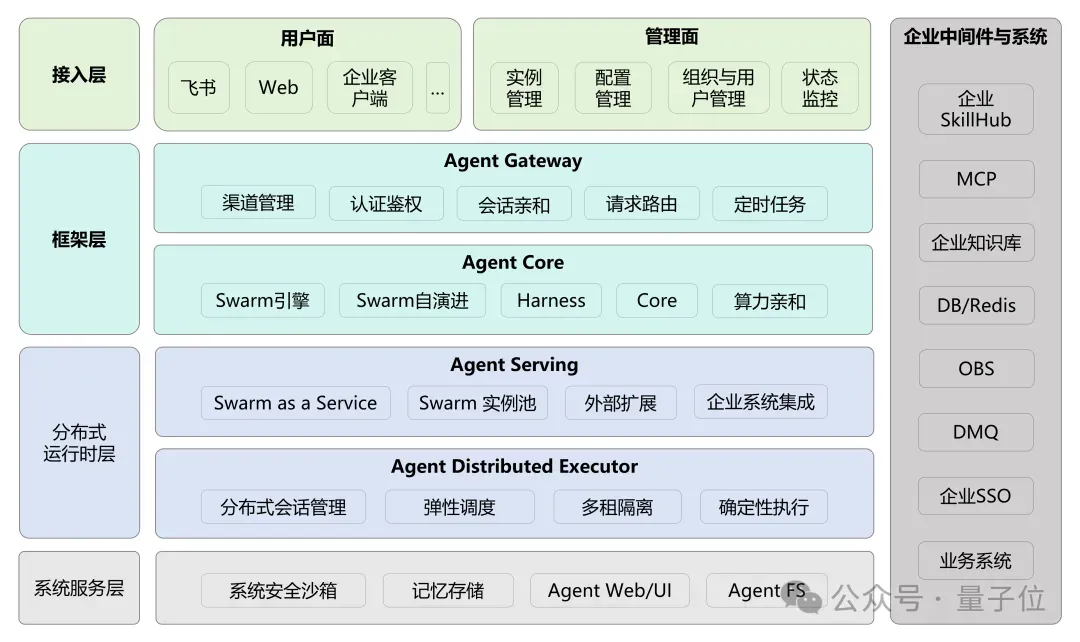
openJiuwen發佈業界首個企業級分佈式蜂群架構,聯合郵儲成功落地金融生產環境
< img id="wx_img" src="https://www.qbitai.com/wp-content/uploads/imgs/qbitai-logo-1.
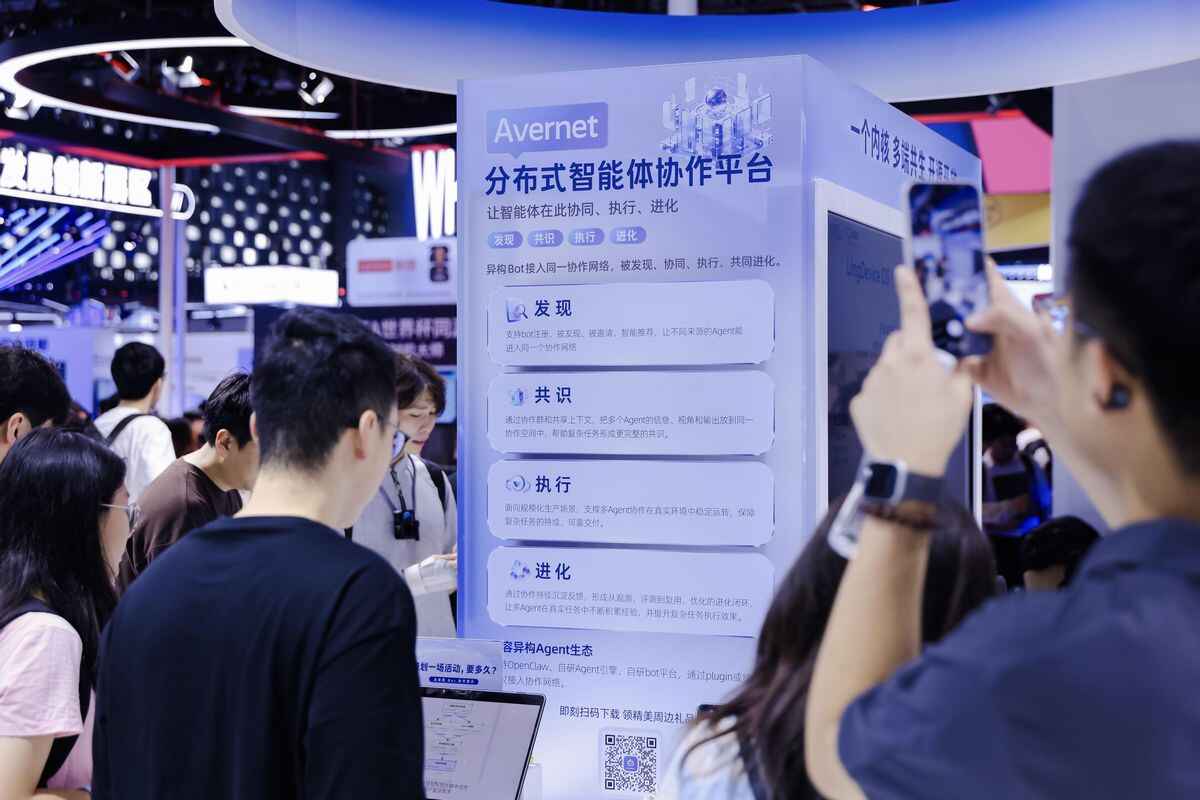
螞蟻集團開源Avernet,讓人與智能體像組織一樣高效協作
**螞蟻集團開源Avernet:打造人與智能體高效協作的“組織級”基礎設施** **來源:量子位** **2026-08-07 11:08:51** 近日,螞蟻集團正式宣佈開源多智能體協作基礎設施Avernet,其社區版本已同步上線。作為業界首個聚焦於“組織級協作”的智能體基礎設施,Avernet的首個版本重點開放了智能體協作網絡能力,旨在支持不同智能體之間的發現、共識達成、跨團隊協作與治理,為人工智能從“單點智能”走向“系統智能”提供關鍵支撐。