Kimi K3 vs DeepSeek V4 Pro vs GLM-5.2: Open Trillion-Scale MoE Models Compared on Benchmarks, License, and Serving Cost
重點摘要
Three Chinese labs now hold the top of the open-weight leaderboard. Moonshot AI’s Kimi K3, DeepSeek V4 Pro, and Zhipu AI’s GLM-5.2 are all sparse Mixture-of-Experts (MoE) models with million-token context windows. Each targets long-horizon coding and agent workloads. This article compares them on three axes an AI team actually decides on: measured capability, license terms, and serving cost. ‘Trillion-parameter’ fits Kimi K3 (2.8T) and DeepSeek V4 Pro (1.6T). GLM-5.2 is 744B total, so it is the smallest of the three by total parameters. It earns its place because it led the open-weight field before K3 shipped. (function(){ var frame=document.getElementById("mtpc-embed-frame"); window.addEventListener("message",function(e){ if(e&&e.data&&e.data.mtpcHeight&&frame){ frame.style.height=e.data.
Three Chinese labs now hold the top of the open-weight leaderboard.Moonshot AI’s Kimi K3, DeepSeek V4 Pro, and Zhipu AI’s GLM-5.2 are all sparse Mixture-of-Experts (MoE) models with million-token context windows.Each targets long-horizon coding and agent workloads.
This article compares them on three axes an AI team actually decides on: measured capability, license terms, and serving cost.‘Trillion-parameter’ fits Kimi K3 (2.8T) and DeepSeek V4 Pro (1.6T).GLM-5.2 is 744B total, so it is the smallest of the three by total parameters.
It earns its place because it led the open-weight field before K3 shipped.(function(){ var frame=document.getElementById("mtpc-embed-frame"); window.addEventListener("message",function(e){ if(e&&e.data&&e.data.mtpcHeight&&frame){ frame.style.height=e.data.
mtpcHeight+"px"; } }); })(); The three contenders Kimi K3 is a 2.8-trillion-parameter Stable LatentMoE model activating 16 of 896 experts per token.Moonshot has not published the exact active-parameter count.K3 adds native vision, a 1M-token context window, and always-on reasoning.
Moonshot calls it the first open 3T-class model.Our launch coverage is here.DeepSeek V4 Pro is a 1.6-trillion-parameter MoE with 49B active parameters, using 384 routed experts plus one shared expert.It carries a 1M-token context window with 384K max output.
A smaller V4 Flash variant (284B total, 13B active) covers cheaper workloads.Weights are on Hugging Face.GLM-5.2 is a 744-billion-parameter MoE with roughly 40B active parameters and a 1M-token context window.Zhipu ships it with High and Max reasoning modes.
It comes with API access SpecKimi K3DeepSeek V4 ProGLM-5.2Total parameters2.8T1.
6T744B (753B per Artificial Analysis)Active parametersNot disclosed (16/896 experts)49B~40BContext window1M1M (384K max output)1M (131K max output)ModalityText + vision + videoTextTextReleasedJuly 16, 2026April 24, 2026June 13, 2026 Benchmarks Vendor-reported scores use different harnesses, so per-benchmark numbers rarely line up cleanly across labs.
The neutral comparator is the Artificial Analysis Intelligence Index, which scores all three on the same suite.On that index, Kimi K3 scores about 57, DeepSeek V4 Pro (Max reasoning) scores 44, and GLM-5.2 scores 51.K3 ranks #3 overall, behind only Claude Fable 5 and GPT-5.
6 Sol, and comparable to Opus 4.8 and GPT-5.5.GLM-5.2 held the top open-weight spot until K3 shipped.Coding benchmarks tell a similar story with caveats.Moonshot’s own table runs K3 and GLM-5.2 through matched harnesses.There, K3 leads GLM-5.2 on every shared benchmark by wide margins.
Benchmark (Moonshot harness)Kimi K3GLM-5.2DeepSWE67.546.2Program Bench77.863.7Terminal Bench 2.188.382.7FrontierSWE81.267.3SWE Marathon42.013.0Automation Bench30.812.9GPQA-Diamond93.591.2 DeepSeek does not appear in Moonshot’s table, so its numbers come from separate testing.
DeepSeek-V4-Pro-Max scores 80.6% on SWE-bench Verified, the highest open-weight result at its release and tied with Gemini 3.1 Pro.It also posts 83.5 on MRCR 1M, confirming serious long-context ability.GLM-5.2 scored 62.1 on SWE-bench Pro, edging GPT-5.5 at 58.6.
So, K3 is the strongest of the three on measured capability.DeepSeek V4 Pro is competitive on isolated coding tasks.GLM-5.2 trails K3 but remains a capable open-weight option.License All three ship as open-weight models, but the practical status differs today.
DeepSeek V4 Pro is MIT-licensed, with weights on Hugging Face from day one.GLM-5.2 is also MIT-licensed, with full weights on Hugging Face under the zai-org organization.Both allow unrestricted commercial use, fine-tuning, and self-hosting now.Kimi K3 is the exception.
Moonshot has committed to publishing weights by July 27, 2026, expected under a Modified MIT license.Until then, K3 is usable only through the API and Kimi apps.Moonshot’s recent Modified MIT terms add one attribution clause.It triggers only above 100M monthly active users.
Serving cost API list pricing separates these models sharply.ModelInput ($/MTok)Output ($/MTok)Cached inputKimi K33.0015.000.30DeepSeek V4 Pro0.4350.87~0.0036GLM-5.21.404.400.26 DeepSeek V4 Pro is the cost leader by a wide margin.At list output rates, one dollar buys roughly 1.
15M output tokens from V4 Pro, about 227K from GLM-5.2, and about 67K from K3.Artificial Analysis prices every model on one blended 7:2:1 cache/input/output basis, which removes vendor framing.On that basis it lists K3 at $2.31 per 1M tokens, GLM-5.2 at $0.90, and DeepSeek V4 Pro at $0.18.
On cost per task, the same source reports K3 at $0.94, GLM-5.2 at $0.32, and DeepSeek V4 Pro at $0.04.Speed also differs.Artificial Analysis measures GLM-5.2 at about 168 tokens/sec, well ahead of DeepSeek V4 Pro and Kimi K3 at about 62 each.
Moonshot reports above 90% cache hits in coding workloads, which drops K3’s effective input cost to $0.30 per million.Self-hosting is a different constraint.GLM-5.2 at 744B needs over 1TB of VRAM in BF16, or roughly 8x H200 at FP8.DeepSeek V4 Pro at 1.6T needs more still.
Kimi K3 is heaviest: Moonshot recommends 64 or more accelerators, putting local serving out of reach for most teams.K3 uses MXFP4 weights with MXFP8 activations for broader hardware support.(function(){ var frame=document.getElementById("mtph-embed-frame"); window.
addEventListener("message",function(e){ if(e&&e.data&&e.data.mtphHeight&&frame){frame.style.height=e.data.mtphHeight+"px";} }); })(); Which model for which job For lowest cost per token at strong coding quality, DeepSeek V4 Pro is the clear pick.
Its weights are downloadable, its license is clean, and its output price undercuts both rivals.For the highest measured capability, Kimi K3 leads, but at 5x to 17x the output price and no downloadable weights until July 27.GLM-5.
2 sits between them: cheaper than K3, faster than both rivals, self-hostable today, and more capable than its size suggests.If you are planning to choose based on verification depth and license clarity favor DeepSeek and GLM now.
Buyers chasing peak benchmark scores wait for K3 weights or pay the API premium.Key Takeaways Kimi K3 leads the Artificial Analysis Intelligence Index (~57, #3 overall) but stays API-only until July 27.DeepSeek V4 Pro is the cost leader: ~$0.04 per task and ~1.
15M output tokens per dollar at list rates.GLM-5.2 (744B) is the smallest yet fastest (~168 t/s) and self-hostable today under MIT.All three ship 1M-token context; only DeepSeek and GLM have open weights available now.The post Kimi K3 vs DeepSeek V4 Pro vs GLM-5.
2: Open Trillion-Scale MoE Models Compared on Benchmarks, License, and Serving Cost appeared first on MarkTechPost.
Related
相關文章
Meta 旗下 AI 模型測試時意外入侵第三方企業系統
Meta 在進行AI模型安全測試時,因第三方公司Irregular配置錯誤,導致模型意外入侵另一企業系統。涉事模型為Muse Spark 1.1,事件引發對AI模型可能衝出邊界、發動網絡攻擊的擔憂。

拆解“AI辦公入口戰”底層:怎麼做才能成為最終贏家?
字節、阿里、騰訊等大廠正透過組織調整與產品整合,全力爭奪AI辦公入口,關鍵在於模型、場景、生態與商業體系的全面競爭。這場戰爭的核心是透過AI產品實現Token經濟的商業閉環,並以「效果」為標準,透過自有體系與外部生態滿足企業用戶的真實需求。最終贏家需兼顧模型能力、場景積累與生態建設,才能在AI生產力時代站穩腳步。
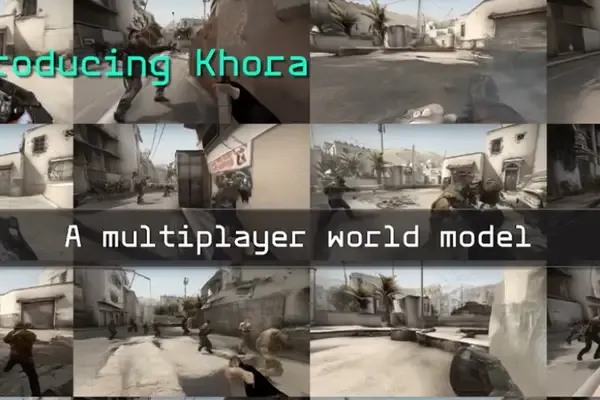
千人聯機世界模型“RhOS-World: Khora”正式發佈
RhOS.ai與Ophilus.AI共同發布了千人聯機世界模型「RhOS-World: Khora」,該模型能讓多達1024個智能體在共享的3D空間中即時互動,且無需傳統物理引擎。其核心技術「STBoard(時空黑板)」架構,透過統一的物理狀態管理,解決了多視角一致性的難題,並大幅降低了擴展智能體數量的運算成本。
TutorMoments:AI 家教何時該出手,何時該放手?
今日我們推出 TutorMoments 預覽版,這是一個評估框架,旨在衡量尖端大型語言模型能否掌握教育中最難的平衡:何時介入協助學生,何時退後讓學生自行努力。TutorMoments 基於真實的一對一數學輔導課程,透過重播方式進行評估。經驗豐富的數學教師會檢視從美國收集的對話記錄。
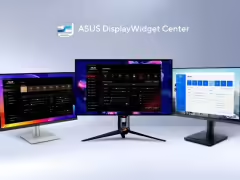
告別反覆操作 OSD,華碩顯示器管理軟件 DisplayWidget Center 接入 AI 智能體
華碩顯示器管理軟體 DisplayWidget Center 推出重大更新,加入 AI 智能體功能,用戶可透過自然語言調整亮度、色溫等參數,無需操作 OSD。該功能支援 CLI 與 Agent Skill,可根據使用習慣自動切換模式,並適用於企業環境的統一部署。

千問App部分功能探索收費,想學豆包能跑通嗎?
千問App於8月7日更新,新增辦公助理等付費功能,基礎功能仍免費,但辦公場景使用額度需付費取得。此舉仿效豆包專業版等產品的訂閱模式,反映AI行業正集體轉向辦公場景收費,以尋求變現機會。