Google Cloud 推出開放知識格式(OKF):一套供應商中立的 Markdown 規範,為 AI 代理提供精選背景資訊
重點摘要
基礎模型不斷增強,但仍卡在同一問題上:背景資訊。模型能寫程式碼或分析資料集,但需要正確的內部知識。這些知識包括資料表結構、指標定義、操作手冊、關聯路徑,且分散在目錄、維基和少數資深工程師的腦中。Google Cloud 推出了開放知識格式(OKF),這是一套開放規範,將 LLM-wiki 模式形式化為可攜式、可互操作的格式。它是一種供應商中立、對代理和人類都友善的標準,專為現代 AI 系統所需的背景資訊而設計。開放知識格式(OKF)是一種格式,而非服務或平臺。OKF v0.1 將知識表示為一組帶有 YAML 前置資料的 Markdown 檔案目錄。透過少量約定俗成的慣例,即可提供統一的背景資訊來源。
Foundation models keep getting stronger, yet they still stall on the same thing: context. A model can write code or analyze a dataset, but only with the right internal knowledge. That knowledge includes table schemas, metric definitions, runbooks, join paths and it lives scattered across catalogs, wikis, and a few senior engineers’ heads. Google Cloud introduced the Open Knowledge Format (OKF), an open specification that formalizes the LLM-wiki pattern into a portable, interoperable format. It is a vendor-neutral, agent- and human-friendly standard for the context modern AI systems need. Open Knowledge Format (OKF) OKF is a format, not a service or a platform. OKF v0.1 represents knowledge as a directory of markdown files with YAML frontmatter. A small set of agreed-upon conventions lets wikis written by one producer be consumed by a different agent without translation. That is the whole idea. There is no compression scheme, no new runtime, and no required SDK. A bundle of OKF documents is just markdown, just files, and just YAML frontmatter. It renders on GitHub, ships as a tarball, and mounts on any filesystem. If you have used Obsidian, Notion, or Hugo, the shape will feel familiar. OKF only formalizes the conventions needed to make those patterns interoperable. (function(){ window.addEventListener("message", function(ev){ if(ev && ev.data && ev.data.mtpOkfHeight){ var f = document.getElementById("mtp-okf-frame"); if(f){ f.style.height = ev.data.mtpOkfHeight + "px"; } } }); })(); The Fragmented Context Problem In most organizations, model context is overwhelmingly internal knowledge. Today it sits in incompatible silos: metadata catalogs with their own APIs, wikis, shared drives, code comments, and docstrings. Ask an agent ‘How do I compute weekly active users from our event stream?’ It must assemble that answer from scattered, mutually incompatible surfaces. Every vendor offers its own catalog, SDK, and knowledge-graph schema. None of the knowledge is portable across products or organizations. The result is duplicated effort. Every agent builder solves the same context-assembly problem from scratch. Every catalog vendor reinvents the same data models. Andrej Karpathy articulated the underlying idea in his April 2026 LLM Wiki gist. His point: LLMs do not get bored, do not forget to update cross-references, and can edit many files in one pass. The bookkeeping that makes humans abandon personal wikis is exactly what LLMs handle well. The same pattern keeps reappearing under different names. Examples include Obsidian vaults wired to coding agents, the AGENTS.md and CLAUDE.md convention files, and ‘metadata as code’ repos. Each instance is bespoke, so none of them interoperate. OKF standardizes that interoperability layer so agents can do the heavy lifting. How OKF Works: The Design in One Screen An OKF bundle is a directory of markdown files representing concepts — tables, datasets, metrics, playbooks, runbooks, or APIs. Each concept is one file, and the file path is its identity. Copy CodeCopiedUse a different Browsersales/ ├── index.md ├── datasets/ │ ├── index.md │ └── orders_db.md ├── tables/ │ ├── index.md │ ├── orders.md │ └── customers.md └── metrics/ ├── index.md └── weekly_active_users.md Each concept carries a small YAML front-matter block, then a markdown body for everything else. Copy CodeCopiedUse a different Browser--- type: BigQuery Table title: Orders description: One row per completed customer order. resource: https://console.cloud.google.com/bigquery?p=acme&d=sales&t=orders tags: [sales, revenue] timestamp: 2026-05-28T14:30:00Z --- # Schema | Column | Type | Description | |---------------|--------|------------------------------------------| | `order_id` | STRING | Globally unique order identifier. | | `customer_id` | STRING | FK to [customers](/tables/customers.md). | The reserved structured fields are type, title, description, resource, tags, and timestamp. Concepts link to each other with normal markdown links. Those links turn the directory into a graph that is richer than file-system parent/child relationships. Bundles can optionally include index.md files for progressive disclosure and log.md files for change history. Three Principles Behind the Design Minimally opinionated: OKF requires exactly one field on every concept: type. Everything else is left to the producer. The spec defines the interoperability surface, not the content model. Producer/consumer independence: A human-written bundle can be read by an agent. A pipeline-generated bundle can be browsed in a visualizer. The format is the contract; tooling at each end is swappable. Format, not platform: OKF is tied to no cloud, database, model provider, or agent framework. It will never require a proprietary account to read, write, or serve. Use Cases, With Examples Data team metadata-as-code: Export BigQuery table and metric definitions as a bundle. Commit it next to the SQL it describes, and review changes through pull requests. Incident runbooks for agents: Store each runbook as a concept. An on-call agent reads index.md, follows cross-links, and resolves the join path it needs. Cross-org knowledge exchange: A vendor ships a catalog export as OKF. Your agent consumes it directly, with no integration work. Developer-team wiki: Replace a stale Notion or Obsidian space with versioned markdown that an agent keeps current. How OKF Compares ApproachStorageSchema requiredPortableSDK/registryAgent-readableOKF v0.1Markdown + YAML filesOnly typeYesNoYes, no translationNotionProprietary DBPer-workspaceExport-onlyAPI neededVia APIObsidian vaultMarkdown filesNone enforcedYesNoBespoke conventionsMetadata catalogVendor storeVendor schemaExport-onlyVendor SDKVendor-specificRAG indexVector storeEmbedding modelNoYesChunks, not concepts The distinction from RAG is useful for developers. RAG re-derives knowledge at query time from raw chunks. An OKF bundle stores curated, cross-linked concepts that an agent reads and updates directly. A Minimal OKF Consumer OKF is parseable with standard tools. This reads a bundle and builds its link graph. Copy CodeCopiedUse a different Browserimport pathlib, re, yaml def load_bundle(root): concepts, links = {}, [] for path in pathlib.Path(root).rglob("*.md"): text = path.read_text() meta = {} if text.startswith("---"): _, fm, body = text.split("---", 2) meta = yaml.safe_load(fm) or {} else: body = text concepts[str(path)] = meta # type, title, tags, etc. for target in set(re.findall(r"\]\((/[^)]+\.md)\)", body)): links.append((str(path), target)) # markdown cross-links return concepts, links concepts, graph = load_bundle("sales/") No backend or install is needed to read or serve a bundle. The same files live in version control beside the code they describe. Key Takeaways Google’s Open Knowledge Format (OKF) v0.1 formalizes the LLM-wiki pattern into a portable, vendor-neutral spec. A bundle is just a directory of markdown files with YAML frontmatter—no SDK, runtime, or registry. Every concept requires only one field, type; cross-links between files form the knowledge graph. Google shipped reference tools: a BigQuery enrichment agent, a static HTML visualizer, and three sample bundles. Unlike RAG, OKF stores curated, version-controlled concepts that agents read and update directly. Check out the Technical details here. Also, feel free to follow us on Twitter and don’t forget to join our 150k+ML SubReddit and Subscribe to our Newsletter. Wait! are you on telegram? now you can join us on telegram as well. Need to partner with us for promoting your GitHub Repo OR Hugging Face Page OR Product Release OR Webinar etc.? Connect with us The post Google Cloud Introduces Open Knowledge Format (OKF): A Vendor-Neutral Markdown Spec for Giving AI Agents Curated Context appeared first on MarkTechPost.
Related
相關文章
Edge AI Daily 早報(6月19日)
AI Engineer World's Fair 2026規模再創新高,標誌AI工程從幕後走向舞臺中央。行業面臨結構性調整:楊立昆警示OpenAI年虧210億美元揭示商業模式脆弱性,Transformer之父轉投OpenAI反映人才爭奪白熱化。Anthropic多線佈局——語音支持七種語言、加入碳清除聯盟、落子首爾辦事處,展現生態擴張野心。監管壓力加劇,意大利依據DMA調查蘋果iCloud,巴西開放iOS側載佣金降至5%,蘋果圍牆花園持續崩塌。
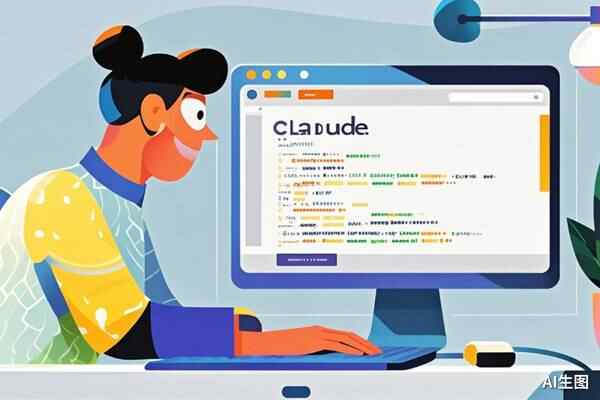
今天起,Claude Design要把設計師和程序員變成同一種人了
猝不及防!Anthropic深夜甩出Claude Design大更新,設計系統一鍵導入,代碼雙向同步,9大平臺一鍵導出。Anthropic設計師親自下場錄屏:AI跑了八輪自查,才敢把設計稿給你看。
OpenAI 成為 Rust 基金會白金會員,合計贊助 60 萬美元
OpenAI 正式成為 Rust 基金會白金會員,將提供總計 60 萬美元資金,用於支持 Rust 開源項目維護者及 Rust 創新實驗室等計劃。這標誌著 AI 巨頭對安全、高效系統編程語言的重視。 #OpenAI #Rust #開源
Claude Design 上線首周用戶破百萬,和 Claude Code 共享 AI 配額
Anthropic 今天(6 月 18 日)發佈公告,在宣佈 Claude Design 上線首周用戶規模突破 100 萬後,進一步強化和 Claude Code 的雙向聯動,實現從設計到編程的無縫工作流。
谷歌時隔6年再發智能音箱,Gemini上桌,售價不到700元
智東西 編譯 | 劉煜 編輯 | 陳駿達 智東西6月18日消息,谷歌昨日宣佈,其首款搭載居家版Gemini語音助手的智能音箱(Google Home Speaker)已開啟預售,將於當地時間6月25日正式上市,售價為99.99美元(約合人民幣677.03元)。在此之前,谷歌已有6年沒有推出過獨立智能音箱產品。 谷歌這款智能音箱外觀近似球形,風格類似亞馬遜新一代Echo音箱與蘋果舊款音箱HomePod Mini。 ▲谷歌智能音箱(圖源:谷歌官網) 使用音箱時,用戶只需通過口令“Hey Google”或“OK Google”喚醒Gemini,就可以繼續下達相應指令。這與谷歌舊款音箱、智能顯示屏等喚醒語音助手的方式相同。此外,用戶只要按照日常說話習慣下達命令,Gemini便能理解用戶意圖,相比之前大大提升溝通效率。 一、加強短時對話記憶,會員可與Gemini不限次數對話 谷歌此次推出的全新音箱升級諸多功能。其中,音箱搭載的Gemini語音助手擁有10款全新擬人化語音音色,用戶可以根據喜好自行選擇聲線。音箱還可支持用戶一次性下達多條語音指令,即使指令未能說對、說完整,用戶中途改口Gemini也能識別。 Gemini還具備多鏈路推理能力,落地到實際生活場景中比較實用。例如,用戶問:“我支持的足球隊下場比賽天氣如何?”Gemini收到指令後,會自動查詢賽事時間、舉辦地點,同時匹配相應時段天氣,再給出答覆。 同時,Gemini加強了短時對話記憶,能承接上下文實現連續對話功能。即使用戶連續追問、甚至串聯多項任務、不重複交代前置條件,該語音助手也能實現來回連貫交流。 ▲谷歌Gemini對話場景(圖源:谷歌官網) 不僅如此,Gemini搭配的連續對話功能,能讓應答後的音箱麥克風保持短暫收音,用戶無需重複喊“OK Google”就能繼續提問。該功能現已全面支持所有Gemini原生適配的語言,包括
微軟,考慮接入DeepSeek
這篇消息聚焦「微軟,考慮接入DeepSeek」。原始導語提到:Copilot Cowork轉為按量計費。 從 AI 情報角度來看,這類內容值得關注其背後的技術進展、產品落地、產業競爭與後續市場影響。