PP-OCRv6 on Hugging Face: 50-Language OCR from 1.5M to 34.5M Parameters
重點摘要
Back to Articles PP-OCRv6 on Hugging Face: 50-Language OCR from 1.5M to 34.5M Parameters Team Article Published June 22, 2026 Upvote 2 AlexZhang AlexTransformer Follow PaddlePaddle cuicheng ChengCui Follow PaddlePaddle Jun Zhang jzhang533 Follow PaddlePaddle Manhui Lin gggdddfff Follow PaddlePaddle Yue Zhang xiaohei66 Follow PaddlePaddle yubo zhangyubo0722 Follow PaddlePaddle leo-q8 leo-q8 Follow PaddlePaddle Evaluate PP-OCRv6 online, then integrate lightweight, production-ready OCR with PaddlePaddle, Transformers, or ONNX Runtime backend. PP-OCRv6 is the latest generation of PaddleOCR’s universal OCR model family. It is designed for real-world text detection and recognition across documents, screenshots, multilingual images, digital displays, industrial labels, and scene text. The model f
Back to Articles PP-OCRv6 on Hugging Face: 50-Language OCR from 1.5M to 34.5M Parameters Team Article Published June 22, 2026 Upvote 2 AlexZhang AlexTransformer Follow PaddlePaddle cuicheng ChengCui Follow PaddlePaddle Jun Zhang jzhang533 Follow PaddlePaddle Manhui Lin gggdddfff Follow PaddlePaddle Yue Zhang xiaohei66 Follow PaddlePaddle yubo zhangyubo0722 Follow PaddlePaddle leo-q8 leo-q8 Follow PaddlePaddle Evaluate PP-OCRv6 online, then integrate lightweight, production-ready OCR with PaddlePaddle, Transformers, or ONNX Runtime backend. PP-OCRv6 is the latest generation of PaddleOCR’s universal OCR model family. It is designed for real-world text detection and recognition across documents, screenshots, multilingual images, digital displays, industrial labels, and scene text. The model family scales from 1.5M to 34.5M parameters, with three tiers: tiny, small, and medium. The medium and small tiers support 50 languages, including Simplified Chinese, Traditional Chinese, English, Japanese, and 46 Latin-script languages. Try PP-OCRv6 online quickly: PP-OCRv6 Online Demo. On PaddleOCR’s official in-house multi-scenario OCR benchmarks, PP-OCRv6_medium reaches 86.2% detection Hmean and 83.2% recognition accuracy. Compared with PP-OCRv5_server, it improves text detection by +4.6 percentage points and text recognition by +5.1 percentage points. PP-OCRv6 focuses on a practical OCR need: producing accurate, structured text outputs with small models and flexible deployment options. For a deeper discussion of why specialized OCR models remain useful in the VLM era, see our previous blog: PP-OCRv5 on Hugging Face: A Specialized Approach to OCR. What’s new in PP-OCRv6 PP-OCRv6 introduces architecture, training, and data improvements across detection and recognition. The main design goal is to improve OCR accuracy while keeping model sizes suitable for different deployment settings. Three model tiers PP-OCRv6 provides three model tiers, covering different model sizes and OCR accuracy levels. Model Model size Detection Hmean Recognition accuracy Typical application scenarios PP-OCRv6_tiny 1.5M params 80.6% 73.5% Edge devices, lightweight local OCR, latency-sensitive demos, constrained environments PP-OCRv6_small 7.7M params 84.1% 81.3% Mobile, desktop, balanced OCR services, multilingual OCR with lower compute cost PP-OCRv6_medium 34.5M params 86.2% 83.2% Accuracy-oriented OCR, server-side pipelines, industrial OCR, document ingestion, multilingual OCR PPLCNetV4 backbone PP-OCRv6 uses PPLCNetV4 as a unified backbone for text detection and text recognition. For developers, the main benefit is consistency across the model family. The tiny, small, and medium tiers are not unrelated models; they are part of the same OCR family and share a common architectural direction. RepLKFPN for text detection Text detection is the first stage of the OCR pipeline. Detection quality affects the crops sent to the recognizer, and poor crops often lead to poorer recognition. PP-OCRv6 upgrades the detection module with RepLKFPN, a lightweight large-kernel feature pyramid network designed for multi-scale text detection while keeping inference efficient. This is relevant for real-world OCR inputs, where text may be small, dense, rotated, low-resolution, or embedded in complex backgrounds. EncoderWithLightSVTR for recognition For text recognition, PP-OCRv6 uses EncoderWithLightSVTR. It combines local context modeling with global attention to improve recognition quality on challenging text crops. The recognition improvements are especially relevant for multilingual text, screen text, industrial characters, special symbols, dense text, and noisy image regions. Unified multilingual OCR The medium and small tiers support 50 languages in one model family, covering Simplified Chinese, Traditional Chinese, English, Japanese, and 46 Latin-script languages. This helps reduce the need for separate OCR models across common multilingual OCR scenarios. Quick start with PaddleOCR Install PaddleOCR: pip install paddleocr Run OCR with Paddle Infernece(Default backend): from paddleocr import PaddleOCR # Model: PP-OCRv6_medium(Default) # Backend: Paddle Inference(Default) ocr = PaddleOCR( use_doc_orientation_classify=False, use_doc_unwarping=False, use_textline_orientation=False, ) result = ocr.predict("https://paddle-model-ecology.bj.bcebos.com/paddlex/imgs/demo_image/general_ocr_002.png") for res in result: res.print() res.save_to_img("output") res.save_to_json("output") The OCR result can be saved as visualization images and structured JSON output. The structured output can then be used by downstream systems such as document parsing, search, extraction, RAG, analytics, or agent workflows. Available inference backends PP-OCRv6 can be used with multiple inference backends through PaddleOCR. PaddleOCR 3.7 provides a unified inference-engine interface, where engine selects the underlying runtime and related configuration can be passed through the pipeline or module API. Backend Description Transformers Hugging Face / PyTorch-oriented inference path for supported PaddleOCR models ONNX Runtime Portable inference path for ONNX-based deployment environments Paddle Inference Native Paddle inference format For Hugging Face users, PaddleOCR supports running selected OCR and document parsing models with a Transformers backend. This can be enabled with: engine="transformers" For more details on how the Transformers backend works in PaddleOCR, see: PaddleOCR: Running OCR and Document Parsing Tasks with a Transformers Backend Run PP-OCRv6 example with Transformer Backend: from paddleocr import PaddleOCR # Model: PP-OCRv6_medium(Default) # Backend: transformers ocr = PaddleOCR( use_doc_orientation_classify=False, use_doc_unwarping=False, use_textline_orientation=False, engine="transformers", ) result = ocr.predict("https://paddle-model-ecology.bj.bcebos.com/paddlex/imgs/demo_image/general_ocr_002.png") ONNX variants are also available in the PP-OCRv6 Collection for environments that use ONNX Runtime through engine="onnxruntime": from paddleocr import PaddleOCR # Model: PP-OCRv6_medium(Default) # Backend: ONNX Runtime ocr = PaddleOCR( use_doc_orientation_classify=False, use_doc_unwarping=False, use_textline_orientation=False, engine="onnxruntime", ) result = ocr.predict("https://paddle-model-ecology.bj.bcebos.com/paddlex/imgs/demo_image/general_ocr_002.png") Together, these backend options make PP-OCRv6 available across different runtime environments while keeping the same OCR model family on the Hugging Face Hub. Conclusion PP-OCRv6 extends PaddleOCR with a lightweight, multilingual OCR model family for real-world text detection and recognition. The release includes three model tiers from 1.5M to 34.5M parameters, up to 50-language OCR support, improved detection and recognition accuracy over PP-OCRv5_server, and multiple model formats on the Hugging Face Hub, including safetensors, Paddle inference models, and ONNX models. Together with the hosted Hugging Face Space and the available PaddleOCR inference backends, PP-OCRv6 provides several entry points for evaluation and integration: Online Demo: PP-OCRv6 Online Demo Model Collection: PP-OCRv6 Collection Transformers Backend Blog: PaddleOCR with Transformers Backend PaddleOCR Documentation: PP-OCRv6 Documentation PaddleOCR: PP-OCRv6 Documentation PaddleOCR Official Website: https://www.paddleocr.com You can evaluate PP-OCRv6 with the online demo, explore the available model assets in the Collection, and use the inference backend that matches your own OCR workflow. Spaces mentioned in this article 1 Collections mentioned in this article 1 More from this author PaddleOCR 3.5: Running OCR and Document Parsing Tasks with a Transformers Backend 37 May 18, 2026 Community EditPreview Upload images, audio, and videos by dragging in the text input, pasting, or clicking here. Tap or paste here to upload images Comment · Sign up or log in to comment Upvote 2 Spaces mentioned i
Related
相關文章
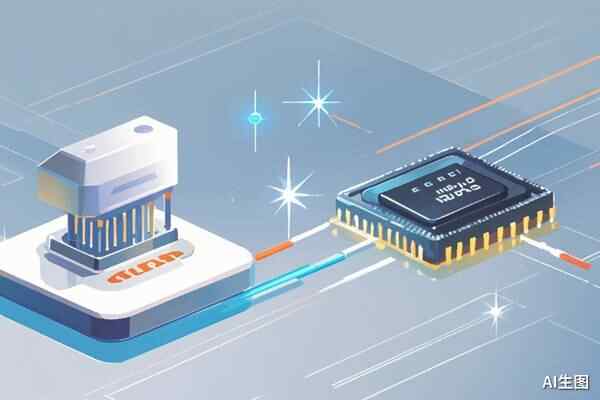
2026“端側AI戰事”升級,蘋果谷歌們在拼什麼?
2026年端側AI競爭將進一步升級,蘋果、谷歌等科技巨頭正專注於軟硬體協同優化。目標是讓端側大模型從「能跑」進化到「好用」,提升使用者體驗。這場戰事考驗各廠整合晶片、演算法與終端裝置的能力。
開弓沒有回頭箭, Fable5 封鎖後 Claude 繼續踩油門:最新 Mythos 已完成訓練,Sonnet 5最快下週上線
{"id":"952b4854-6517-45fa-bbcf-981afca341a4","object":"response","model":"deepseek-v4-flash","output":[],"stop_reason":"max_output_tokens","usage":{"input_tokens":146,"output_tokens":200,"total_tokens":346}}
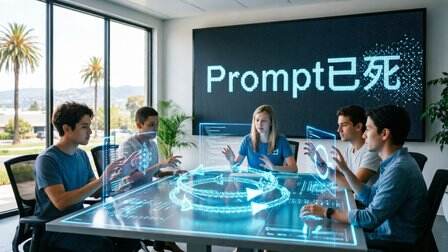
Prompt已死,Loop Engineering成了硅谷AI圈新頂流
Prompt Engineering不再是主流,Loop Engineering已成為矽谷AI圈的最新熱門趨勢。這項新技術專注於設計反饋循環,讓AI模型能持續自我優化與修正。業界認為,Loop Engineering將取代傳統提示工程,成為提升AI效能的核心方法。
百川發佈新一代醫療增強大模型 M4:登頂 OpenAI 醫療評測,超越 GPT-5.5
該模型在 HealthBench 及其 Hard、Professional 三個榜單上同時位列世界第一,全面超越 GPT-5.5、Claude Opus 4.7、DeepSeek-V4-Pro,幻覺率低至 3.3%。
讓大模型從“一問一答”走向“邊看邊說”,京東開源實時視頻視覺語言交互模型 JoyAI-VL-Interaction
JoyAI-VL-Interaction 支持攝像頭、直播流、監控流等多種視頻輸入,也支持語音輸入輸出、可視化界面、長期記憶、後臺模型接口和 vLLM 部署方案。
微軟也燒不起 Token ,該 DeepSeek 上位了
這篇消息聚焦「微軟也燒不起 Token ,該 DeepSeek 上位了」。原始導語提到:免費又無限的 AI 蜜月期,正在結束 從 AI 情報角度來看,這類內容值得關注其背後的技術進展、產品落地、產業競爭與後續市場影響。