Databricks Open-Sources Omnigent: A Meta-Harness That Composes, Governs, and Shares AI Agents Across Claude Code, Codex, and Pi
重點摘要
Databricks released Omnigent, an open source ‘meta-harness’ for AI agents. The project ships under the Apache 2.0 license. The Databricks AI team built it with Neon. A harness is the wrapper around a model that turns it into an agent. Claude Code, Codex, and Pi are harnesses. Omnigent sits one level above them. It treats each harness as an interchangeable part of a larger system. Many engineers now juggle four or five agents at once. They copy text between coding agents, search tools, Docs, and Slack. Each harness only understands its own sessions. Omnigent adds a shared layer where composition, control, and collaboration live. What is Omnigent Omnigent is a common interface above command-line agents and agent SDKs. It wraps terminal coding agents such as Claude Code, Codex, and Pi. It als
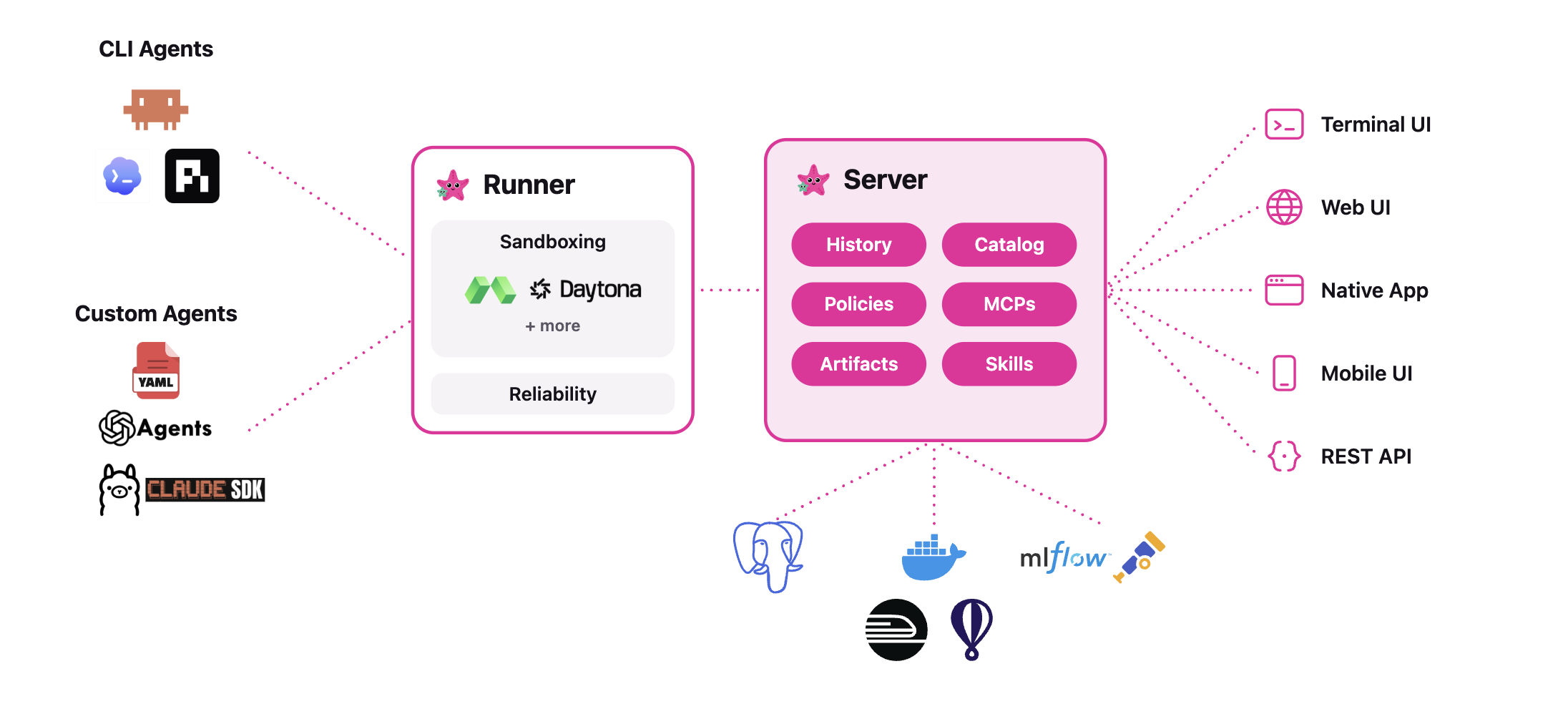
Databricks released Omnigent, an open source ‘meta-harness’ for AI agents. The project ships under the Apache 2.0 license. The Databricks AI team built it with Neon. A harness is the wrapper around a model that turns it into an agent. Claude Code, Codex, and Pi are harnesses. Omnigent sits one level above them. It treats each harness as an interchangeable part of a larger system. Many engineers now juggle four or five agents at once. They copy text between coding agents, search tools, Docs, and Slack. Each harness only understands its own sessions. Omnigent adds a shared layer where composition, control, and collaboration live. What is Omnigent Omnigent is a common interface above command-line agents and agent SDKs. It wraps terminal coding agents such as Claude Code, Codex, and Pi. It also wraps SDKs like OpenAI Agents and the Claude Agents SDK. The design rests on one observation. However a harness calls its model internally, the user-facing interface is the same. Messages and files go in. Text streams and tool calls come out. Omnigent standardizes that interface so harnesses become swappable. You supply the models and the infrastructure. Omnigent runs the agents on top. It can coordinate several of them as interchangeable workers under one orchestrator. How Omnigent Works The architecture has two parts. A runner wraps any agent in a sandboxed session with a uniform API. A server provides policies and sharing. The server exposes every session over the terminal, the app, and web APIs. One command starts a session in your terminal. It also launches a local web UI at localhost:6767. The same session appears in the browser or on a phone. Messages, sub-agents, terminals, and files stay in sync. The CLI installs under two names, omnigent and omni. They are interchangeable. On first run, it detects model credentials already in your environment. https://omnigent.ai/ Composition, Control, and Collaboration Databricks team frames Omnigent around three capabilities: Composition means combining models, harnesses, and techniques without rewriting code. You switch between Claude Code, Codex, Pi, and custom agents with one-line changes. Control means stateful, contextual policies. They track agent actions and enforce guardrails at the meta-harness layer, not through prompts. One example pauses an agent after every $100 it spends. Another requires human approval to git push once the agent installs a new npm package. Collaboration means sharing live agent sessions by URL. Teammates watch the agent work and chat with it in real time. They can comment on files, co-drive the session, or fork the conversation. An OS sandbox, called Omnibox, underpins this. It can lock down OS access and transform network requests. For instance, it can keep your GitHub token hidden from the agent. The token is injected only in the egress proxy on approved requests. Use Cases and Examples Two example agents ship with the repository: Polly is a multi-agent coding orchestrator. It writes no code itself. It plans, then delegates work to coding sub-agents in parallel git worktrees. Each diff routes to a reviewer from a different vendor than the writer. You merge the result. Debby is a brainstorming partner with two heads. One head is Claude, the other GPT. Every question goes to both, with answers shown side by side. Type /debate and the heads critique each other before converging. Other practical patterns follow the same shape. A frontier advisor model can guide a cheaper open-source worker. A lead agent can orchestrate parallel subagents. Different LLMs can handle planning, search, and code generation in one flow. Interactive Concept Demo Marktechpost team has created a interactive demo (below) that lets you experience Omnigent’s meta-harness workflow firsthand. You pick a task for the Polly orchestrator, which plans it and delegates to three sub-agents: Claude Code, Codex, and Pi that are running in parallel and streaming their steps live. A session cost meter ticks up as they work, and the two policy toggles show Omnigent’s control layer in action: the cost budget pauses the run at $3.00 for your approval, and a contextual policy halts a git push that follows an npm install until you allow it. Once the sub-agents finish, each diff is cross-reviewed by a different vendor than the one that wrote it, then marked ready to merge. Terminal, Web, and Mobile tabs show the same session staying in sync across interfaces. It’s an illustrative simulation, no live models are called. ◇ Omnigent Meta-Harness One orchestrator. Many harnesses. One governed session. Interactive concept demo 1 · Pick a task for the orchestrator (Polly) Build REST endpoint + tests Refactor auth module Add caching layer 2 · Policies (control layer) Cost budget — pause at $3.00 Approve git push after npm install Run session ⌘ Terminal ▤ Web UI ▢ Mobile same session · in sync Session LLM cost $0.00 Orchestrator · Polly (writes no code; plans & delegates) Idle. Pick a task and press “Run session”. Claude Codewaiting Codexwaiting Piwaiting ✓ Ready to merge. 3 diffs cross-reviewed by a different vendor than the writer. Illustrative simulation of the Omnigent workflow — no live models are called. Learn more at omnigent.ai · GitHub · Apache 2.0 · Alpha. Marktechpost · AI Dev & Research Media Policy paused the session Reason goes here. Deny / stop Approve & continue /* ===== scoped reset ===== */ #omnigent-demo *{box-sizing:border-box!important;margin:0;padding:0} #omnigent-demo{ background:#0b0b0c!important;color:#e8e8ea!important; font-family:-apple-system,BlinkMacSystemFont,"Segoe UI",Roboto,Helvetica,Arial,sans-serif!important; border:1px solid #1f1f22!important;border-radius:16px!important; padding:0!important;line-height:1.5!important; max-width:920px!important;margin:0 auto!important;overflow:hidden!important; } #omnigent-demo hr,#omnigent-demo p:empty,#omnigent-demo del,#omnigent-demo s{display:none!important} #omnigent-demo .og-wrap{padding:22px!important} #omnigent-demo code{font-family:ui-monospace,SFMono-Regular,Menlo,Consolas,monospace!important; background:#16161a!important;color:#9fd356!important;padding:1px 5px!important;border-radius:5px!important;font-size:.85em!important} /* ===== header ===== */ #omnigent-demo .og-head{display:flex!important;align-items:center!important;justify-content:space-between!important;gap:12px!important;flex-wrap:wrap!important;margin-bottom:18px!important} #omnigent-demo .og-brand{display:flex!important;align-items:center!important;gap:13px!important} #omnigent-demo .og-logo{font-size:30px!important;color:#76B900!important;line-height:1!important;text-shadow:0 0 18px rgba(118,185,0,.5)!important} #omnigent-demo .og-title{font-size:21px!important;font-weight:700!important;color:#fff!important;letter-spacing:-.3px!important} #omnigent-demo .og-title span{color:#76B900!important;font-weight:600!important} #omnigent-demo .og-sub{font-size:12.5px!important;color:#8a8a90!important;margin-top:2px!important} #omnigent-demo .og-badge{font-size:11px!important;color:#76B900!important;border:1px solid #2f3a14!important;background:#13160a!important;padding:5px 10px!important;border-radius:999px!important;white-space:nowrap!important} /* ===== controls ===== */ #omnigent-demo .og-controls{display:grid!important;grid-template-columns:1fr 1fr auto!important;gap:16px!important;align-items:end!important; background:#101012!important;border:1px solid #1d1d21!important;border-radius:12px!important;padding:16px!important;margin-bottom:14px!important} #omnigent-demo .og-field > label{display:block!important;font-size:11px!important;text-transform:uppercase!important;letter-spacing:.6px!important;color:#74747c!important;margin-bottom:9px!important;font-weight:600!important} #omnigent-demo .og-chips{display:flex!important;flex-wrap:wrap!important;gap:7px!important} #omnigent-demo .og-chip{font-size:12.5px!important;color:#cfcfd4!important;background:#17171b!important;border:1px solid #26262c!important; paddin
Related
相關文章

Edge AI Daily 早報(6月19日)
AI Engineer World's Fair 2026規模再創新高,標誌AI工程從幕後走向舞臺中央。行業面臨結構性調整:楊立昆警示OpenAI年虧210億美元揭示商業模式脆弱性,Transformer之父轉投OpenAI反映人才爭奪白熱化。Anthropic多線佈局——語音支持七種語言、加入碳清除聯盟、落子首爾辦事處,展現生態擴張野心。監管壓力加劇,意大利依據DMA調查蘋果iCloud,巴西開放iOS側載佣金降至5%,蘋果圍牆花園持續崩塌。
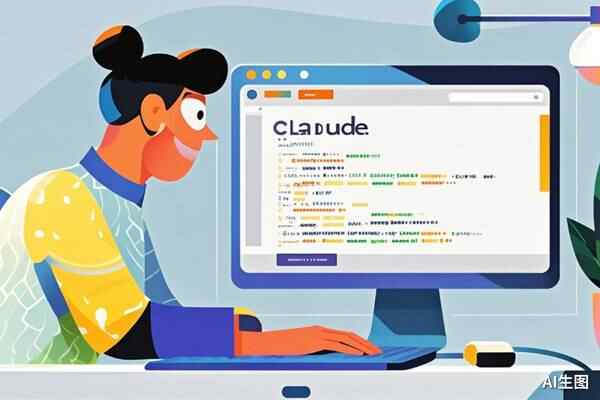
今天起,Claude Design要把設計師和程序員變成同一種人了
猝不及防!Anthropic深夜甩出Claude Design大更新,設計系統一鍵導入,代碼雙向同步,9大平臺一鍵導出。Anthropic設計師親自下場錄屏:AI跑了八輪自查,才敢把設計稿給你看。
OpenAI 成為 Rust 基金會白金會員,合計贊助 60 萬美元
OpenAI 正式成為 Rust 基金會白金會員,將提供總計 60 萬美元資金,用於支持 Rust 開源項目維護者及 Rust 創新實驗室等計劃。這標誌著 AI 巨頭對安全、高效系統編程語言的重視。 #OpenAI #Rust #開源

Claude Design 上線首周用戶破百萬,和 Claude Code 共享 AI 配額
Anthropic 今天(6 月 18 日)發佈公告,在宣佈 Claude Design 上線首周用戶規模突破 100 萬後,進一步強化和 Claude Code 的雙向聯動,實現從設計到編程的無縫工作流。
谷歌時隔6年再發智能音箱,Gemini上桌,售價不到700元
智東西 編譯 | 劉煜 編輯 | 陳駿達 智東西6月18日消息,谷歌昨日宣佈,其首款搭載居家版Gemini語音助手的智能音箱(Google Home Speaker)已開啟預售,將於當地時間6月25日正式上市,售價為99.99美元(約合人民幣677.03元)。在此之前,谷歌已有6年沒有推出過獨立智能音箱產品。 谷歌這款智能音箱外觀近似球形,風格類似亞馬遜新一代Echo音箱與蘋果舊款音箱HomePod Mini。 ▲谷歌智能音箱(圖源:谷歌官網) 使用音箱時,用戶只需通過口令“Hey Google”或“OK Google”喚醒Gemini,就可以繼續下達相應指令。這與谷歌舊款音箱、智能顯示屏等喚醒語音助手的方式相同。此外,用戶只要按照日常說話習慣下達命令,Gemini便能理解用戶意圖,相比之前大大提升溝通效率。 一、加強短時對話記憶,會員可與Gemini不限次數對話 谷歌此次推出的全新音箱升級諸多功能。其中,音箱搭載的Gemini語音助手擁有10款全新擬人化語音音色,用戶可以根據喜好自行選擇聲線。音箱還可支持用戶一次性下達多條語音指令,即使指令未能說對、說完整,用戶中途改口Gemini也能識別。 Gemini還具備多鏈路推理能力,落地到實際生活場景中比較實用。例如,用戶問:“我支持的足球隊下場比賽天氣如何?”Gemini收到指令後,會自動查詢賽事時間、舉辦地點,同時匹配相應時段天氣,再給出答覆。 同時,Gemini加強了短時對話記憶,能承接上下文實現連續對話功能。即使用戶連續追問、甚至串聯多項任務、不重複交代前置條件,該語音助手也能實現來回連貫交流。 ▲谷歌Gemini對話場景(圖源:谷歌官網) 不僅如此,Gemini搭配的連續對話功能,能讓應答後的音箱麥克風保持短暫收音,用戶無需重複喊“OK Google”就能繼續提問。該功能現已全面支持所有Gemini原生適配的語言,包括
微軟,考慮接入DeepSeek
這篇消息聚焦「微軟,考慮接入DeepSeek」。原始導語提到:Copilot Cowork轉為按量計費。 從 AI 情報角度來看,這類內容值得關注其背後的技術進展、產品落地、產業競爭與後續市場影響。